
Las Vegas · Henderson · Reno
Engineered fall protection systems in Nevada
Designed, PE-stamped and installed by one team.
Tritech helps commercial and industrial facilities across Nevada — Las Vegas, Henderson and Reno and everywhere between — put permanent fall protection where people actually work: rooftop guardrail, horizontal lifelines, overhead rigid rail and ladder safety systems, each designed for the structure it sits on. Talk with David Lee about your facility, a project that is coming up, or a system that is already there and needs a look.
- PE-stamped designs
- Design, fabrication and installation
- Serving all of Nevada
- 1,800+ successful installations in the USA
Trusted by industry leaders for truly turnkey systems





Why facilities call
Three reasons a Nevada facility calls us.
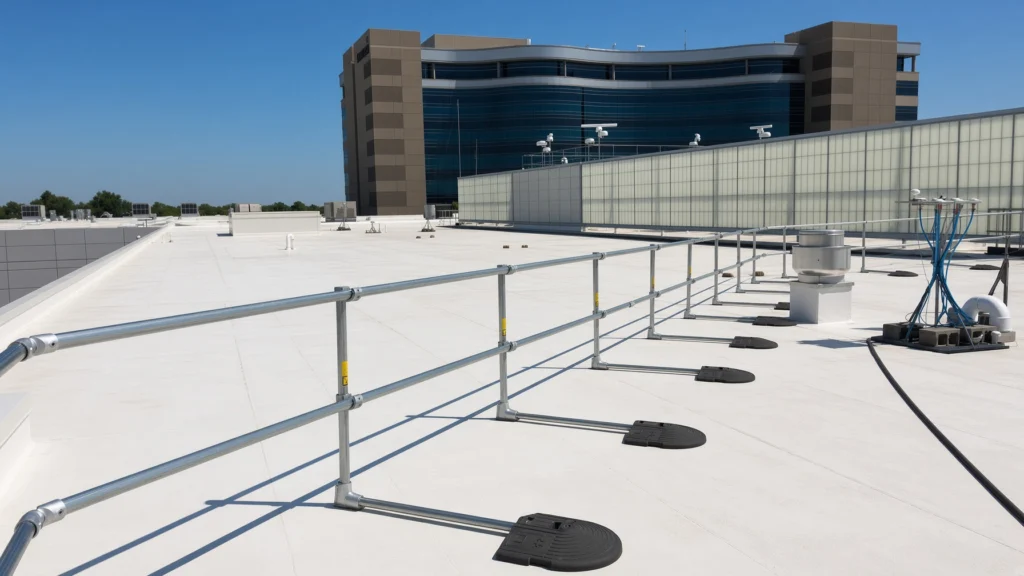
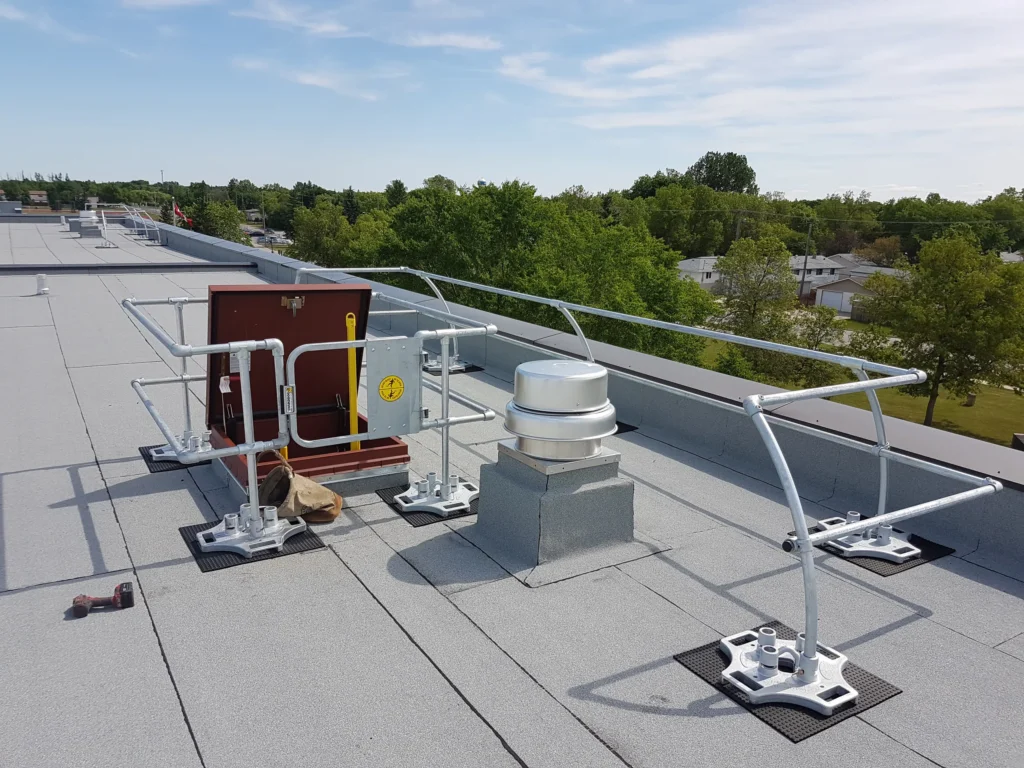
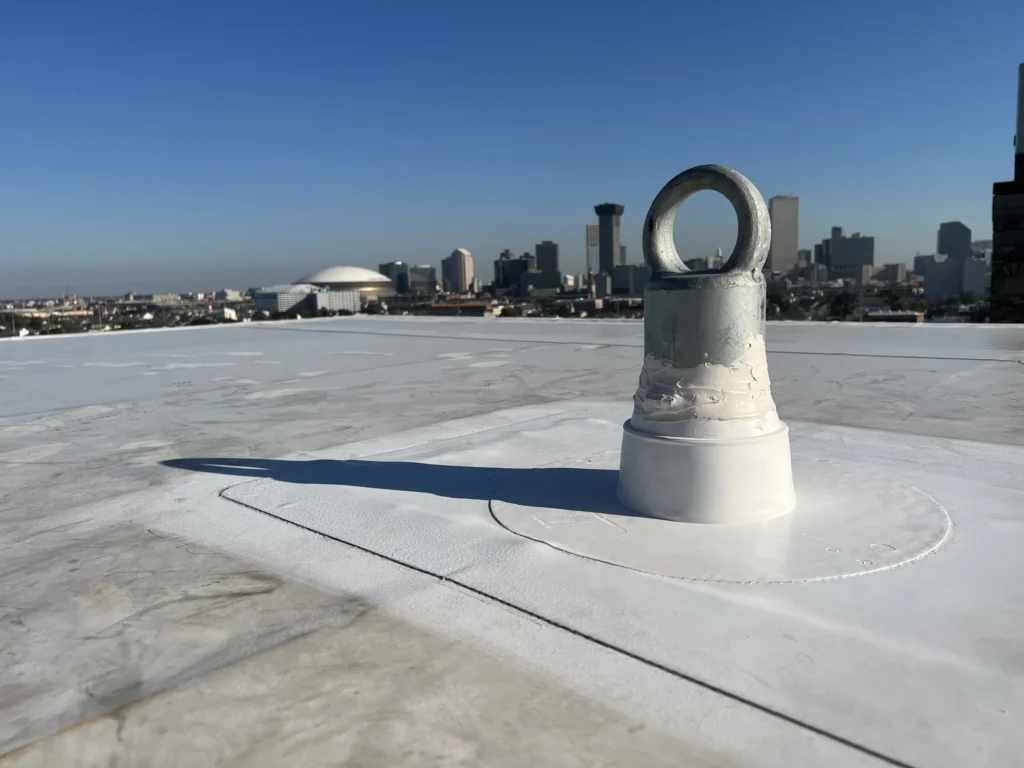
Your HVAC tech, roofer or maintenance contractor has asked for tie-off points or guardrail before they work near the edge. Start with where the work is, how they get there and what the task is — the system should fit how people actually use the roof, not the other way round.
An insurer, a corporate safety review or an inspection has flagged an exposed edge, a roof opening or an elevated work area. Send us the findings and any deadline, and the site assessment goes straight to the tasks and locations that were named.
There are lifelines, guardrail or anchors up there, but the records are thin or the condition is uncertain. Pull together whatever drawings, manufacturer information and past inspection reports you have; we will tell you what passes, what needs work and what the paperwork should look like.
What we install
Permanent systems for roofs and elevated work areas.
Everything below is designed to your structure, fabricated, installed and documented by Tritech. Nothing portable, nothing rented. Each card leads to the full system page.
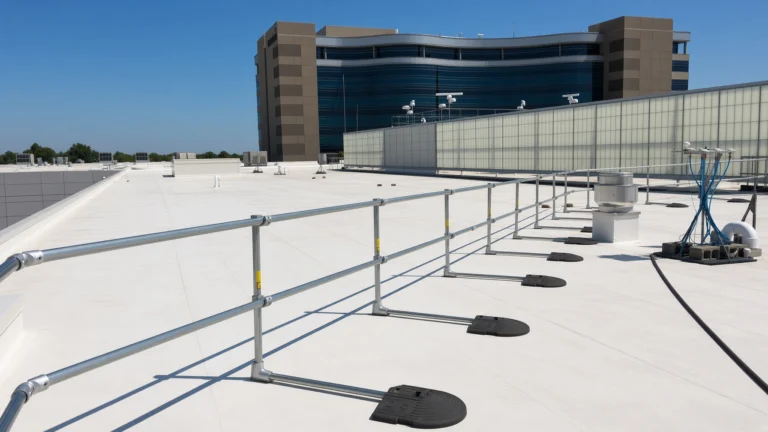
Rooftop guardrail
A physical barrier at the edges, hatches and work areas that need one. Parapet, metal-roof and freestanding variants; which one depends on the roof structure, the parapet, how people get onto the roof and where the maintenance happens.
Explore guardrail and barrier systems →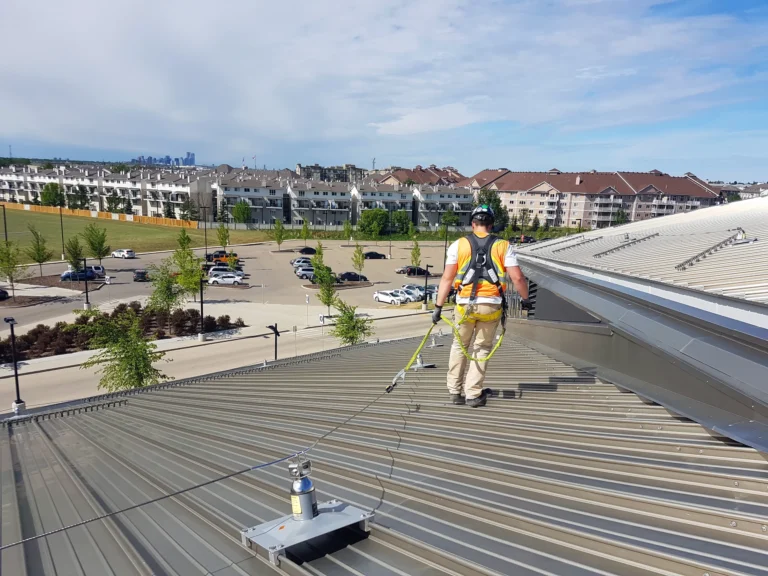
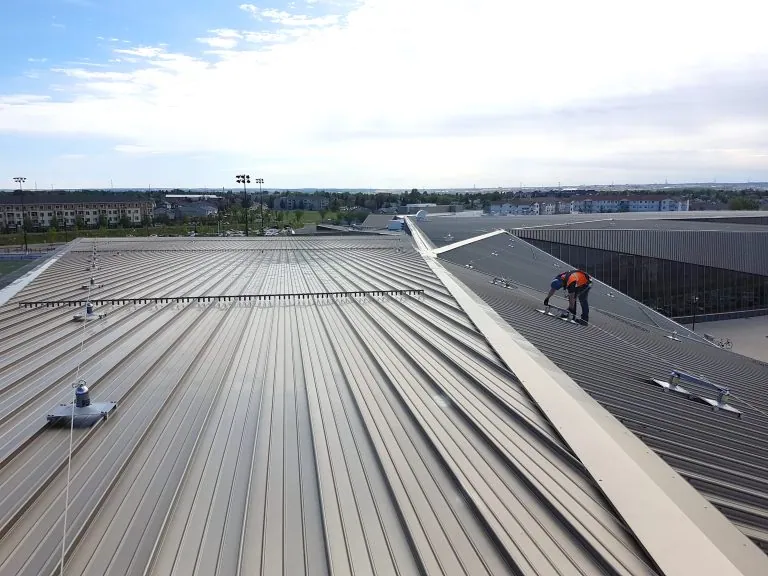
Horizontal lifeline systems
For movement along a defined route where guardrail is not practical. The design has to account for the supporting structure, the number of users and whether the job calls for restraint or fall arrest — and if it is arrest, for clearance and rescue.
Explore horizontal lifeline systems →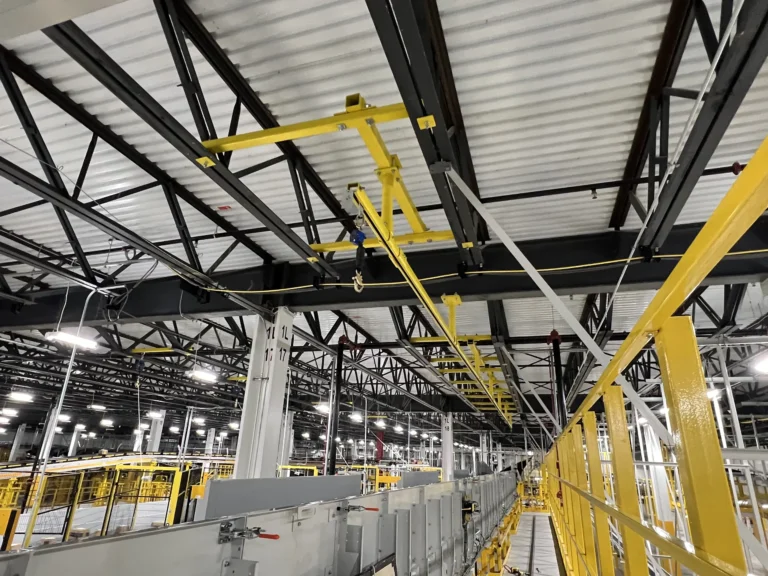
Rigid rail and overhead fall arrest
Overhead rail for loading docks, maintenance bays, conveyors and process areas, where people work at height every shift. Rail position, structural support, available clearance and how the worker moves all shape the design.
Explore rigid rail systems →-
Ladder safety and roof access
Fixed ladders, roof transitions and access points reviewed together: getting onto the roof and getting from the hatch to the work area are the same task.
-
Hatch, skylight and opening protection
The edge is only part of it. Hatches, skylights and other openings need guarding along the routes employees and contractors use.
-
Inspection and existing-system assessment
We assess the installed system, its records and how it is used, and tell you whether it needs documentation, repair, replacement or further engineering review.
-
Warning lines and designated areas
Allowed only in specific circumstances — infrequent, temporary work at a set distance from the edge. Not a substitute for a system where people work regularly.
Nevada facility needs
What we see on Nevada sites.
-
Facilities across Nevada
Nevada is the distribution and battery manufacturing corridor around Reno and Sparks, mining in the north, and hospitality and convention buildings in Las Vegas with large, busy rooftops. Data centers are a growing part of both metros.
-
Who enforces fall protection in Nevada
Nevada runs its own OSHA-approved state plan, Nevada OSHA, which covers private and public workplaces. State plans must be at least as effective as federal OSHA and can set their own requirements, so the design is checked against the rule that applies in Nevada.
-
Heat, sun and UV
Roof surfaces get extremely hot and sustained UV breaks materials down. Systems are specified with finishes suited to the sun, and rooftop work is planned for the cooler part of the day.
Relevant Tritech projects
Work like yours, with the problem it solved.
Florida
Roof Fall Protection for Healthcare Facilities in Florida
Florida's healthcare facilities operate in an environment where compliant fall protection is complicated by factors most other states simply do not face.
Read the case study →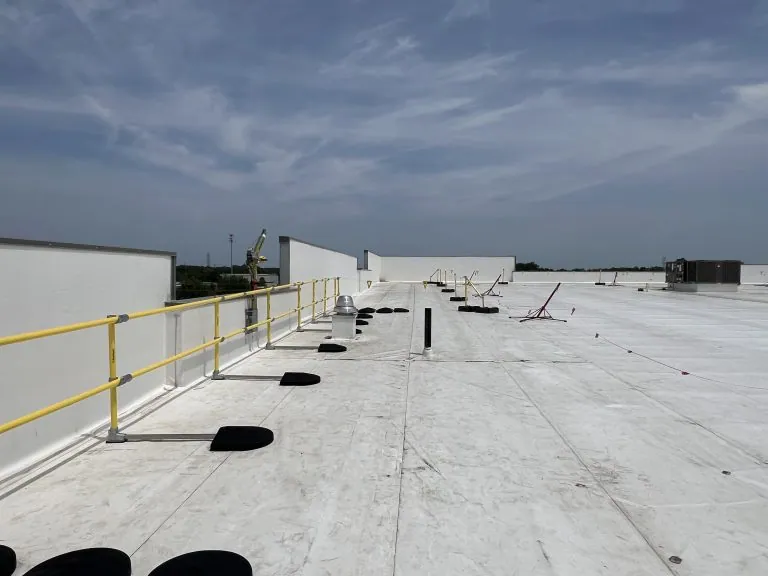
Michigan
Distribution Facility — Michigan
A major distribution facility in Michigan required a compliant rooftop fall protection solution to support safe access for maintenance personnel and subcontractors.
Read the case study →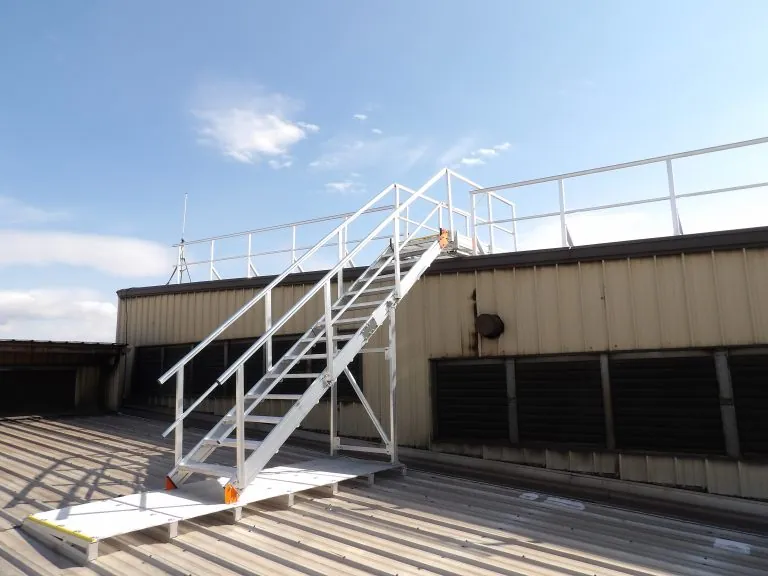
Illinois
Roof Fall Protection Guardrail System Case Study in Illinois
An Illinois manufacturing facility faced critical fall hazards at roof-level maintenance areas, where workers serviced mechanical drive systems near large vent openings and unprotected edges.
Read the case study →Client names withheld at their request. Locations are shown by state. See more in the project gallery →
From site assessment to installation
One team from the first walk to the handover.
-
01
Understand the work
David talks through the facility, the affected tasks, access routes, any existing system and the deadline. Photos and drawings ahead of the visit make the site walk count.
-
02
Develop the design
Our engineers review the structure and the intended use, set the system approach and the engineering scope, and confirm the drawings and documentation you will receive.
-
03
Define the proposal
One proposal covers the system, the installation scope, site requirements and exclusions, with responsibilities for roof coordination, access equipment and work-area restrictions spelled out.
-
04
Plan the installation
Access and sequencing are coordinated with your operations. Any shutdowns, restricted areas or weather-dependent work are identified before the crew is scheduled.
-
05
Complete the handover
You get the drawings, the inspection requirements and the user information, and we agree how the system will be maintained and who keeps its records.
Questions about fall protection in Nevada
Answers before the first call.
Anything not covered here, David answers on the phone.
Do you handle both the engineering and the installation?
Yes. Tritech designs, fabricates and installs as one team, and the drawings are PE-stamped. Your proposal names the engineering deliverables, the installation scope and the handover documentation, so there is no separate engineer to hire and no gap between the person who designed the system and the person who installed it.
What does OSHA require on a low-slope roof?
It depends on the work and the standard that applies. For general-industry work, OSHA 1910.28 looks at how close the task is to the edge and, for some provisions, whether the work is both infrequent and temporary. Within 6 ft of an unprotected edge that generally means guardrail, travel restraint or fall arrest; the designated-area option from 6 to 15 ft only applies to infrequent, temporary work. Construction work by a contractor falls under 1926 and can differ. Review the actual task before choosing a system — when rooftop units or drains sit near the edge, as they do on most commercial roofs, the question usually settles itself.
Who enforces fall protection rules in Nevada?
Nevada runs its own OSHA-approved state plan, Nevada OSHA, which covers private and public workplaces. State plans must be at least as effective as federal OSHA and can set their own requirements, so the design is checked against the rule that applies in Nevada.
Who is responsible — me or my contractor?
Both have duties. A contractor is responsible for their own workers under 29 CFR 1926; you are responsible for your employees under 1910 and for giving contractors a workplace they can comply in. A permanent system designed for the roof is how most owners stop having that conversation every time a trade shows up, but the system has to fit the work each party actually does.
Should we use guardrail or a lifeline?
Guardrail is a barrier: nobody needs equipment or training to be protected by it. A lifeline is used with a harness and compatible connectors, so it depends on the user. Which one fits comes down to the work area, how much movement the job needs, what the structure can support and who will be up there. The site assessment compares the suitable options side by side.
Will installation affect our roof warranty?
It can if attachment and flashing are done without regard to the roof assembly. We review attachment details against the manufacturer’s requirements and use flashing details designed for the roof type; where a penetration is not acceptable we design around it. Send the warranty documents and your roofing contractor’s details early so any coordination is sorted before the crew arrives.
What affects the cost and the schedule?
System length, structural conditions, engineering scope, attachment details, site access and installation restrictions. A guardrail run and a lifeline system for the same roof can differ several times over, so we do not quote ranges off a web form. Photographs and drawings define the scope; you get a real number and a project-specific schedule after the site walk.
Can you assess a system another company installed?
Usually, yes. Send the manufacturer, the installation drawings and any inspection records you have. Whether a system can be inspected, repaired or recertified depends on its condition, its documentation and the manufacturer’s requirements — we tell you which of those applies before any work is quoted.
Can you work through the summer heat?
Yes. Summer rooftop installation is planned around the heat — early starts, water and shaded breaks — and materials and finishes are chosen for sustained sun and UV.
Are your installers union? Do you work prevailing-wage jobs?
It is handled case by case — it depends on the site, the owner’s requirements and the contract. Speak with an expert and we will answer in detail for your project: call David directly, or send the site assessment request below and it will be covered on the first call.
Do you work near me?
Yes. David Lee covers Nevada, including Las Vegas, Henderson, Reno, Sparks, North Las Vegas, Carson City and Elko. Tell us the city and ZIP code of your facility and the site walk is planned from there.
More of our work
Photos from the field, and the full project write-ups.
The projects above are the ones closest to the territory. The rest of what Tritech has designed and installed lives in two places.
Project gallery
41 installation photos from Tritech sites, filterable by system, industry and application — guardrail, lifelines, rigid rail, platforms and anchors as they were actually built.
Browse the project gallery →Case studies
5 projects written up in full: the hazard, the options the engineers weighed, the system that went in and what changed for the people using the roof or the floor.
Read the case studies →Service area
Nevada and the states around it.
Your Nevada contact is David Lee. Pick another state on the map to find who covers it.
- Cities we serve
- Las Vegas, Henderson, Reno, Sparks, North Las Vegas, Carson City, Elko
- David also covers
- Alabama, Arkansas, California, Louisiana, Mississippi
- Neighbouring states
- California, Oregon, Idaho, Utah, Arizona
Request a site assessment
Let’s Discuss Your Project
Tell us where the facility is, what needs protecting and whether there is a deadline. Three short steps. If you have roof plans, photographs or a previous inspection report, keep them handy for the call.
Prefer to talk? Call Tritech and ask for David — or send the form and David will call you.
Mon–Fri, 7:00–6:00 Central