


SOLUTIONS
Permanent Roof Anchor Point
Durable, Engineered Anchorage for Rooftop Safety
Engineered for Rooftop Environments
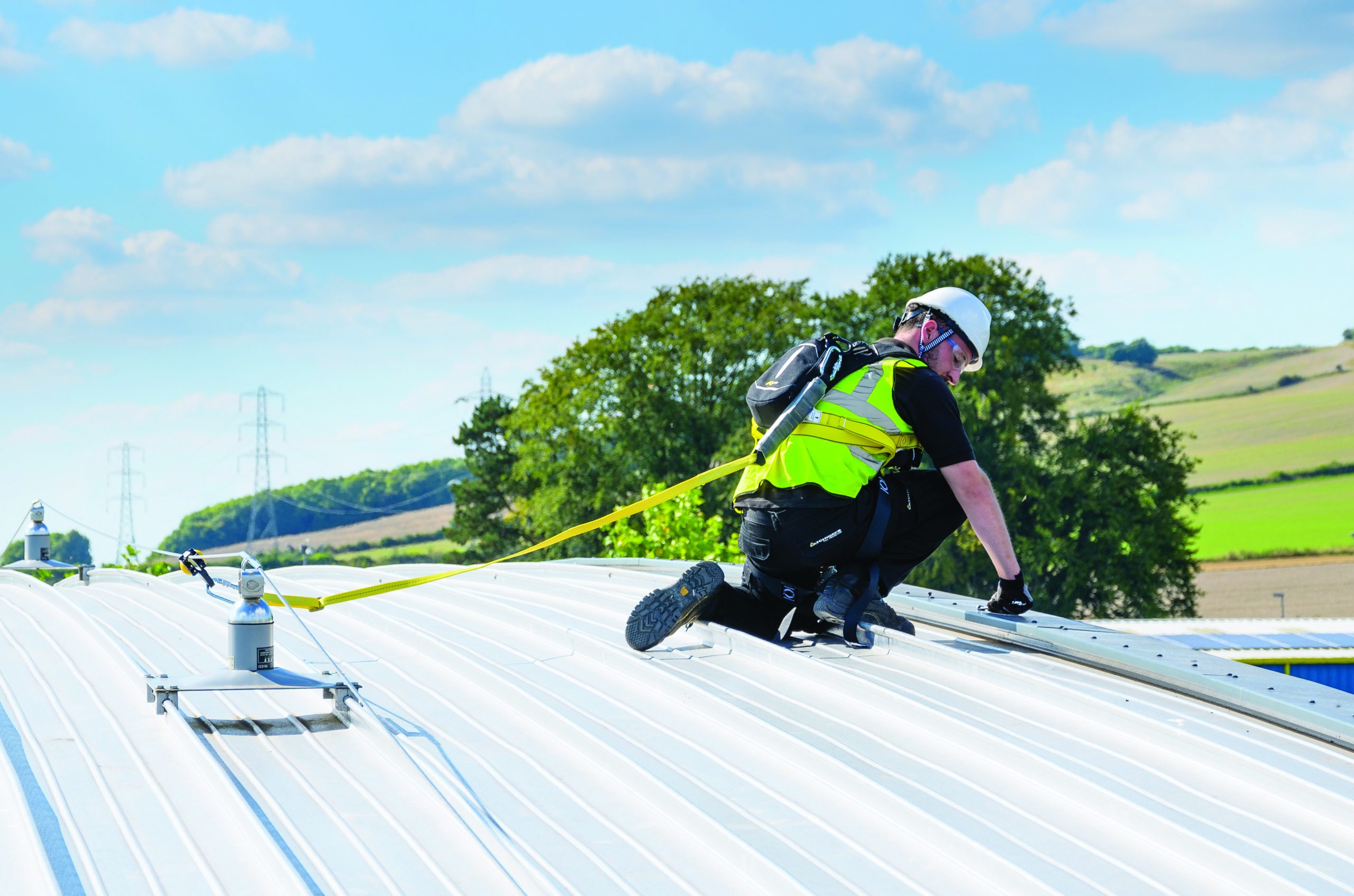
Designed for permanent installation on flat, pitched, or standing-seam roofs, these anchor points provide secure tie-off locations without compromising roof integrity.
Built to Withstand the Elements
Manufactured from corrosion-resistant materials such as stainless steel and galvanized steel, roof anchors are built to last through all weather conditions while maintaining structural reliability.
Fully Compliant with Safety Standards
Meets or exceeds OSHA 29 CFR 1926.502(d) and ANSI Z359.18 standards for permanent anchorage systems used with lifelines, lanyards, or self-retracting lifelines (SRLs).

PROBLEMS WE SOLVE
Reliable Protection for Rooftop Work
Permanent roof anchors eliminate the need for temporary tie-off points, ensuring safe and consistent access for workers performing routine maintenance, HVAC service, or inspection tasks. Once installed, they remain a ready-to-use solution as part of your facility’s long-term fall protection plan.
Areas of Application for Permanent Roof Anchor Points
- Building Access & Maintenance
- Manufacturing & Industrial Facilities
- Energy & Utilities
- Infrastructure Development
- Government & Military

Building Access & Maintenance

Manufacturing & Industrial Facilities

Energy & Utilities

Infrastructure Development
Government & Military


Answers to
Key Questions
What does PE stamped drawing mean?
A PE-stamped drawing is an engineering drawing signed and sealed by a licensed professional engineer. The stamp certifies that a qualified engineer designed the anchorage for the specific structure and loads and takes professional responsibility for that design. For a permanent roof anchor, the PE stamp is the document that proves the anchor meets the OSHA 5,000-pound strength duty or the engineered safety-factor-of-two alternative. It is the record a facility hands an auditor or inspector to defend the installation.
What is a davit arm?
A davit arm is a curved or angled overhead support that holds an anchorage point out and above a work area, most often at a building edge for facade access, window washing, or confined-space rescue. It positions the tie-off point above the worker so the connection works for suspension or overhead arrest, and it can pivot or be removed from a fixed base socket between jobs. Tritech engineers the davit, its base, and the anchorage as one load path into the structure.
At what height is fall protection required?
Under OSHA general industry rules (29 CFR 1910.28), fall protection is generally required at 4 feet above a lower level. Under construction (29 CFR 1926.501), the trigger is generally 6 feet. Different thresholds apply to specific situations, such as work near dangerous equipment or over openings. A roof anchor supports compliance wherever a worker is exposed to a fall at or above these heights and a passive guard is not feasible.
CONTACT
Secure Rooftop Access That Lasts
Talk to our fall protection specialists about installing permanent roof anchor points that ensure long-term safety and compliance for your facility.
Let’s Discuss Your Project
"*" indicates required fields