SOLUTIONS
Overhead Crane System
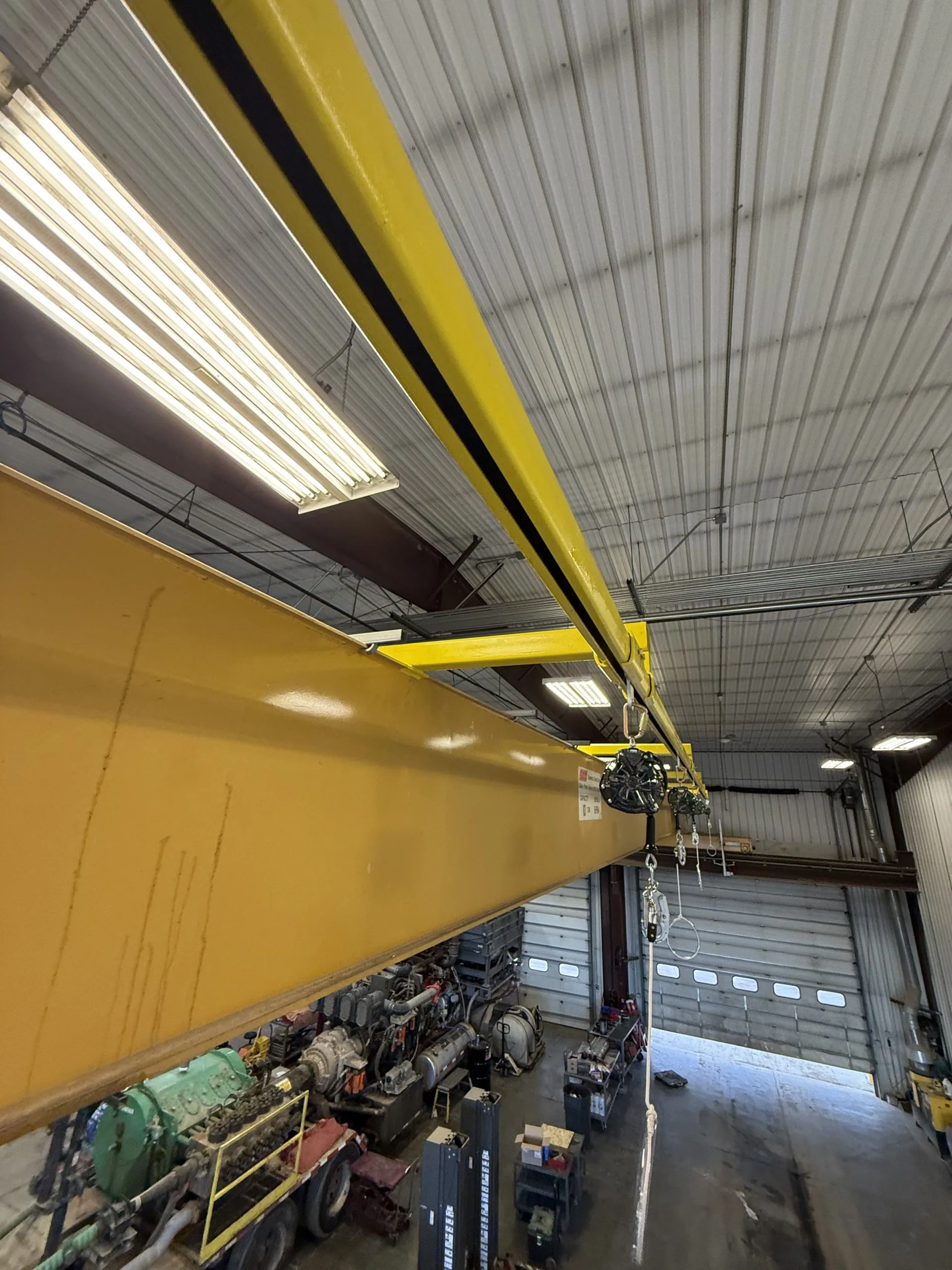
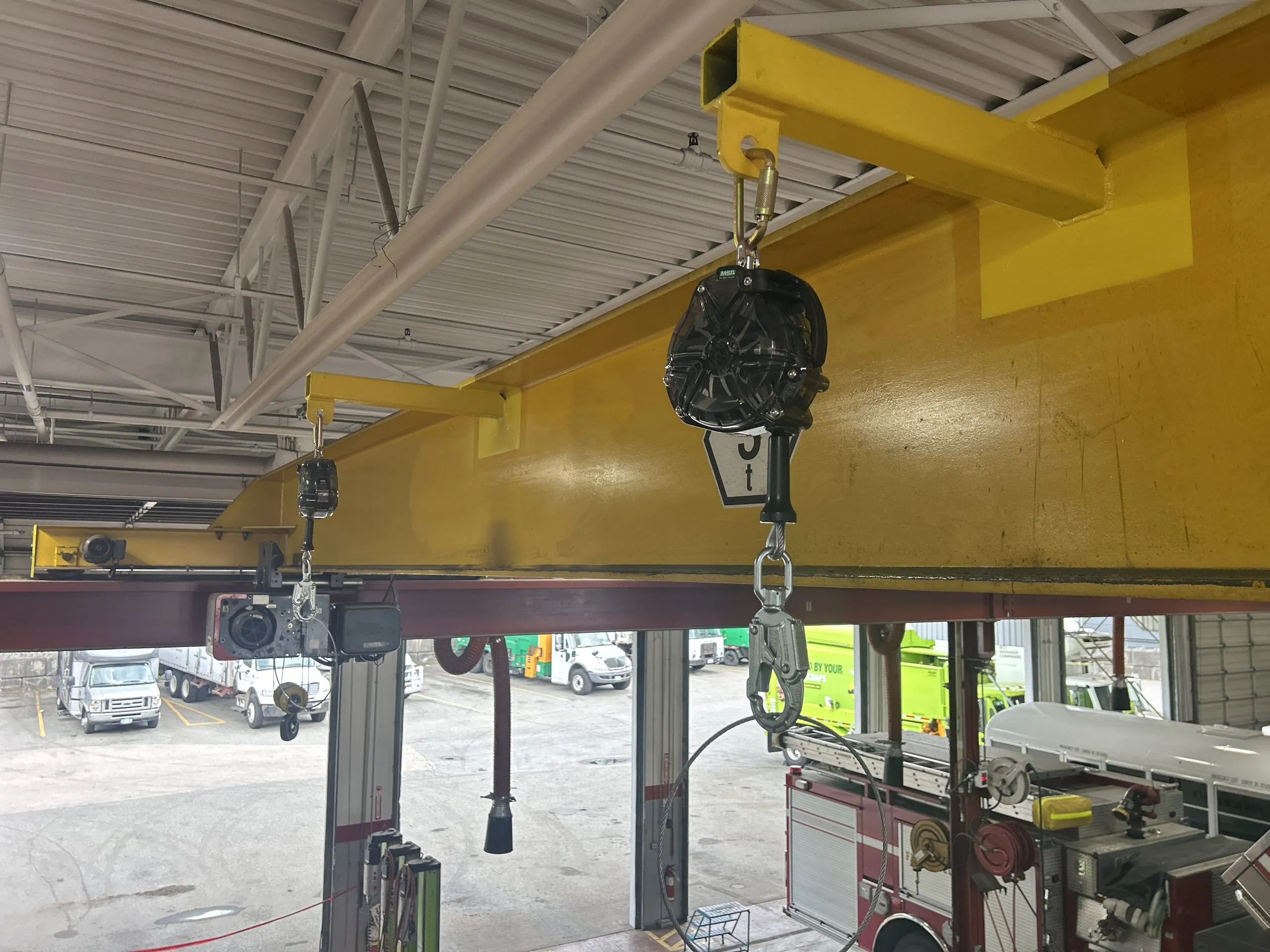
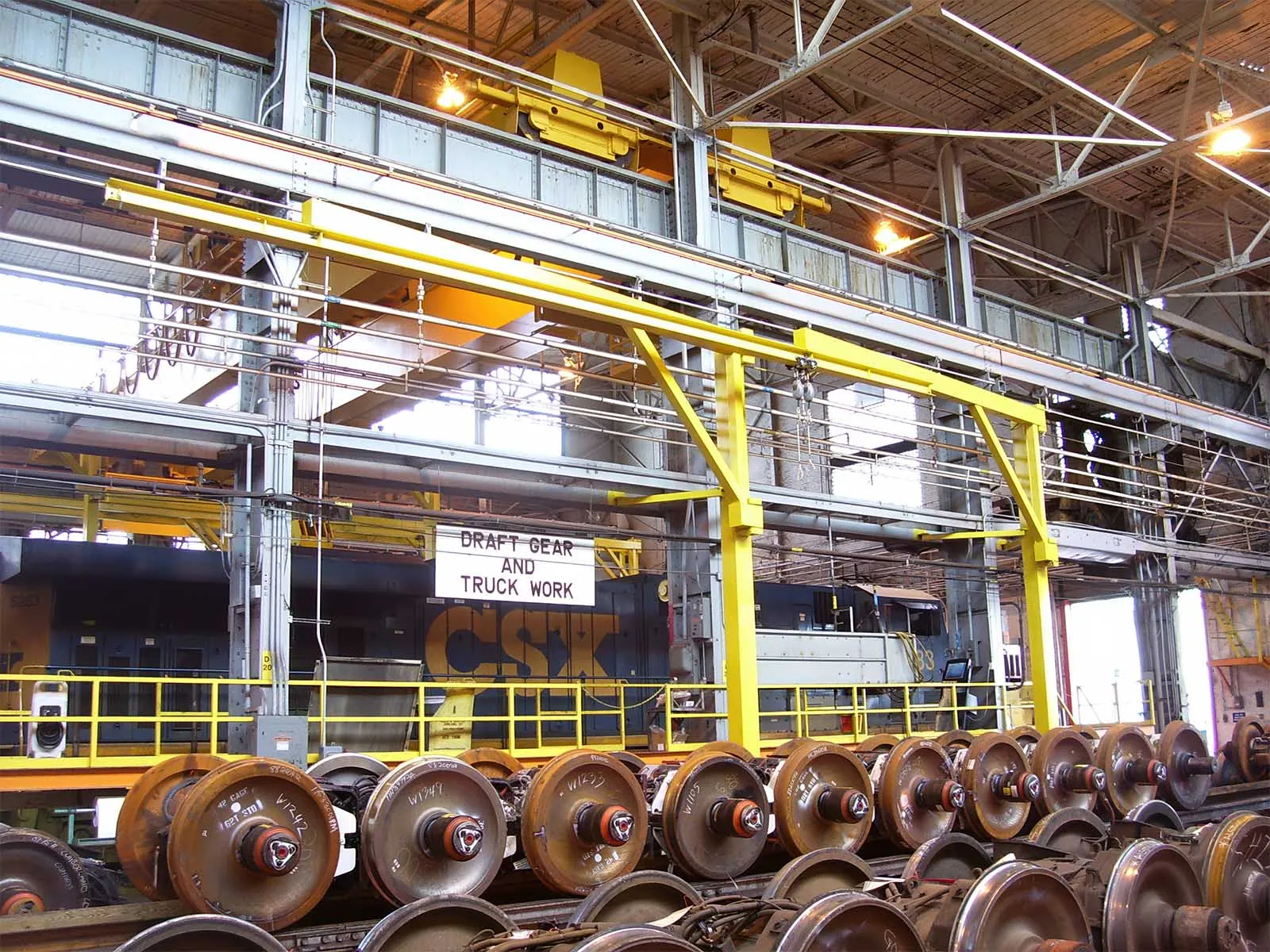
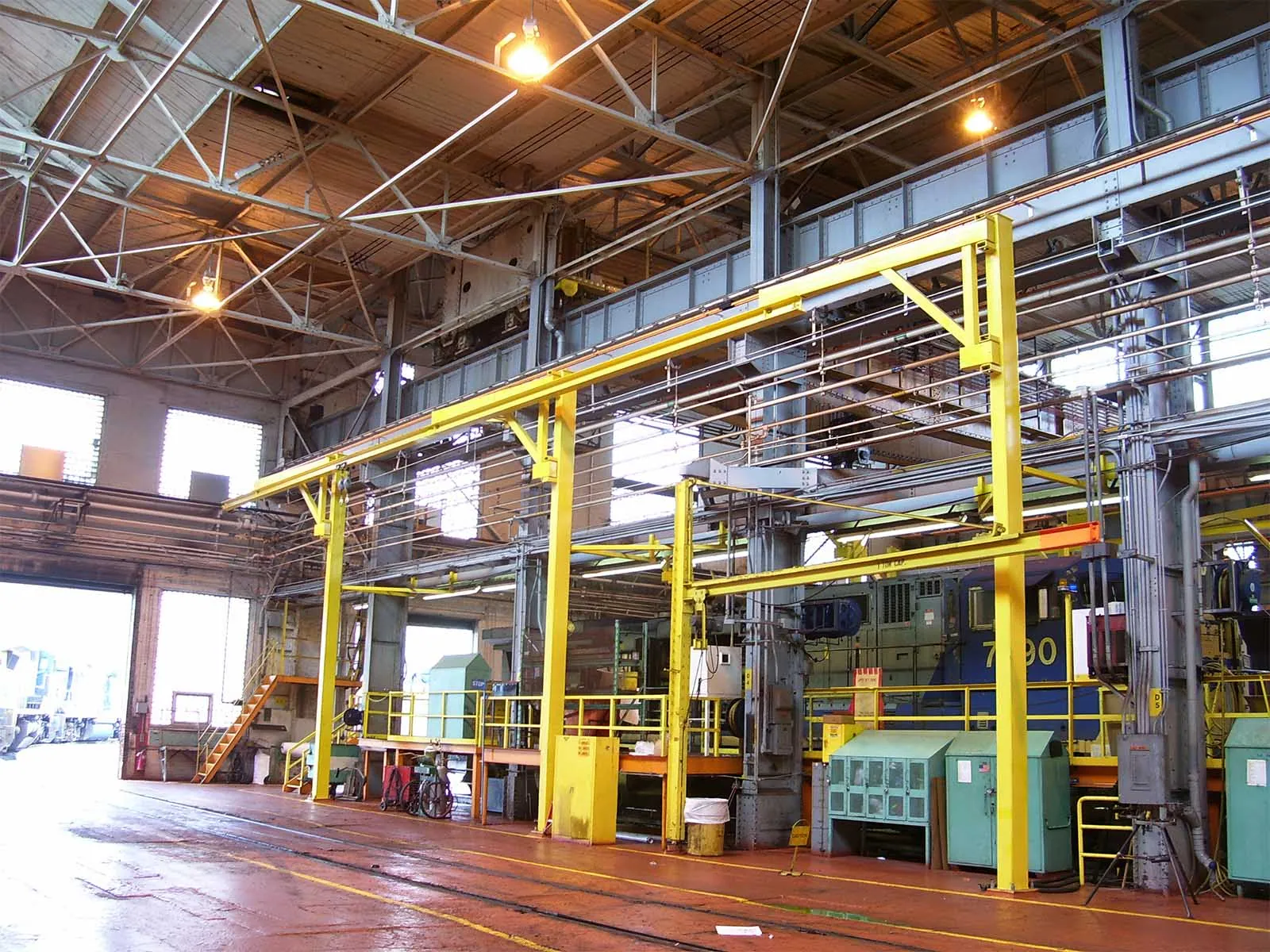
Engineered Fall Protection for Crane Rail and Elevated Work Areas
Continuous Overhead Protection
Allows workers to stay securely attached while moving along crane rails, overhead platforms, and walkways—without getting in the way of their tasks.
Adaptable to Any Crane Setup
Works with bridge cranes, gantries, monorails, jib cranes, and more—whether they’re fixed in place or mobile.
Code-Compliant Safety
Built to meet OSHA and ANSI safety standards, helping protect your team and keep your facility ready for inspections.
PROBLEMS WE SOLVE
Protecting Workers During Crane Maintenance and Elevated Access
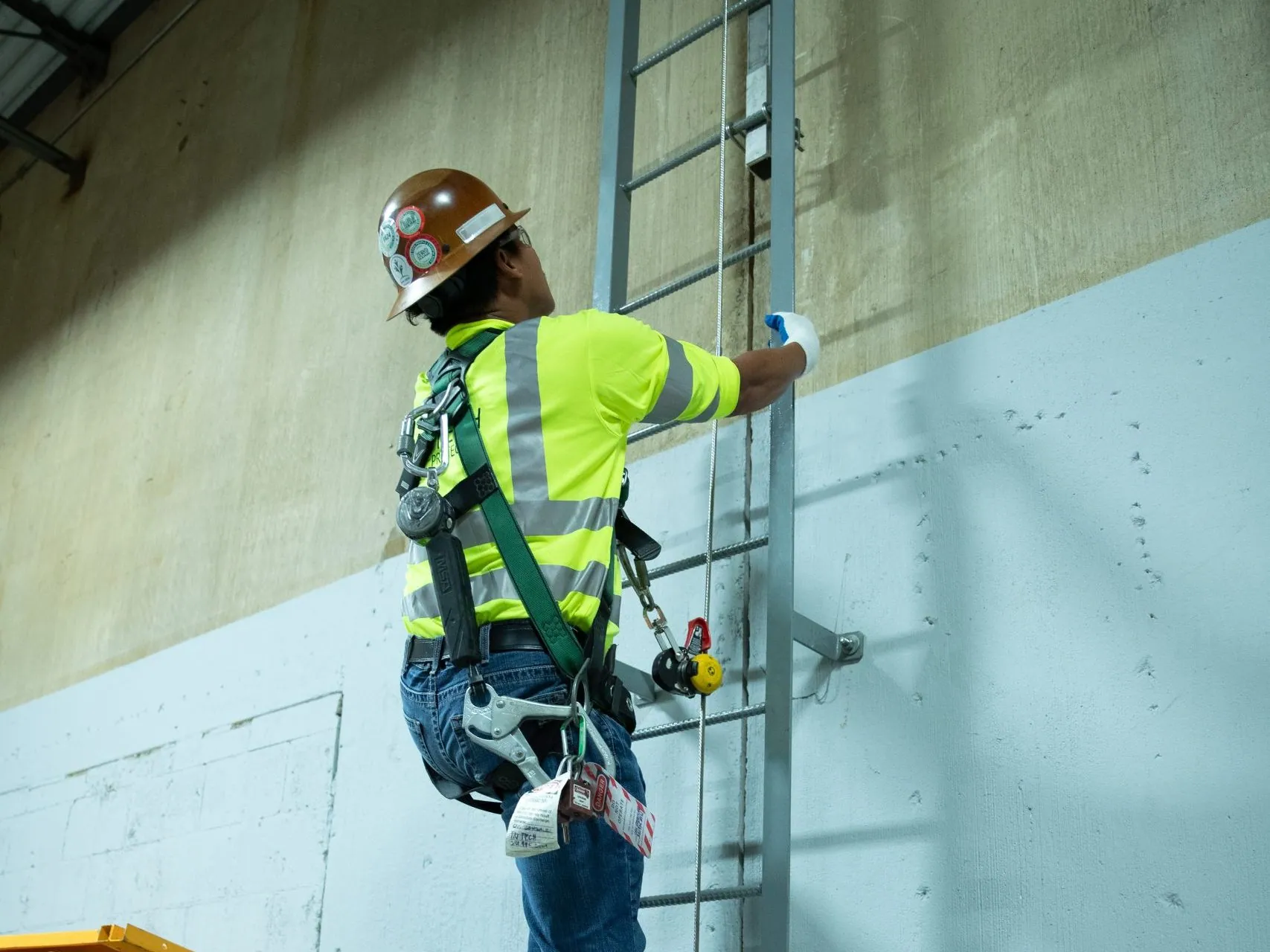
Working on or near overhead cranes puts workers at risk of falling, especially when accessing rails or narrow walkways. Our fall protection systems help prevent that by using overhead lifelines that keep workers securely connected while giving them the freedom to move. Safety and productivity go hand-in-hand.
Areas of Application for Overhead Crane Lifeline Systems
- Manufacturing & Industrial Facilities
- Supply Chain Management
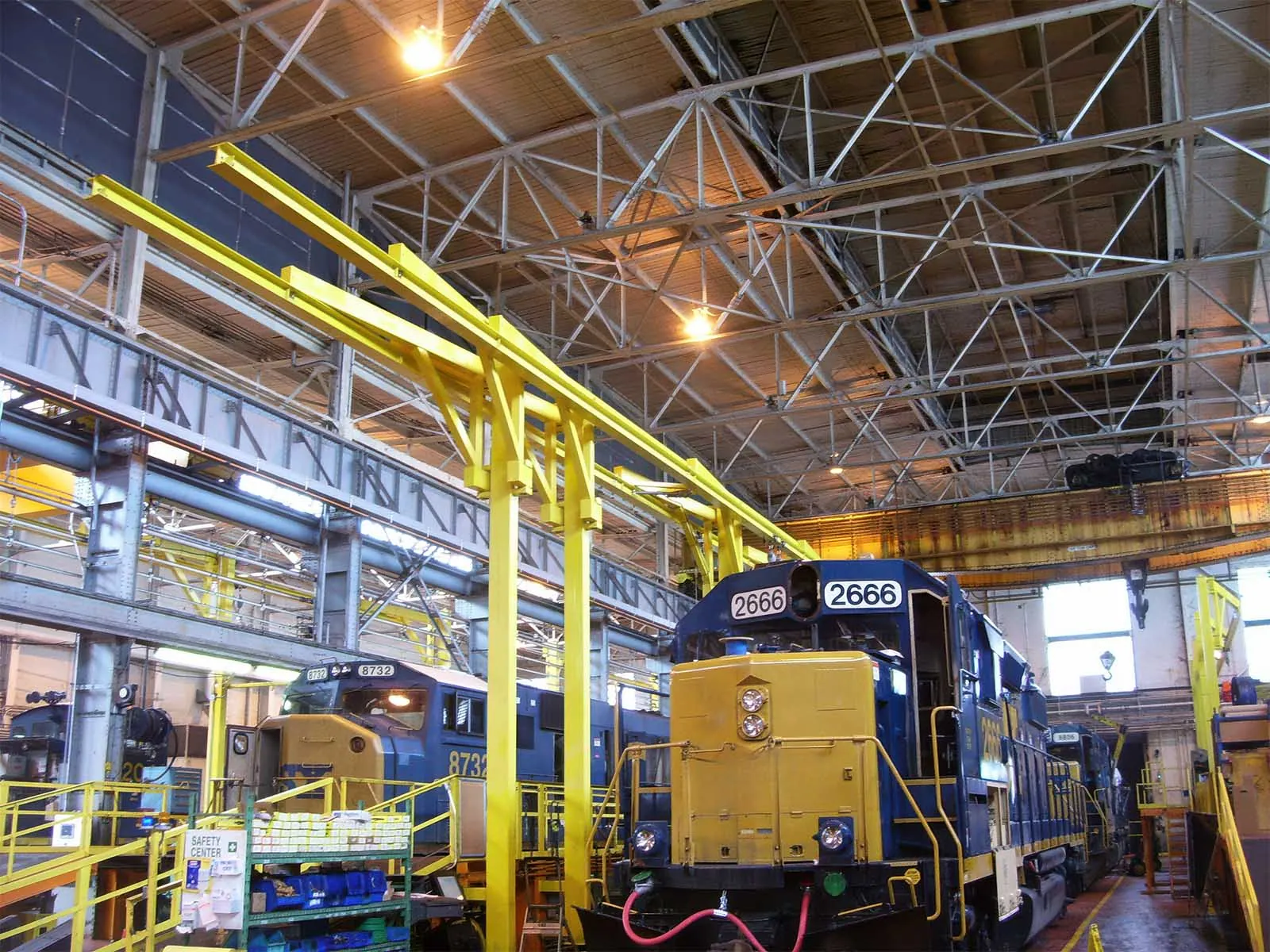
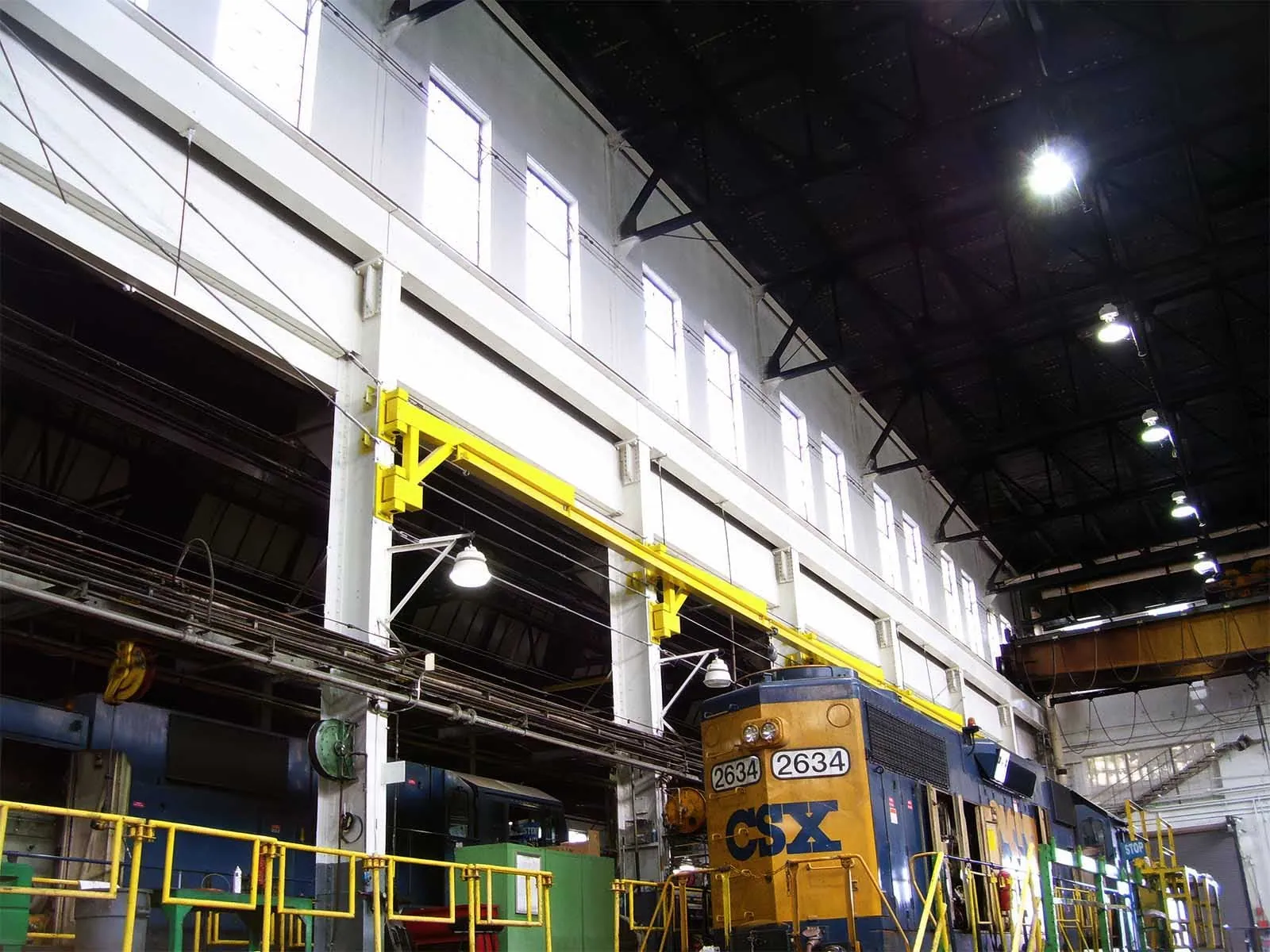
- Railcar & Transportation
- Aerospace
- Government & Military

Manufacturing & Industrial Facilities
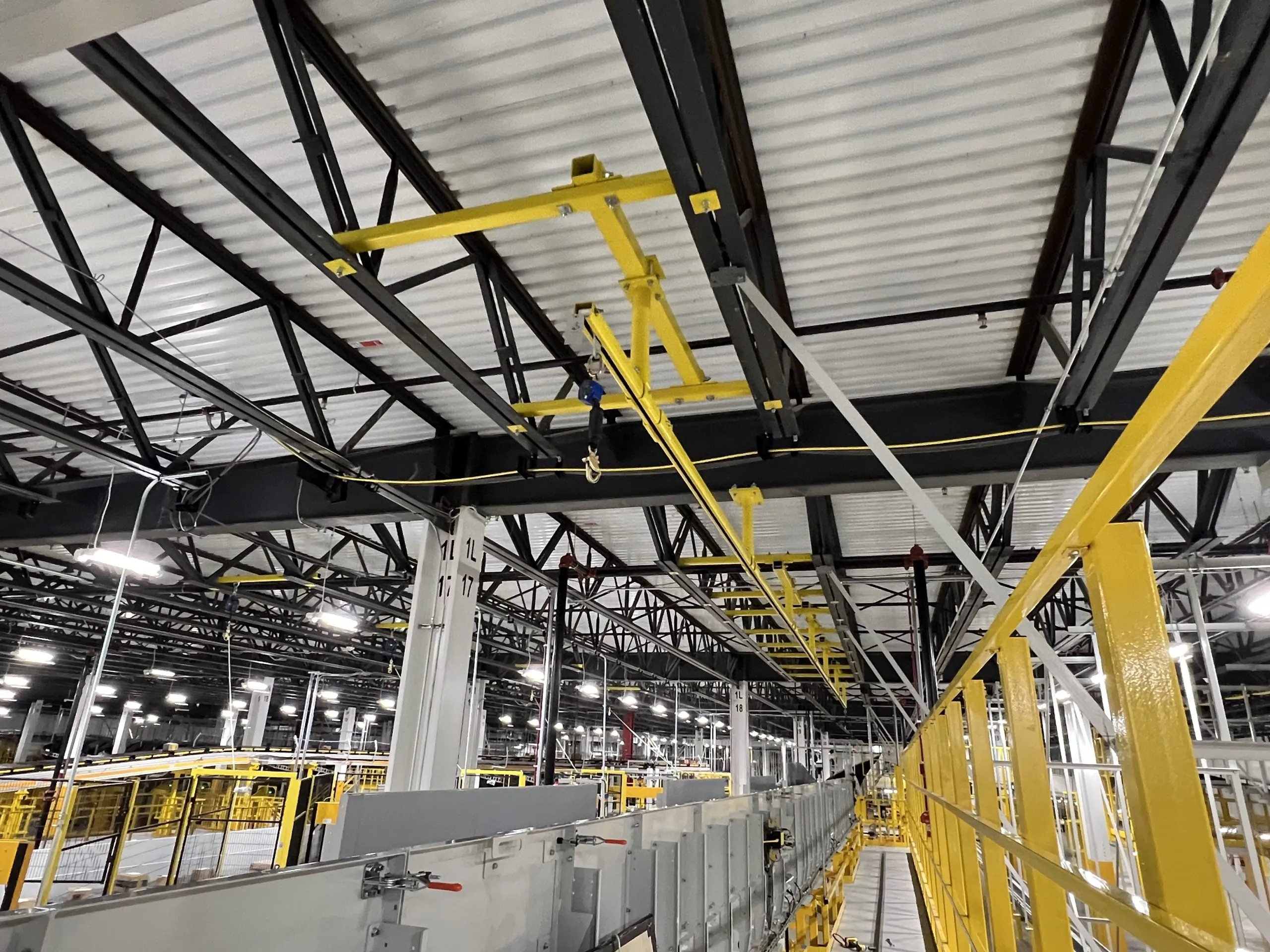
Supply Chain Management
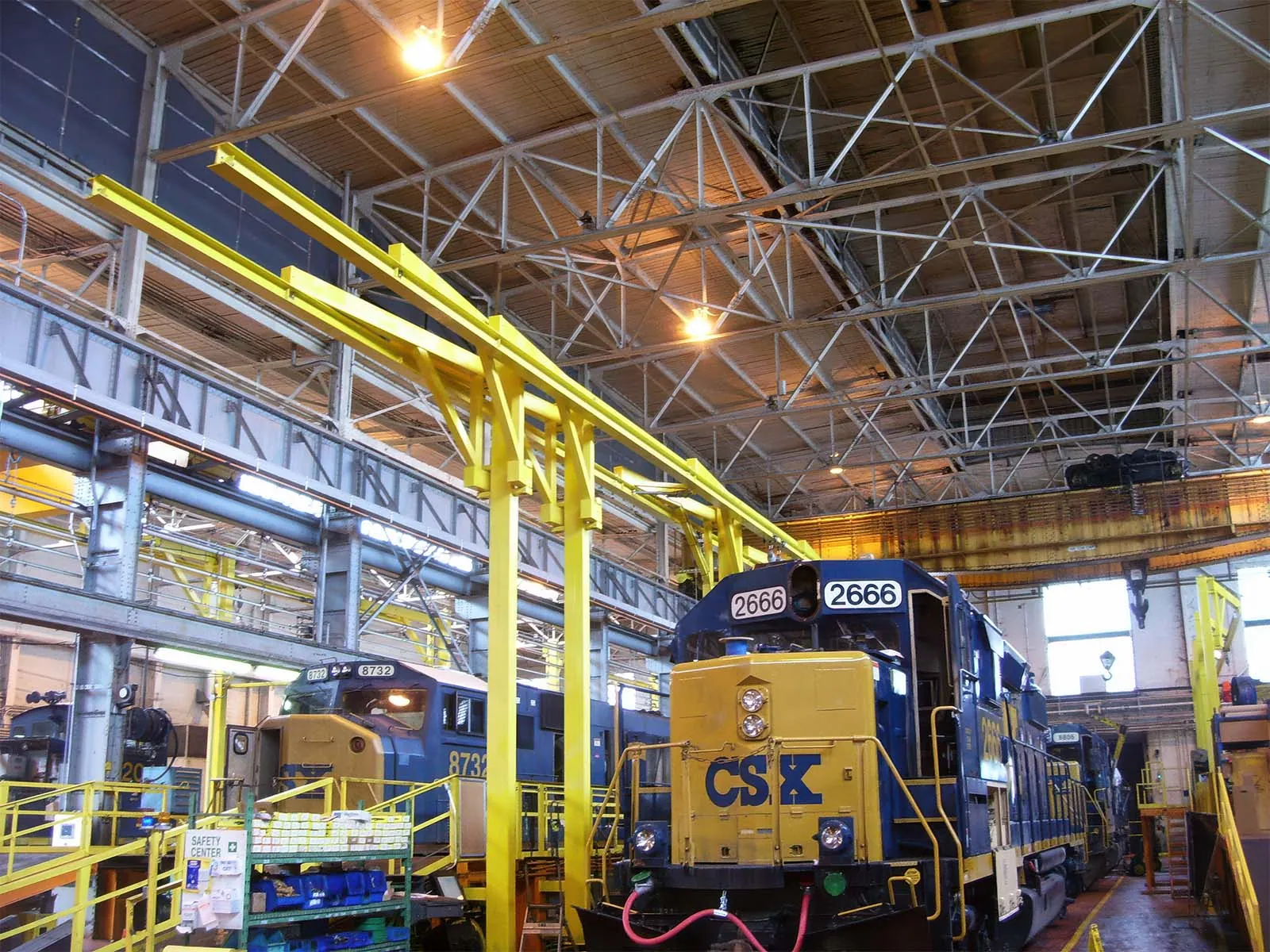
Railcar & Transportation
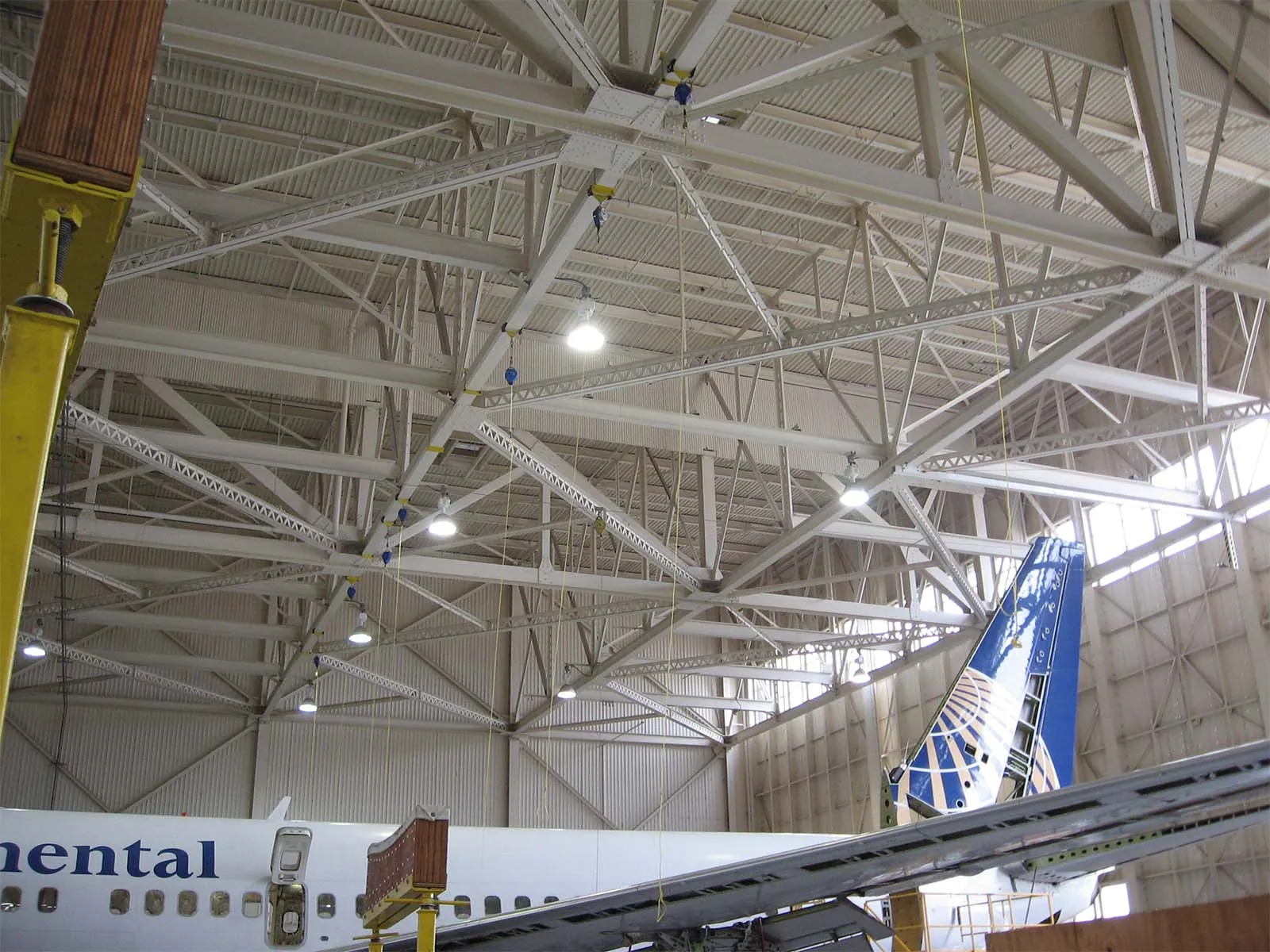
Aerospace
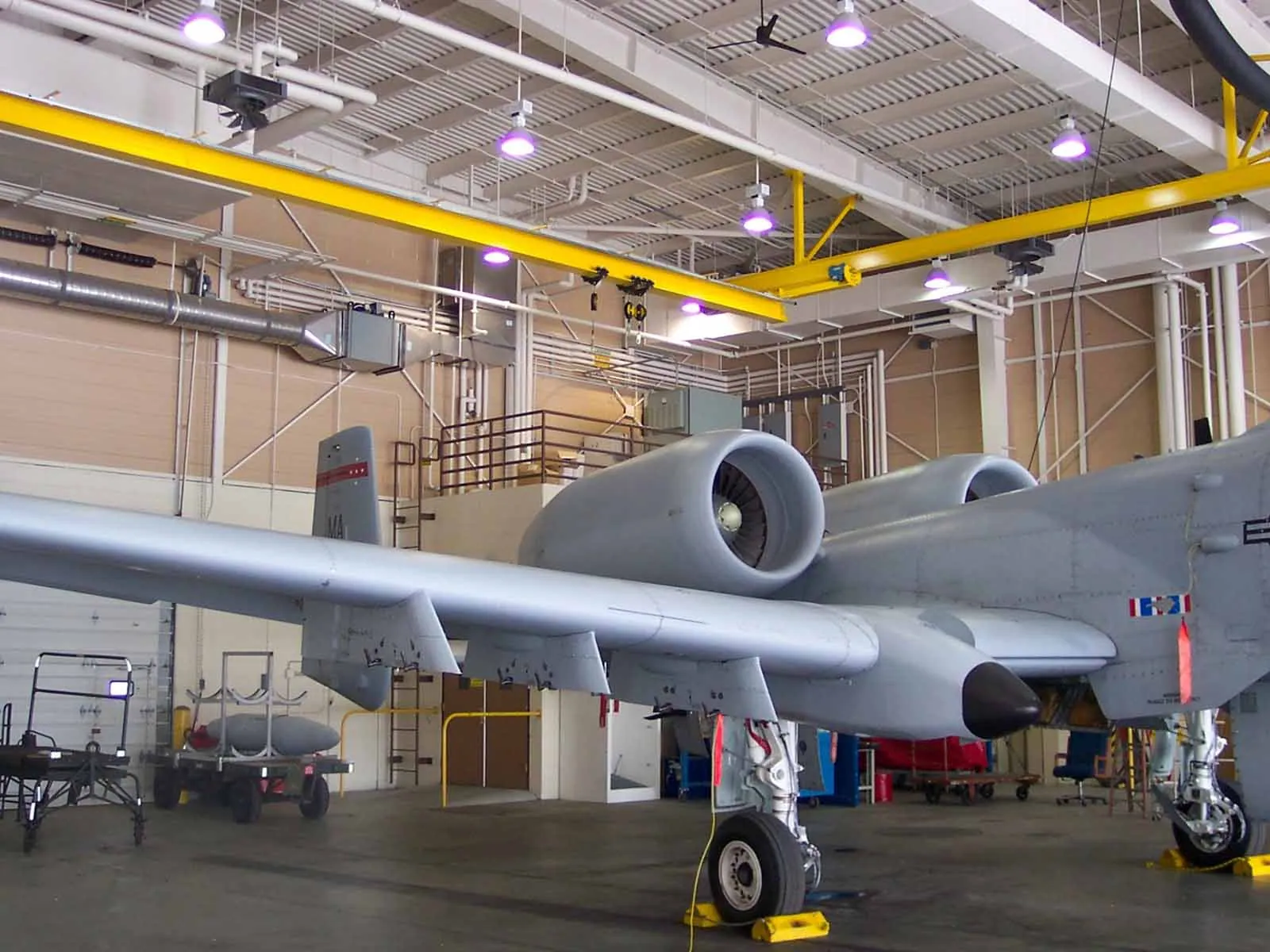
Government & Military
Where this system is used
Industries and applications that run on Overhead Crane Systems
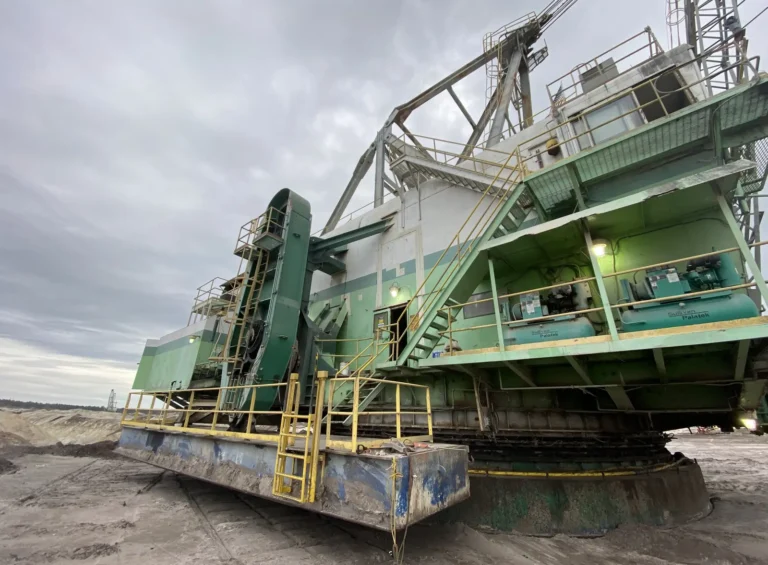
Mining
Engineered fall protection for open pit, underground, in-situ and dredging operations and their processing facilities. PE-stamped, installed and certified by one team since 1993.
Read more →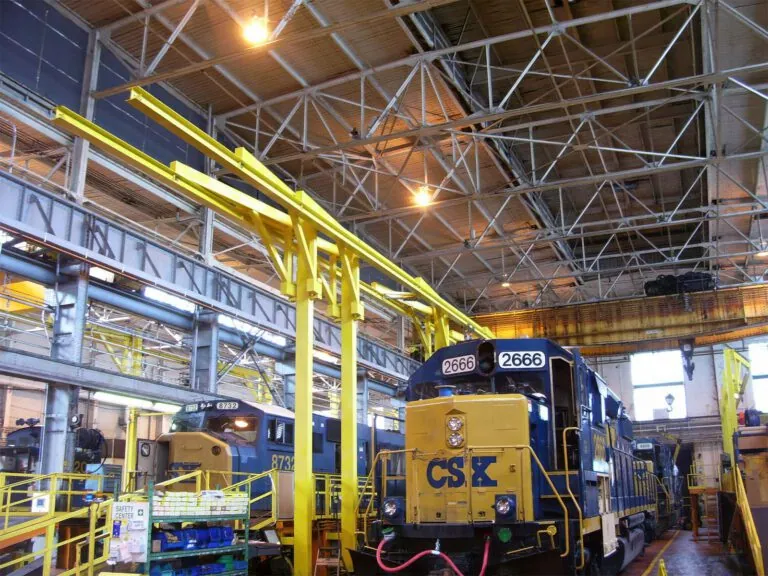
Transportation & Rail
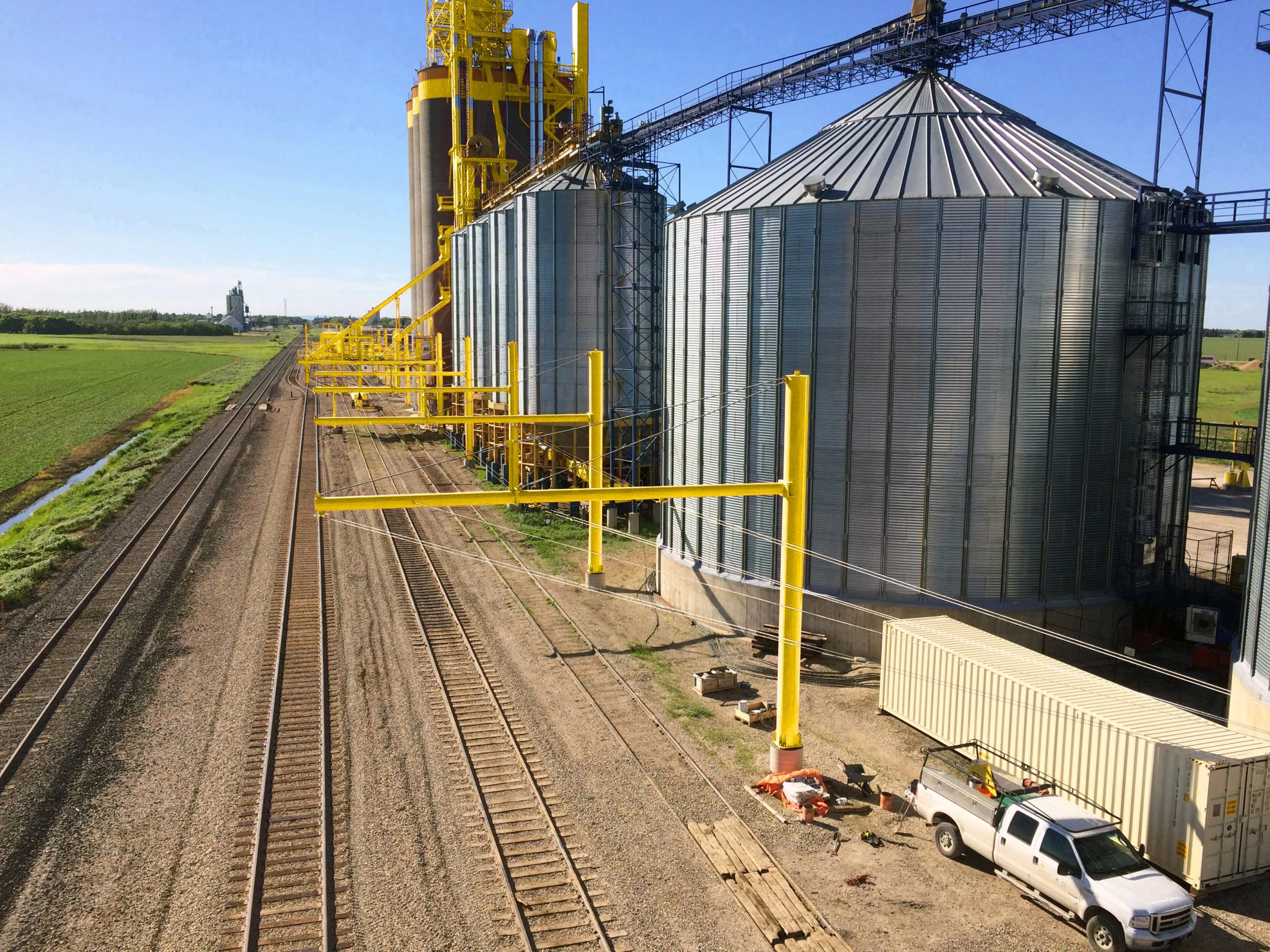
Railcar and truck loading, rail yards, marine decks and fleet maintenance.
Read more →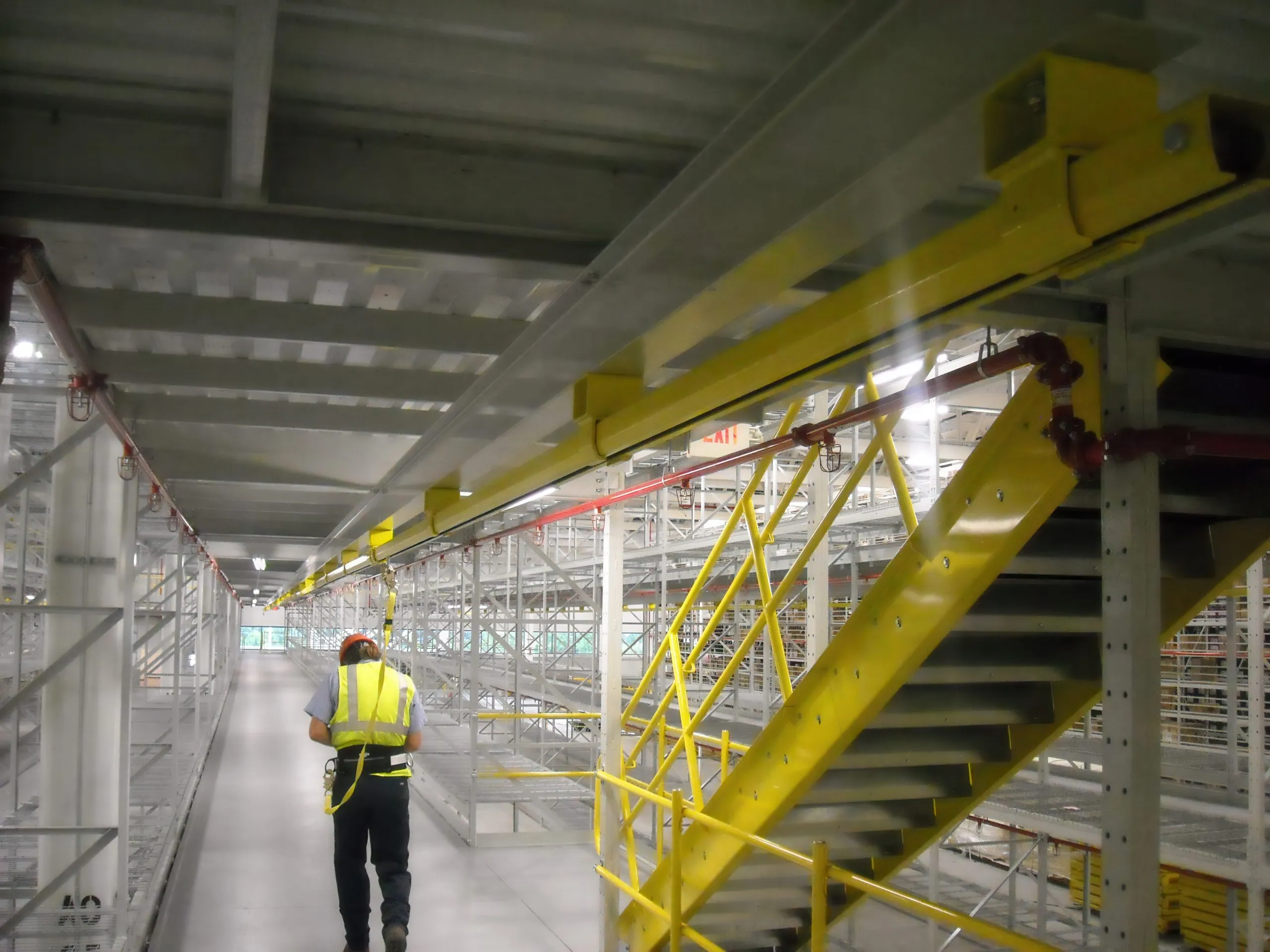
Downloads
Brochures & downloads
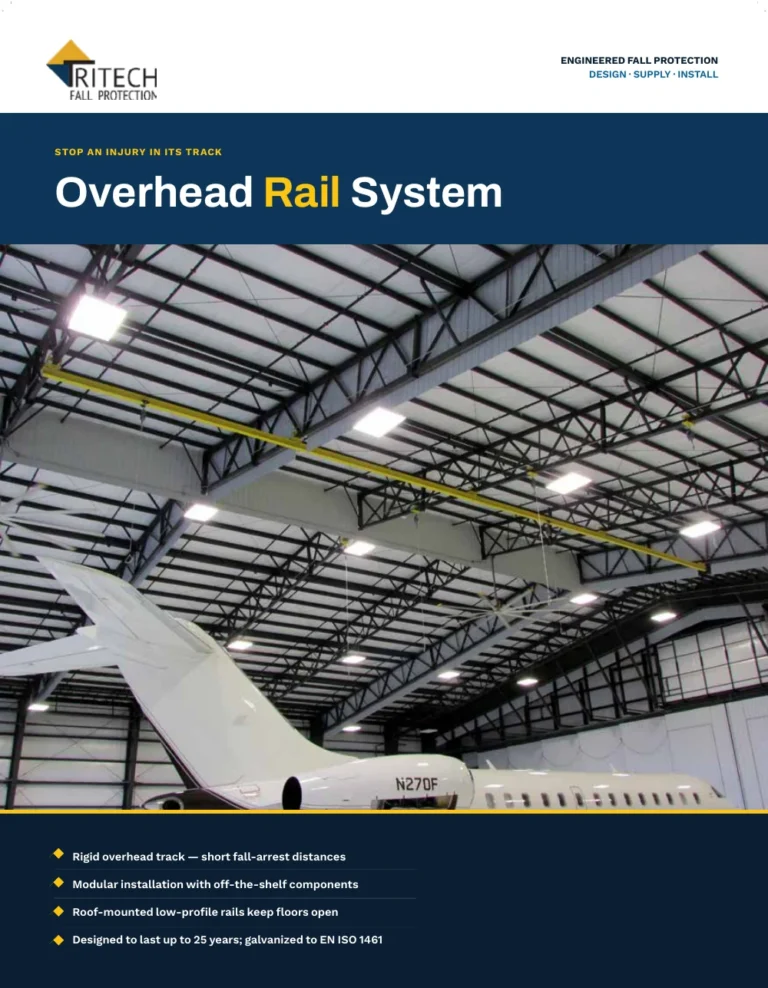
Brochure
Overhead Rigid Rail System Brochure
Overhead rigid rail fall arrest for hangars, rail and truck loading and plants: short fall distances, open floors and a design life of up to 25 years.
Answers to
Key Questions
What is the difference between a rigid rail carrier and a cable carrier?
A rigid rail carrier is a trolley that rides a fixed structural track that barely deflects under load, so it arrests a fall within inches and keeps the connection point high above the worker. A cable carrier rides a tensioned wire rope that sags during arrest and needs more clearance below. Crane runways and bridge-crane access routes are classic rigid rail territory: clearances are tight, the fall path is congested with equipment, and the track can be engineered to follow the runway. Tritech engineers both types and matches the carrier to the structure and the clearance available.
What is the OSHA standard for horizontal lifelines?
There is no standalone OSHA standard for horizontal lifelines; OSHA regulates them as part of a personal fall arrest system. The system must be designed, installed, and used under the supervision of a qualified person, as part of a complete personal fall arrest system that maintains a safety factor of at least two (29 CFR 1926.502(d)(8) in construction). General industry, which covers crane maintenance and inspection in an operating facility, applies the criteria of 29 CFR 1910.140.
How many people can tie off to a horizontal lifeline?
The engineered rating decides. Many systems are designed for two or more simultaneous users, but only when the design accounts for the combined dynamic load, anchor capacities, and fall scenarios. Crane maintenance often puts a full crew on the runway at once, so the user count gets set during design, not on the day of the job. A system rated for one user does not become a two-user system by adding a second worker.
At what height is fall protection required?
Under OSHA’s general industry standard, which governs crane maintenance and inspection in an operating facility, fall protection is required at 4 feet above a lower level (29 CFR 1910.28(b)(1)). Construction work triggers at 6 feet (29 CFR 1926.501(b)(1)). A crane runway or bridge walkway sits far above either figure, so every trip onto the crane requires protection.
CONTACT
Protect Your Team During Overhead Crane Access and Maintenance
Our experts can help you put in place a fall protection system that keeps your people safe—and fits right into your existing crane setup without slowing down your work.
Let’s Discuss Your Project
"*" indicates required fields
Not ready to talk yet? Download the Overhead Rigid Rail System Brochure