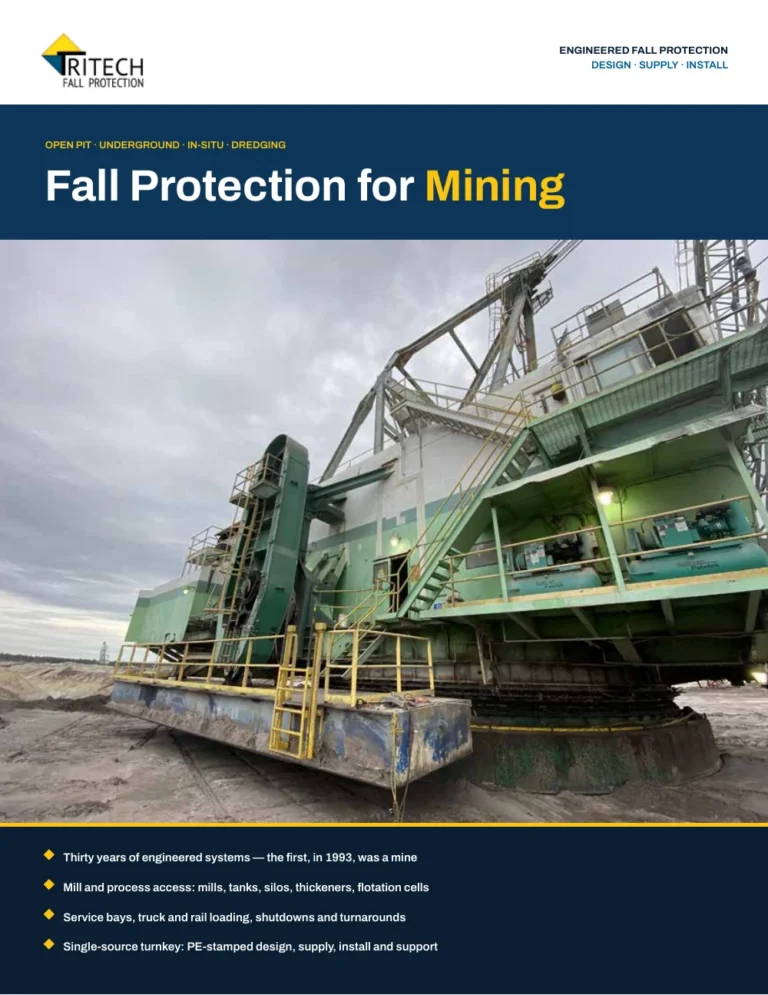
Brochure
Mining Fall Protection Brochure
Fall protection for open pit, underground, in-situ and dredging sites: where mine exposure concentrates and the engineered systems Tritech installs for it.
Set up a 30-minute meeting to speak with an expert.
OPEN PIT · UNDERGROUND · IN-SITU · DREDGING
Service bays, loading racks, mills and pipe racks — the work at height on a mine site is repetitive, high-consequence and squeezed into shutdown windows. Tritech engineers, installs and certifies mining fall protection systems, as one team. Our first engineered system went into a mine in 1993. Thousands have followed.
Where we started
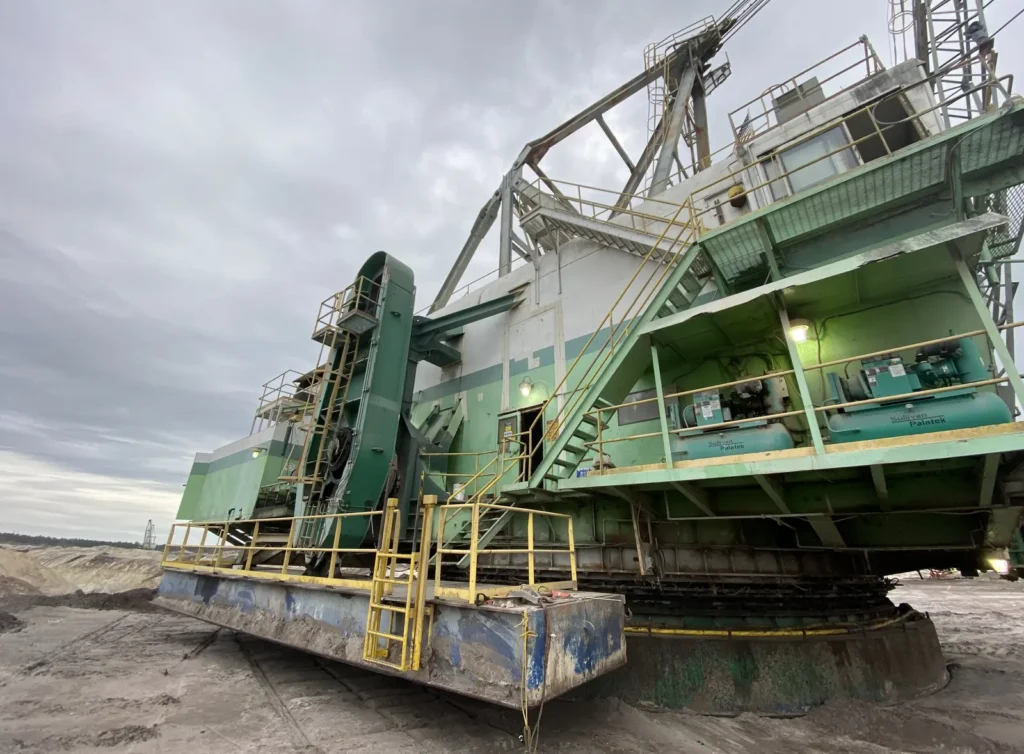
Tritech Fall Protection’s first project, in 1993, was an engineered horizontal lifeline for a railcar loading system at the Potash Corporation of Saskatchewan’s Cory Division mine. That project was the first of thousands of systems that followed across mines, processing facilities and industrial operations throughout North America.
Mining is not a market we moved into. It is the industry we were built in — shaped by dust and weather, shutdown windows measured in hours, and equipment that cannot stay down. Those constraints still shape how we design and deliver.
Assessment, PE-stamped design, supply, installation and ongoing support are all delivered by Tritech engineers and technicians. One contract, one point of liability.
Systems are designed to the structure, the task and the frequency of access — not fitted from a catalogue — and sequenced to cause as little disruption to production as possible.
The assessment team looks first for ways to eliminate the hazard outright, even when that means no system is sold.
Know the site
Every mine reaches a point where someone has to get up on, into or alongside something. Geology changes what that thing is. It does not change the exposure. The four below are the most common; the exposure repeats across every method and sub-category.
Benches, haul roads, crushers, and the shops that keep the fleet running.
Soft rock or hard rock. Portals, shops, service bays and shaft infrastructure.
Well fields, injection sites and the pipe racks that connect them.
Floating plant, walkways and transfer points on and around the water.
Almost every mine site also runs an above-ground processing facility, a mill, or ships ore to one nearby. That is where the majority of routine, repeated work at height happens — and where most of the systems we install on mine sites end up.
Across every site type the same three areas come up again and again: service bays for haul trucks and loaders; truck and rail loading and unloading; and anything accessed during a shutdown or turnaround, when headcount peaks, the schedule is tightest, and people are working on equipment they do not touch the rest of the year.
Where fall protection belongs on a mine site
Each area lists the systems most often engineered for it, linked to the page that describes the system.
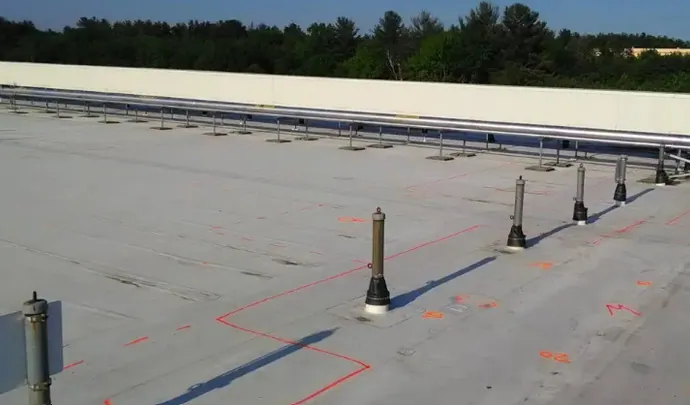
Stacks, exhaust ducts, HVAC units and air handlers put technicians on roofs with no fixed edge protection — often to pull a single sample. The exposure is short, repeated, and easy to underestimate.
Free-standing guardrail · Horizontal lifelines · Certified roof anchors
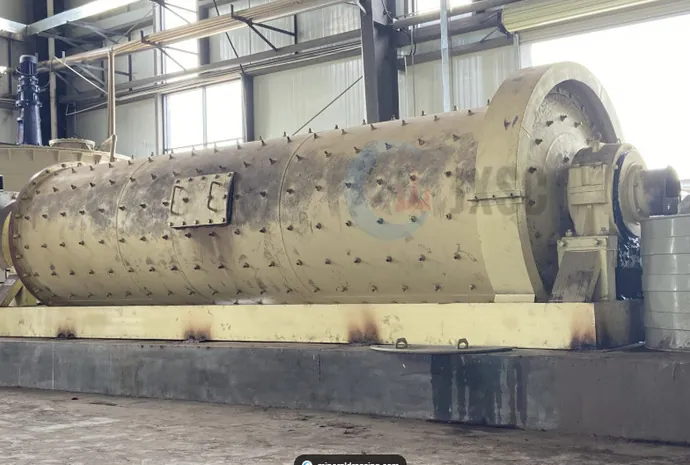
Ball mills, tanks, silos, thickeners and flotation cells all have to be entered, inspected or worked on — most often during maintenance, shutdowns and turnarounds, when the crew is largest and the window is shortest.
Anchors · Horizontal lifelines · Davit arms for tank and vessel access · Confined space entry
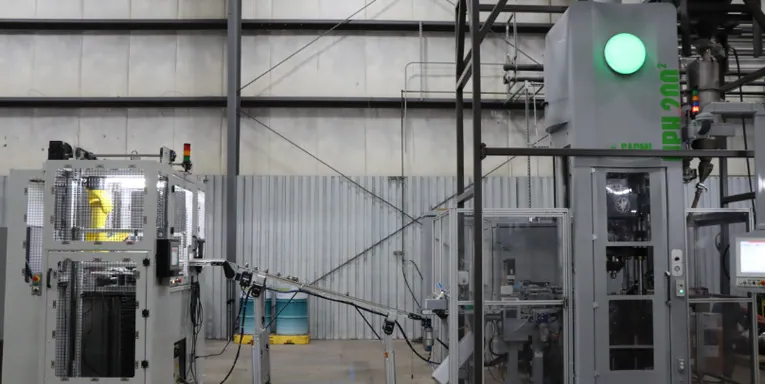
Continuous process equipment gets accessed on the run and on the turnaround: drive ends, transfer points, gallery walkways and the cleanout access nobody plans for.
Overhead rigid rail · Horizontal lifelines · Anchors · Guardrail
Most of this work happens on a turnaround. The time to engineer the protection is before the shutdown — not during it.
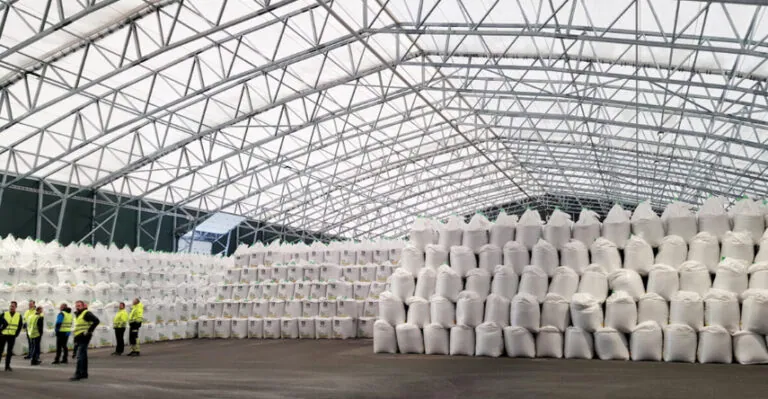
Catwalks, sorters and lift equipment inside storage sheds and bagging halls. Long spans, changing product levels underfoot, and housekeeping access at height.
Horizontal lifelines · Guardrail · Access platforms and walkways
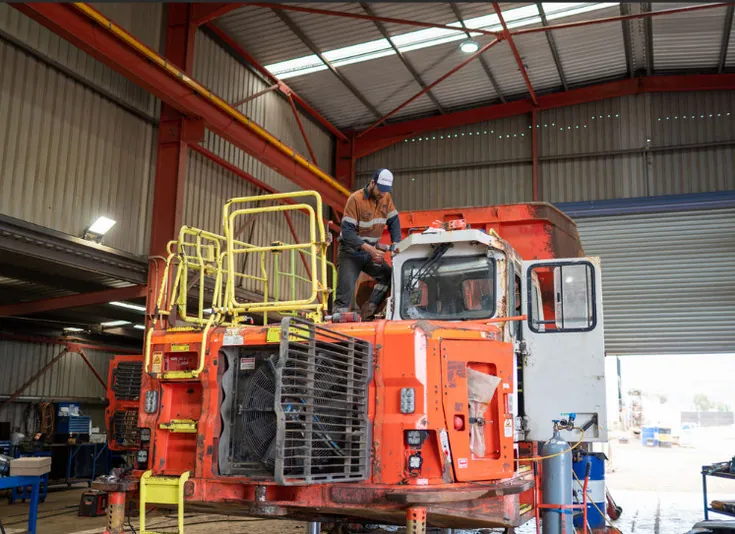
Haul trucks and loaders, worked on from above, daily. Deck-height access on a machine that changes shape as it is dismantled — one of the highest-frequency exposures on any site.
Overhead rigid rail · Access platforms and stairs · Guardrail · Anchors
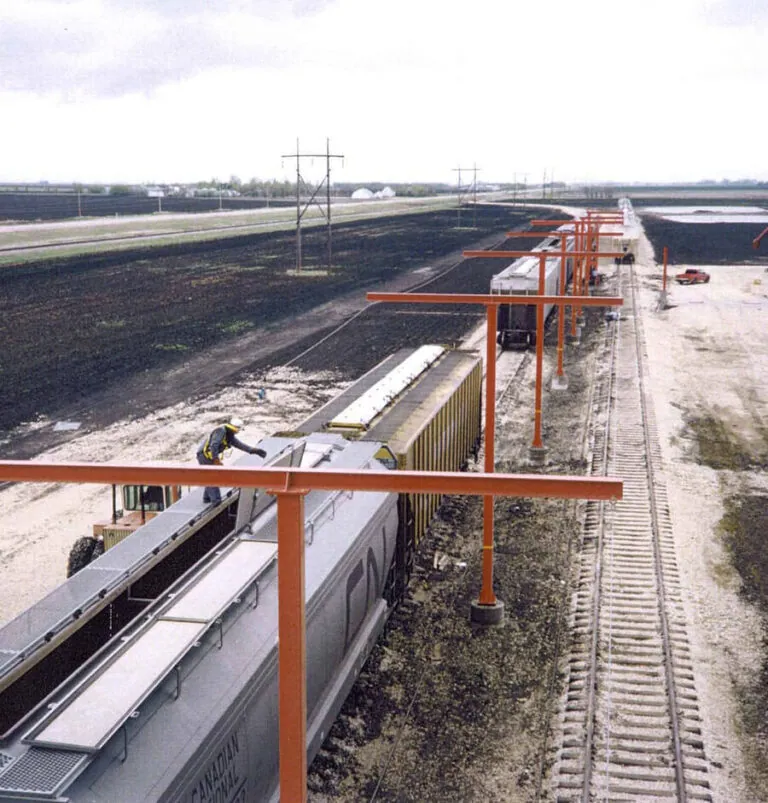
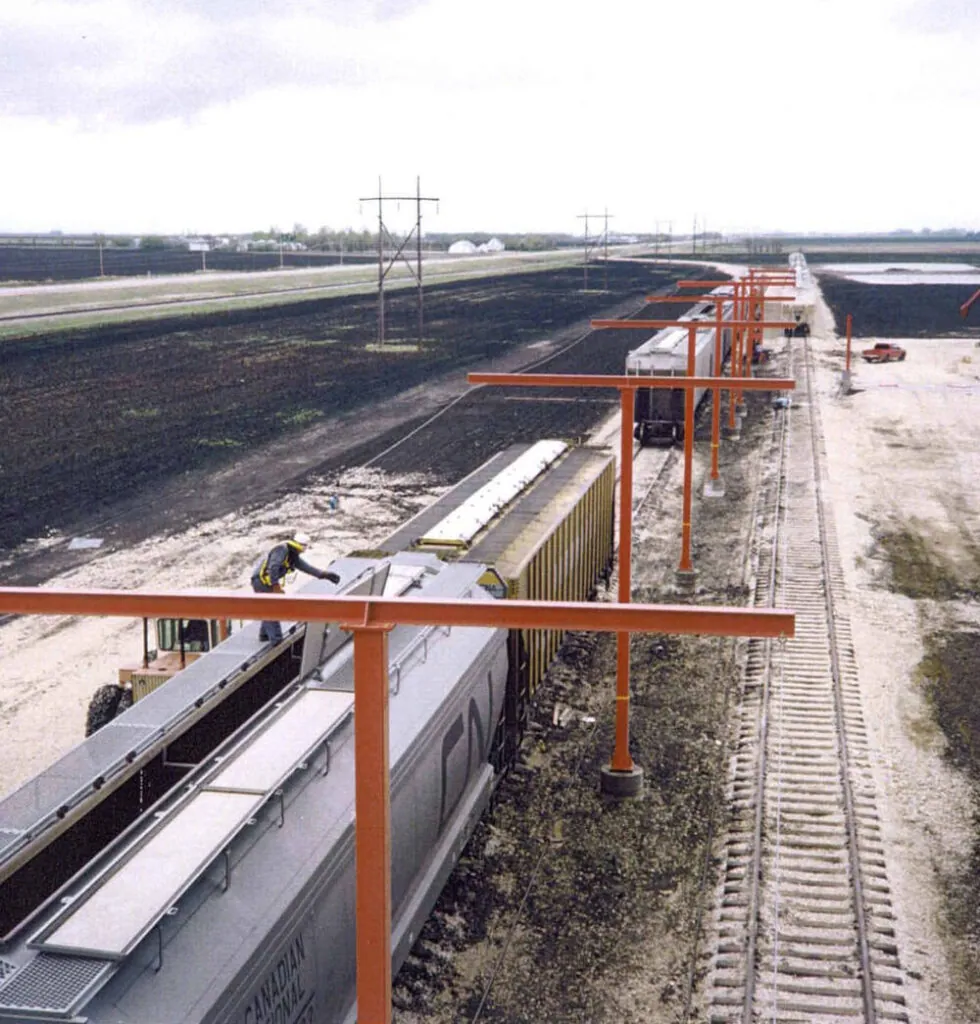
Product receiving and loading — the application our very first system solved, in 1993, and still the one we are asked for most.
Overhead rigid rail · Horizontal lifelines · Railcar and truck loading access · Mobile units
Service bays and loading racks are where our first system went in — and still where most sites carry the most exposure.
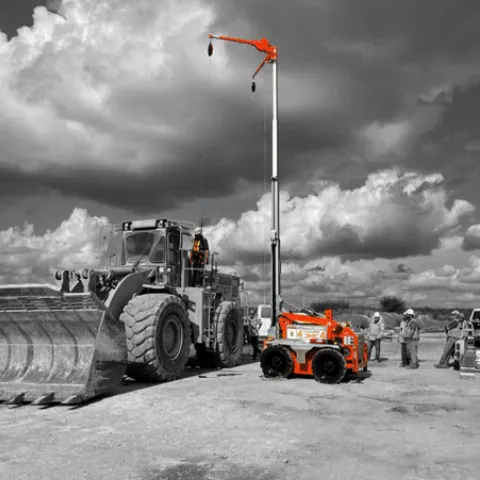
Not every exposure justifies a permanent installation. Where work moves, or happens once a year, a mobile unit puts certified protection exactly where the job is.
Mobile anchor and mast units · Portable guardrail · Temporary lifelines
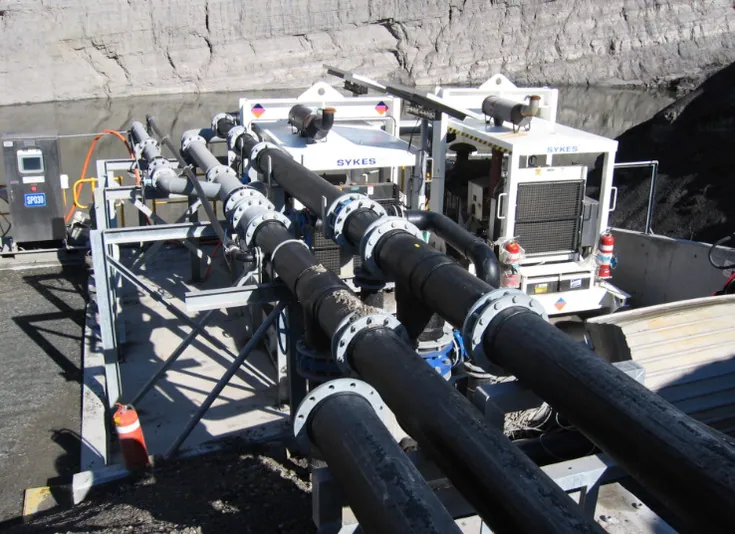
Pipe racks and well injection sites. Dispersed, remote, lightly staffed — and routinely accessed for valve work, sampling and maintenance with nothing overhead.
Horizontal lifelines · Certified anchors · Mobile units · Access platforms
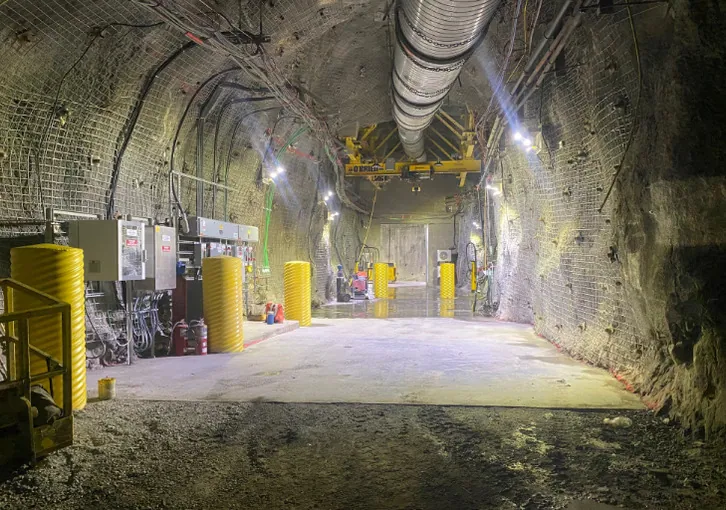
Service bays for haulers and diggers, shops and portal infrastructure. Permanent anchorage where the ground allows it; mobile solutions where it does not.
Certified anchors, permanent or mobile · Overhead rigid rail · Access platforms
Who regulates it
Fall protection on U.S. mine property — including the mill and preparation plant — is regulated by the Mine Safety and Health Administration under 30 CFR, not by OSHA. The operative standards are 30 CFR 56.15005 (surface metal and nonmetal mines), 30 CFR 57.15005 (underground metal and nonmetal mines) and 30 CFR 77.1710(g) (surface coal mines and surface areas of underground coal mines). Each requires safety belts and lines to be worn wherever there is a danger of falling; MSHA does not set a trigger height the way OSHA’s general industry rule does, so the exposure assessment carries more weight, not less.
Where OSHA and MSHA jurisdiction meet — for example, an off-site processing or shipping facility — the split follows the MSHA–OSHA interagency agreement, and the assessment documents which regime governs each area.
ANSI/ASSP Z359 remains the consensus standard for how systems and equipment are designed, tested and inspected, and Tritech engineers to it regardless of which agency inspects the site. In Canada, mine sites fall under provincial mining and occupational health and safety regulation, with CSA Z259 governing equipment and system design.
| Question | Answer |
|---|---|
| Who inspects fall protection at a U.S. mine? | MSHA, under 30 CFR Parts 56, 57 and 77 (contractors on mine property included). |
| Is there a trigger height? | Not in the MSHA rule; the requirement applies wherever there is a danger of falling. |
| What design standard applies? | ANSI/ASSP Z359 (U.S.) and CSA Z259 (Canada) as consensus standards; PE/P.Eng. stamp in the state or province of installation. |
Systems we install
No two mine sites present the same problem. These are the system families we design, supply, install and certify — selected and combined to fit the structure, the task and the frequency of access.
| System family | Where it fits on the site | Pages |
|---|---|---|
| Overhead rigid rail | Haul truck and loader service bays, railcar and truck loading racks, conveyor drive ends; low-clearance, near-zero fall distance | Rigid rail systems |
| Engineered horizontal lifelines, permanent and temporary | Pipe racks, building roofs, thickener and gallery walkways, long spans | Horizontal lifeline systems |
| Railcar and truck loading access | Loadout and receiving, tarping and hatch work | Railcar and transportation |
| Free-standing and permanent guardrail | Roof edges, silo tops, bagging halls, plant perimeters | Non-penetrating roof guardrail Ground based guardrail |
| Davit arms for tank and vessel access | Flotation cells, thickeners, storage tanks, reaction vessels; entry and retrieval | Davit arm systems |
| Certified anchor points, permanent and mobile | Roofs, structural steel, equipment-mounted, underground where ground allows | Anchorage systems Permanent anchor system |
| Access platforms, stairs and walkways | Storage sheds, crushers, service bay decks | Platform systems Static platforms |
| Mobile and temporary fall protection units | Open-pit field maintenance, well fields, once-a-year tasks | Mobile platforms Mobile stairs systems |
How we work
Site walk, hazard identification, elimination options first
Customised to the structure and the task, not a catalogue fit
PE-stamped drawings in the state or province of installation
Single source — one contract, one point of liability
Manufacturer-trained, certified dedicated technicians
Inspection, certification, training and O&M for the life of the system
Team up with Tritech
Our clients trust us like one of their own team. That only happens when the engineering is right the first time and the same team is still there ten years later.
FAQ
MSHA, for anything on mine property including the mill. OSHA general industry rules apply only where MSHA jurisdiction ends. The assessment records which regime governs each area so the documentation matches the inspector who shows up.
Yes, and it is how most mine-site systems go in. The design and fabrication happen before the outage; the install crew is scheduled to the turnaround. Engineering the system during the shutdown is what we work to avoid.
Yes. Tritech operates from Orlando, Florida and Calgary, Alberta, with territory managers across the U.S. and Canada. Drawings are stamped by a professional engineer licensed in the state or province of installation.
A walk of the pit, plant, shop or well field with your team; identification and ranking of every exposure; elimination or engineering-control options first; and a written summary you can act on with or without us.
Yes. Existing systems can be inspected, recertified and, where the engineering supports it, brought onto a scheduled inspection programme.
Downloads
Brochure
Fall protection for open pit, underground, in-situ and dredging sites: where mine exposure concentrates and the engineered systems Tritech installs for it.
Start here
Tell us where your people work at height and we will walk it with you — pit, plant, shop or well field. The assessment identifies every exposure, ranks it, and looks first at whether the hazard can be eliminated outright, before any system is proposed.
Prefer to talk?