


SOLUTIONS
Weighted Roof Anchor System
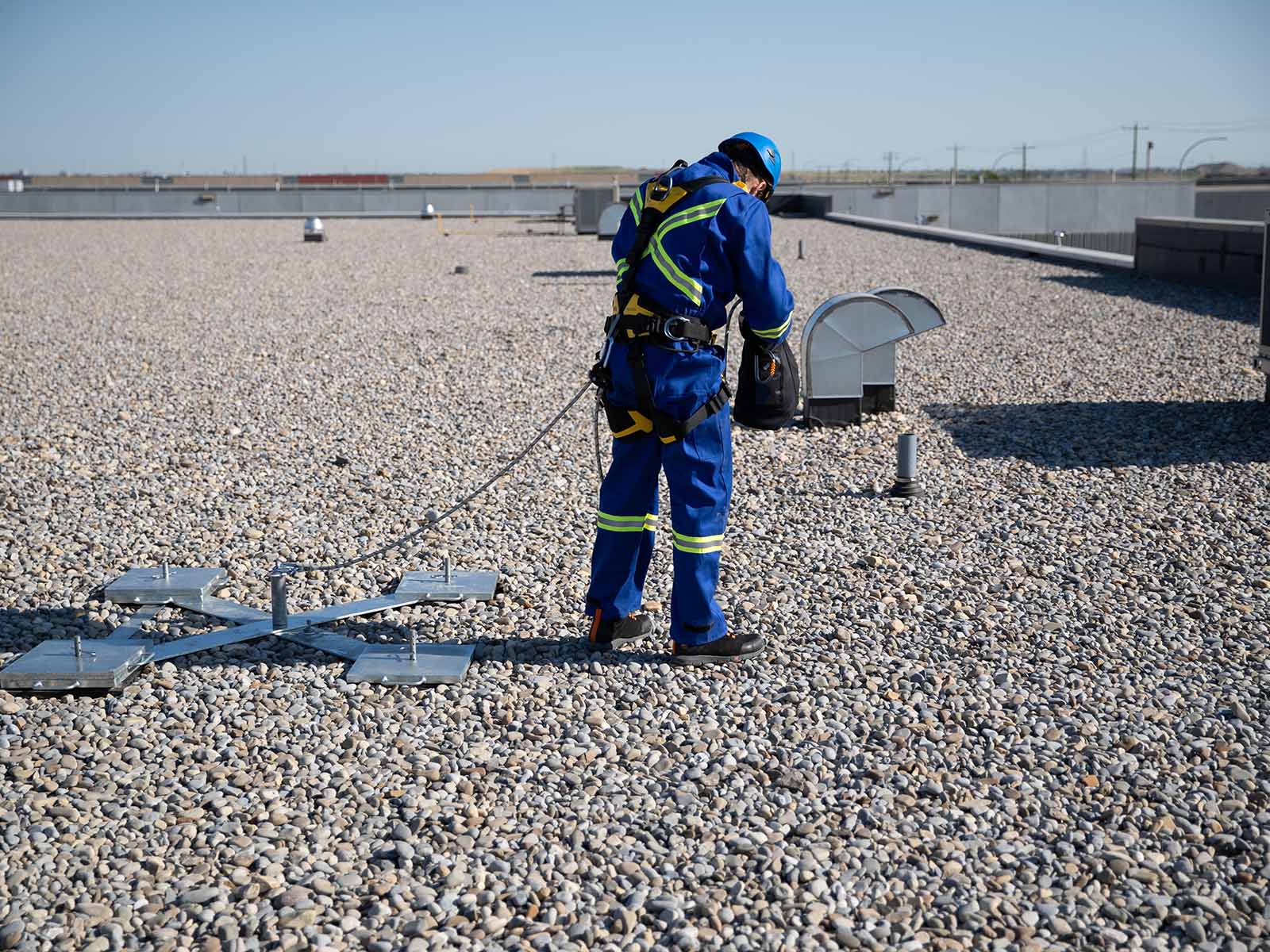
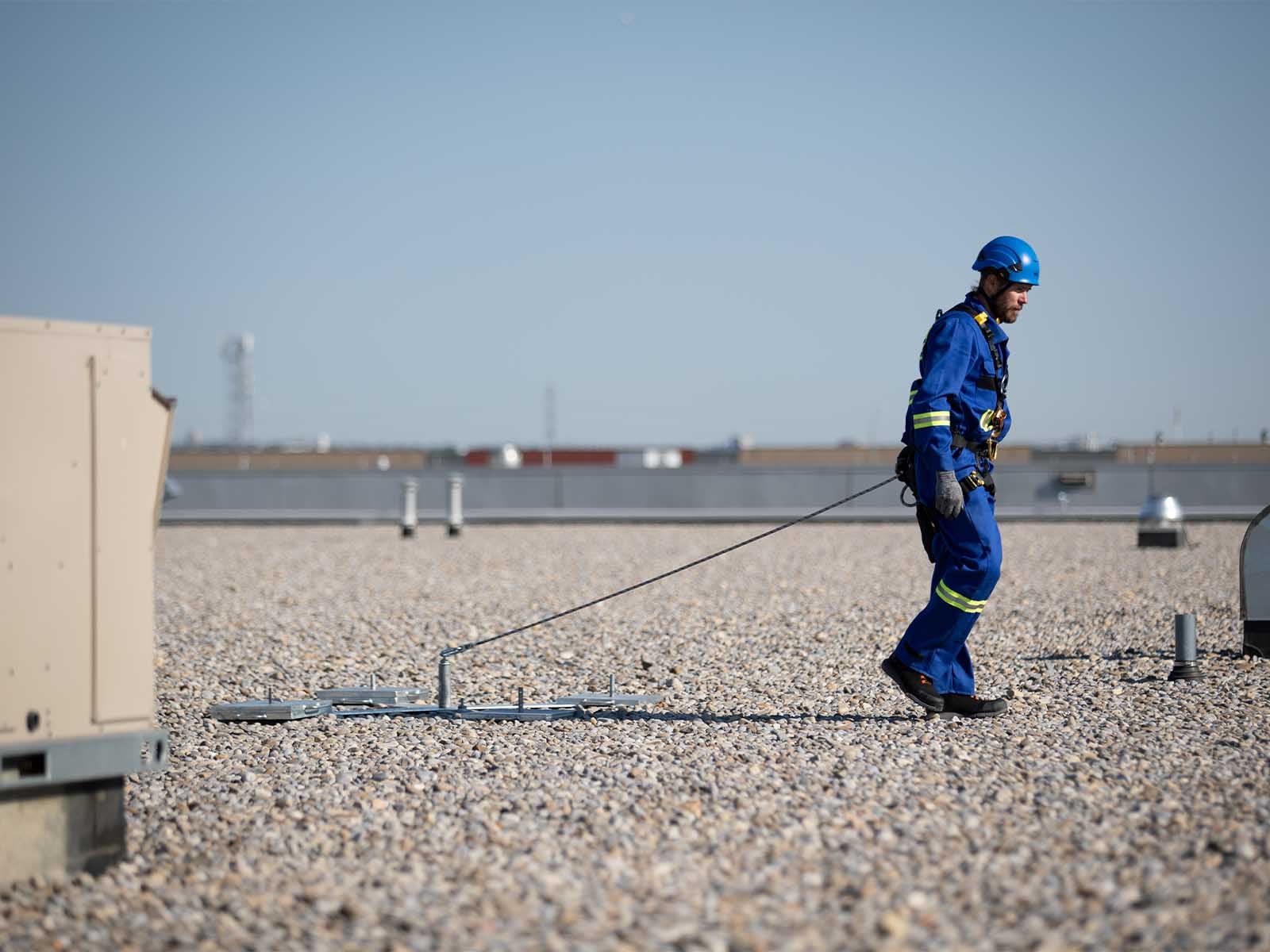
A Portable, OSHA-Compliant Anchor Designed for Safety and Versatility
Worker Safety First
Creates a certified anchor point for fall arrest equipment, helping keep workers secure during rooftop maintenance, inspections, or repairs.
Preserves Building Integrity
Because it’s freestanding, the system can be placed where needed without drilling or mounting, making it suitable for sensitive or finished surfaces.
Quick Setup, Maximum Versatility
Engineered for fast and easy setup, this weighted anchor system works well for modular projects, rental spaces, or changing work areas.




PROBLEMS WE SOLVE
Safe Access Without Structural Modifications
Not every job allows for permanent anchor points. Whether you’re working on a leased facility or short-term project, a weighted anchor system delivers trusted fall protection that adapts to your workflow.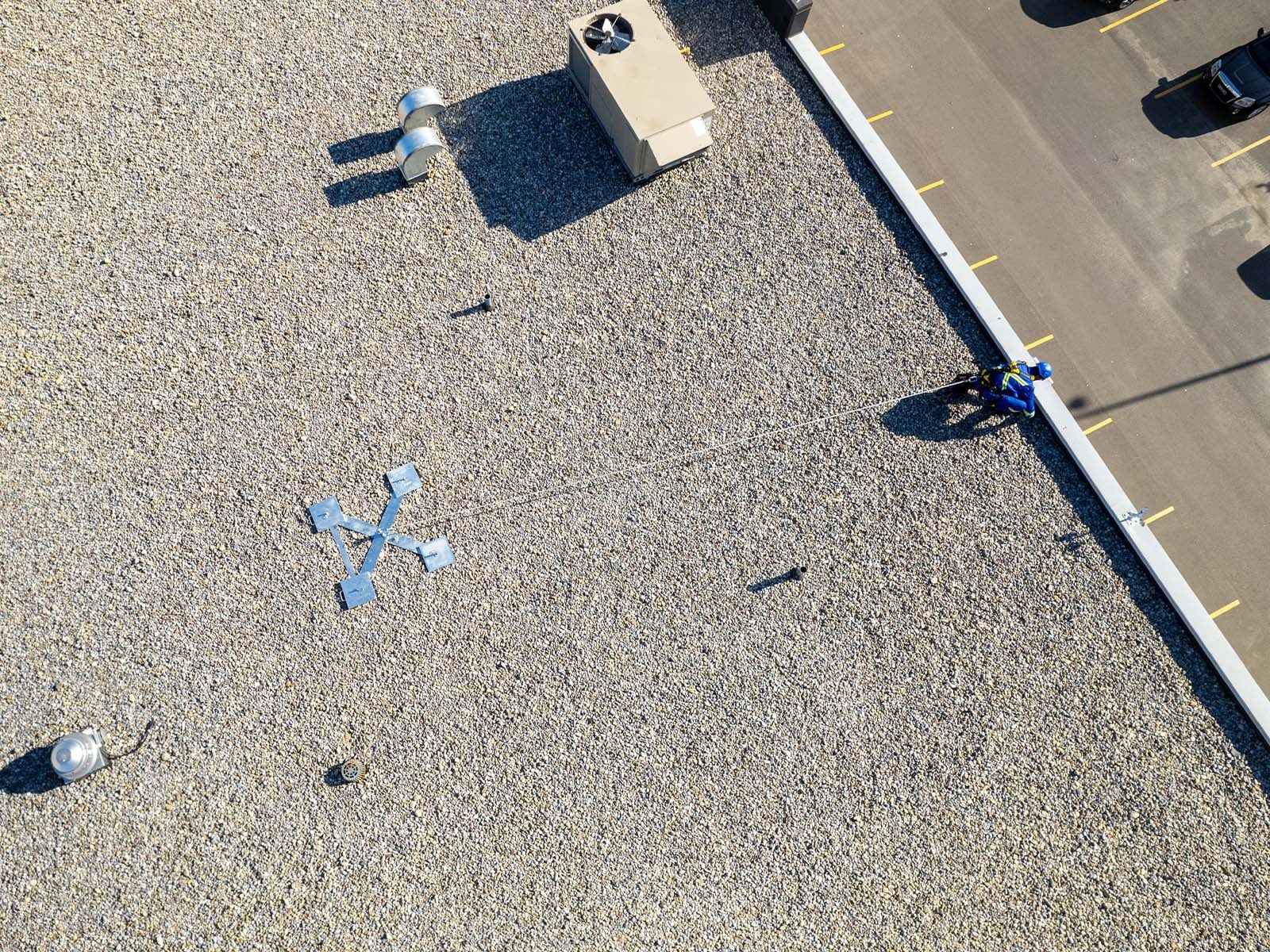
Areas of Application for Weighted Anchor Systems
- Building Access & Maintenance
- Energy & Utilities
- Manufacturing
- Infrastructure Development
- Government & Military

Building Access & Maintenance

Energy & Utilities

Manufacturing

Infrastructure Development
Government & Military


Answers to
Key Questions
What is the OSHA 5000 lb requirement?
OSHA requires an anchorage used for personal fall arrest to support at least 5,000 pounds for each employee attached, or to be designed, installed, and used under the supervision of a qualified person as part of a complete personal fall arrest system that maintains a safety factor of at least two (29 CFR 1910.140(c)(13) general industry; 29 CFR 1926.502(d)(15) construction). A weighted anchor system complies through the engineered path: dead weight arranged in an engineered geometry resists the forces of an arrested fall with no connection into the roof structure. That only works when a qualified person has run the design for the specific roof and surface, so the calculations belong with the system as its compliance record.
What are the 4 types of fall protection?
Fall protection generally sorts into four approaches: elimination or prevention (removing the hazard or guarding it with passive systems like guardrails), fall restraint (keeping a worker back from the edge so a fall cannot start), fall arrest (stopping a fall in progress with a harness, connector, and anchor), and administrative controls (warning lines, training, and procedures). A weighted anchor system serves the restraint and arrest tiers on roofs where nothing can penetrate the membrane and no structure exists to fasten to. Used in restraint mode, it keeps the worker from reaching the edge at all, which is the stronger position.
What is the minimum height for fall protection?
OSHA’s general industry standard sets the trigger at 4 feet above a lower level (29 CFR 1910.28(b)(1)); construction work triggers at 6 feet (29 CFR 1926.501(b)(1)). Roof maintenance on an existing building is general industry work, so the 4-foot duty applies to the crews a weighted anchor system protects. Tritech designs and installs weighted systems where the roof warranty or the deck rules out penetrations.
CONTACT
Protect Your People—With Anchors That Work Anywhere
Let us help you implement a secure, flexible fall protection solution that’s built for safety and built around your site.
Let’s Discuss Your Project
"*" indicates required fields