


SOLUTIONS
Dropdown Gangway System
A Height-Adjustable, OSHA-Compliant Access Solution for Safe Transfers Across Elevated Work Areas
Controlled Movement
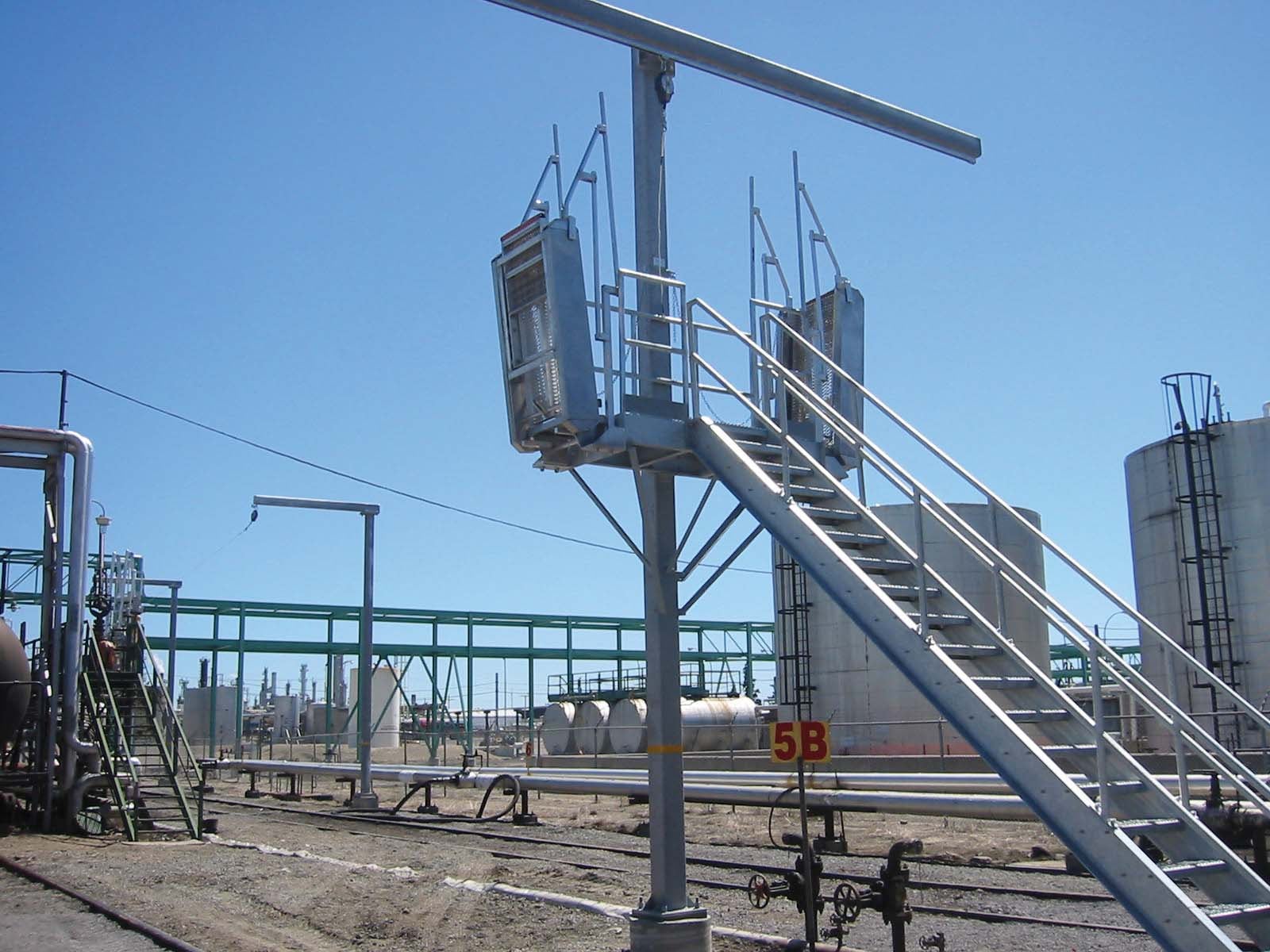
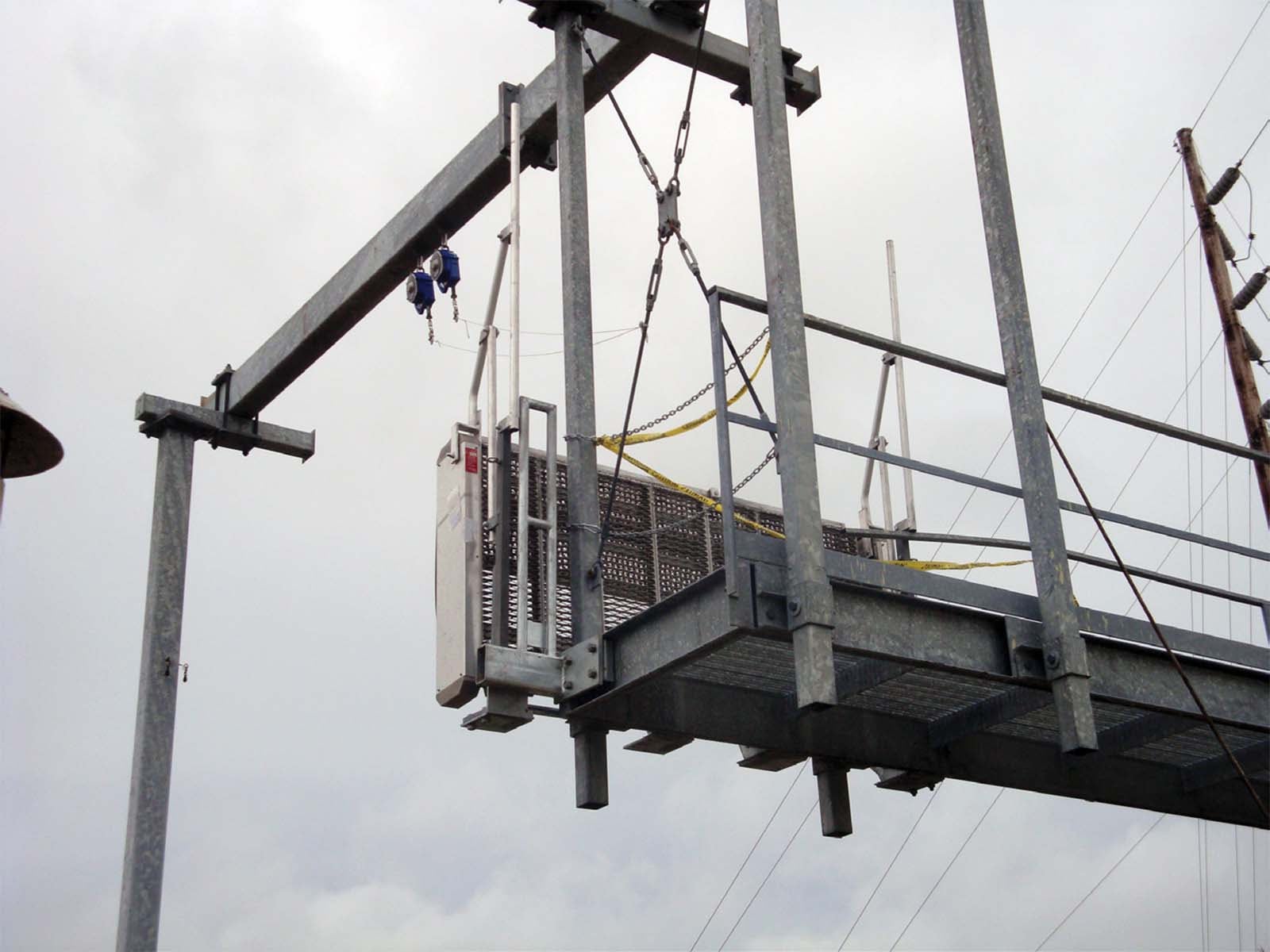
Designed with spring-balanced or counterweighted systems for smooth, stable raising and lowering with no sudden drops or shaky transitions.
Safe & Secure Platform Transition
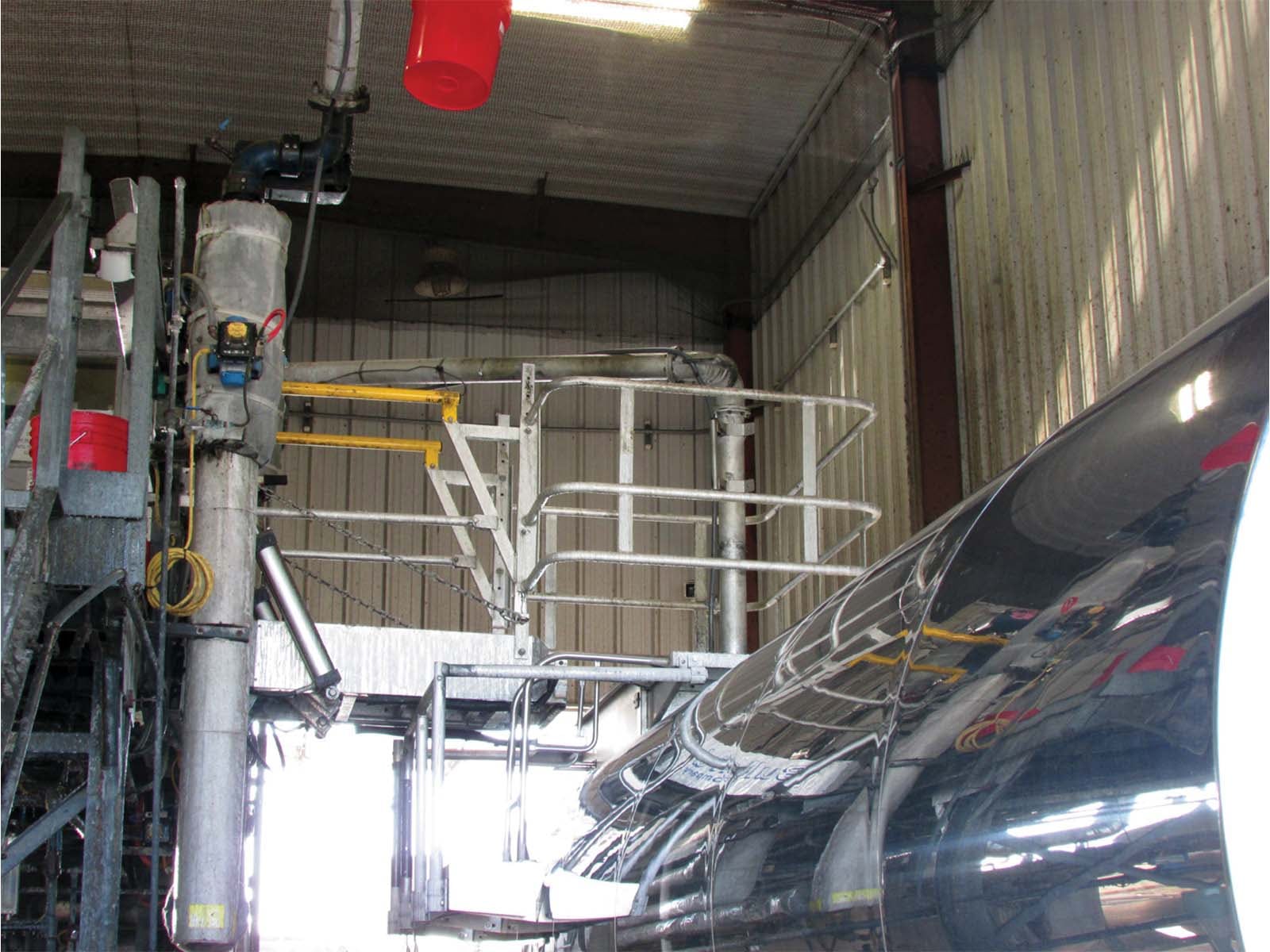
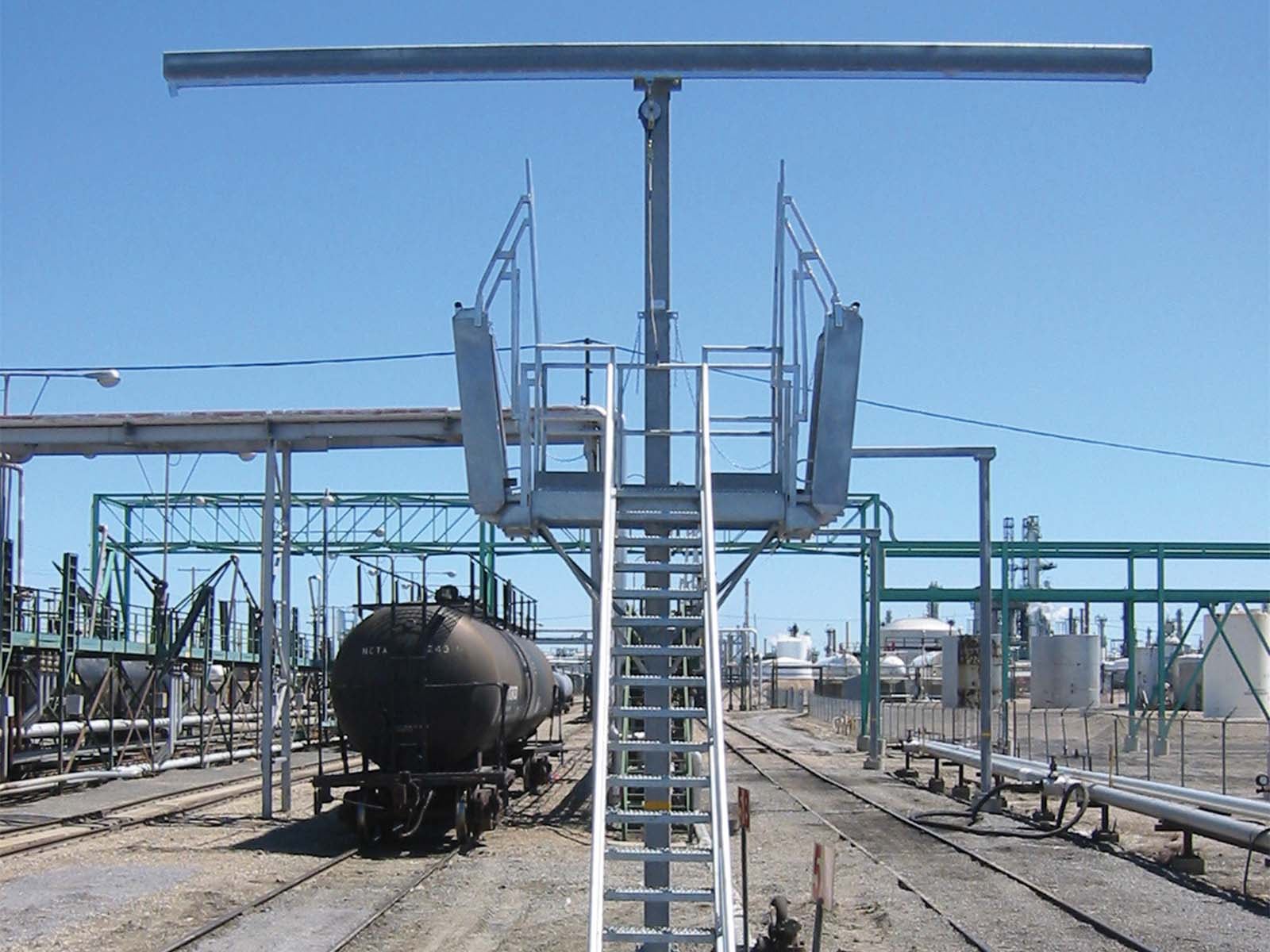
Designed with slip-resistant surfaces, handrails, and optional safety cages, our platforms help reduce the risk of falls during step-over movements. Available in both fixed (static) configurations and tracking gangway systems that can be rolled along the elevated platform to align precisely with truck or railcar hatch areas.
Built for Demanding Environments
Made to handle tough conditions and built in line with OSHA and ANSI fall protection standards.


PROBLEMS WE SOLVE
Safe Access Between Platforms and Mobile Equipment
Stepping between different levels, like from a raised platform onto a truck or rail car can be risky without the right setup. Dropdown gangways create a sturdy, secure bridge that helps prevent slips, missteps, and falls. They’re especially useful in busy work environments where workers are constantly loading and unloading trucks and railcars; it’s essential to have safe and efficient ways to move between surfaces. Whether it’s in manufacturing, transportation, or energy, these systems make sure your team can move safely and confidently.
Areas of Application for Dropdown Gangways
- Railcar & Transportation
- Supply Chain Management
- Manufacturing
- Energy & Utilities
- Government & Military

Railcar & Transportation

Supply Chain Management

Manufacturing

Energy & Utilities
Government & Military


Answers to
Key Questions
Are elevated platforms considered fall hazards?
Yes. OSHA requires fall protection on any walking-working surface with an unprotected side or edge 4 feet or more above a lower level in general industry (29 CFR 1910.28(b)(1)), and the top of a tank truck or railcar sits well past that trigger. A dropdown gangway addresses the exposure at its worst point: it bridges from the loading platform onto the vehicle and lowers a guarded walking surface, often with a safety cage, over the work area. The worker loads or samples from inside passive protection instead of standing on an unguarded vehicle top.
What are the OSHA guidelines for platforms?
Loading platforms are walking-working surfaces under 29 CFR 1910 Subpart D: fall protection at 4 feet or more above a lower level (29 CFR 1910.28(b)(1)), with guardrail built to 29 CFR 1910.29(b) (top rail at 42 inches, plus or minus 3 inches, rated for 200 pounds of outward or downward force) as the standard control. The gangway extends that protection past the platform edge, so the guarded surface follows the worker onto the truck or railcar.
What is the OSHA 4 foot rule?
The 4-foot rule is the general industry trigger under 29 CFR 1910.28(b)(1): employers must protect workers at unprotected sides and edges 4 feet or more above a lower level. Loading racks, terminals, and transload facilities operate under general industry, so the rule governs every gangway cycle. Tritech engineers gangway and platform systems to the rack, the fleet, and the clearances involved.
CONTACT
Bridge the Gap Safely with a Dropdown Gangway
Let us help you design a safe, easy-to-use gangway system that fits your needs and keeps your team protected.
Let’s Discuss Your Project
"*" indicates required fields