


SOLUTIONS
ADA Railing
A Safe, Code-Compliant Handrail System for Public & Commercial Spaces
Smooth, Continuous Design
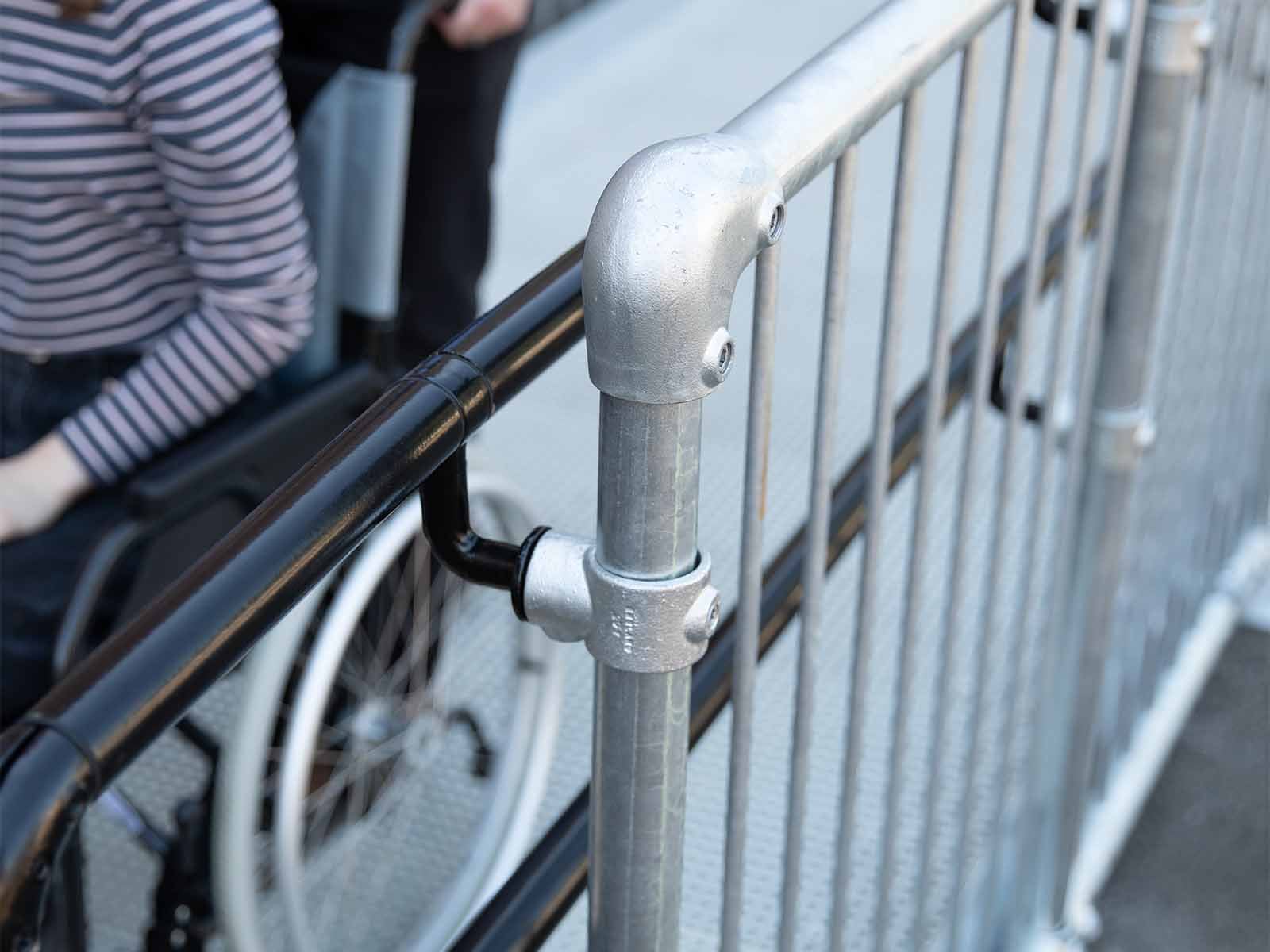
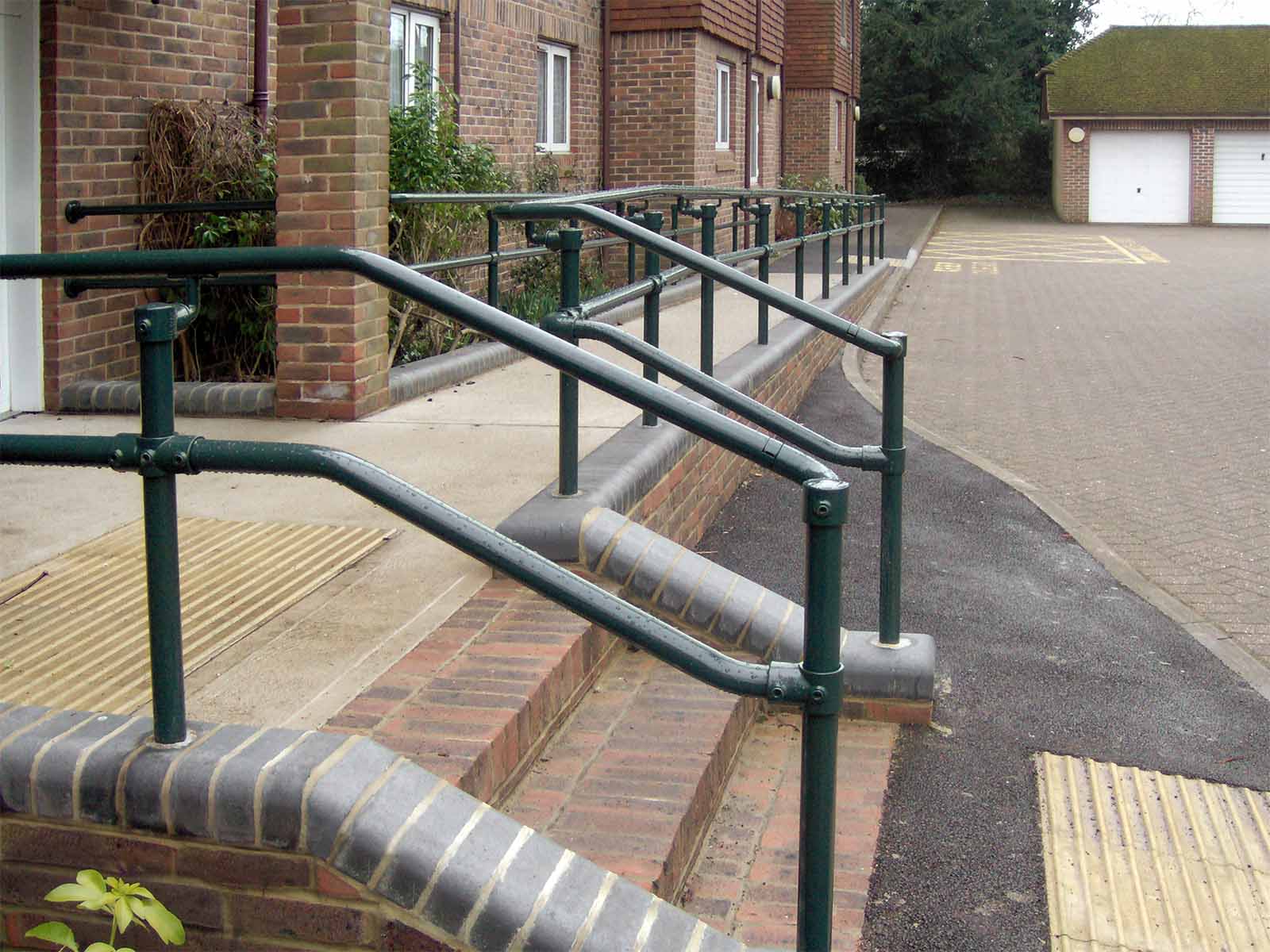
The system features a non-slip, continuous gripping surface, ensuring uninterrupted hand support and compliance with ADA standards for accessibility.
Easy to Install and Adapt
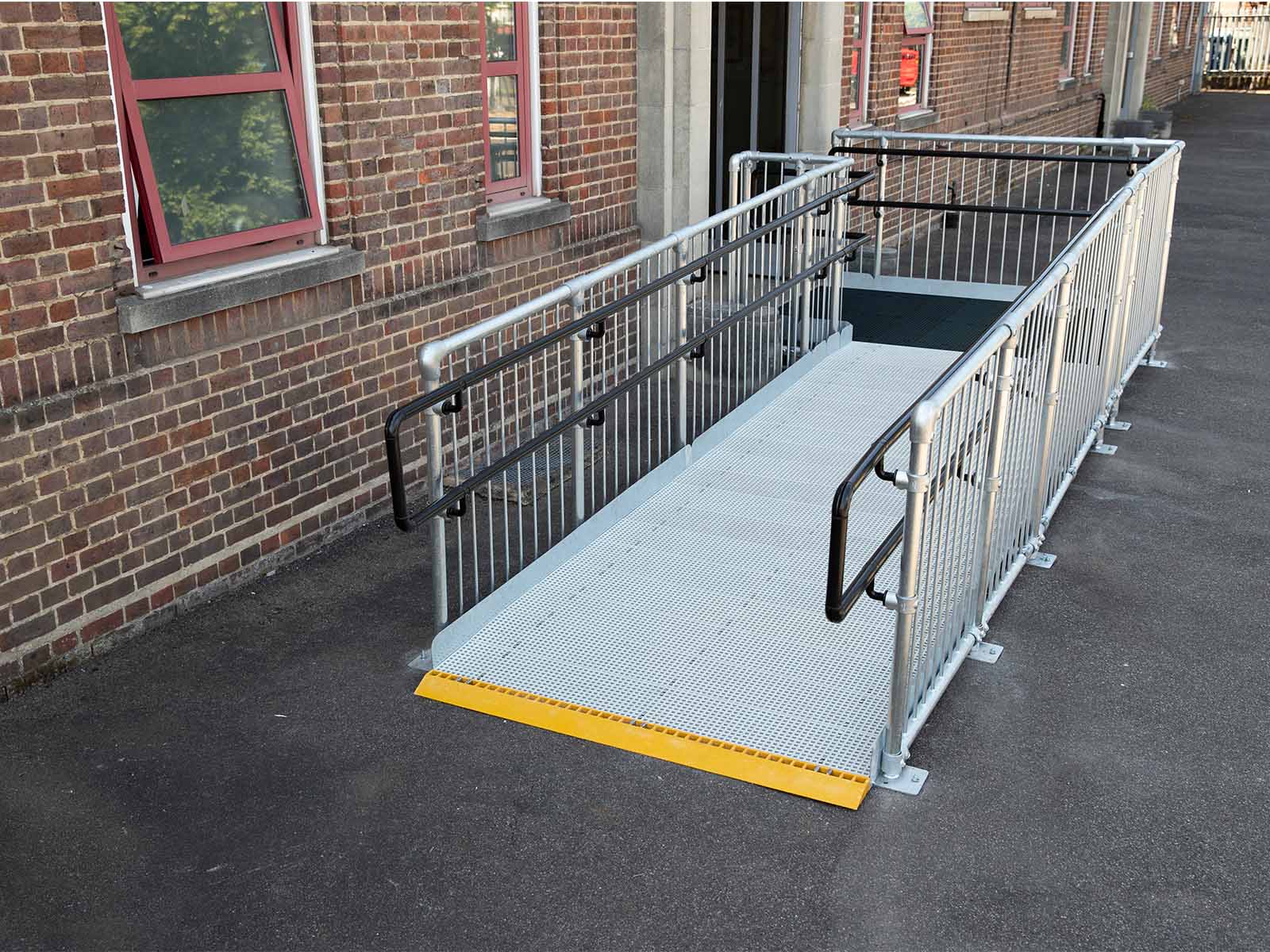
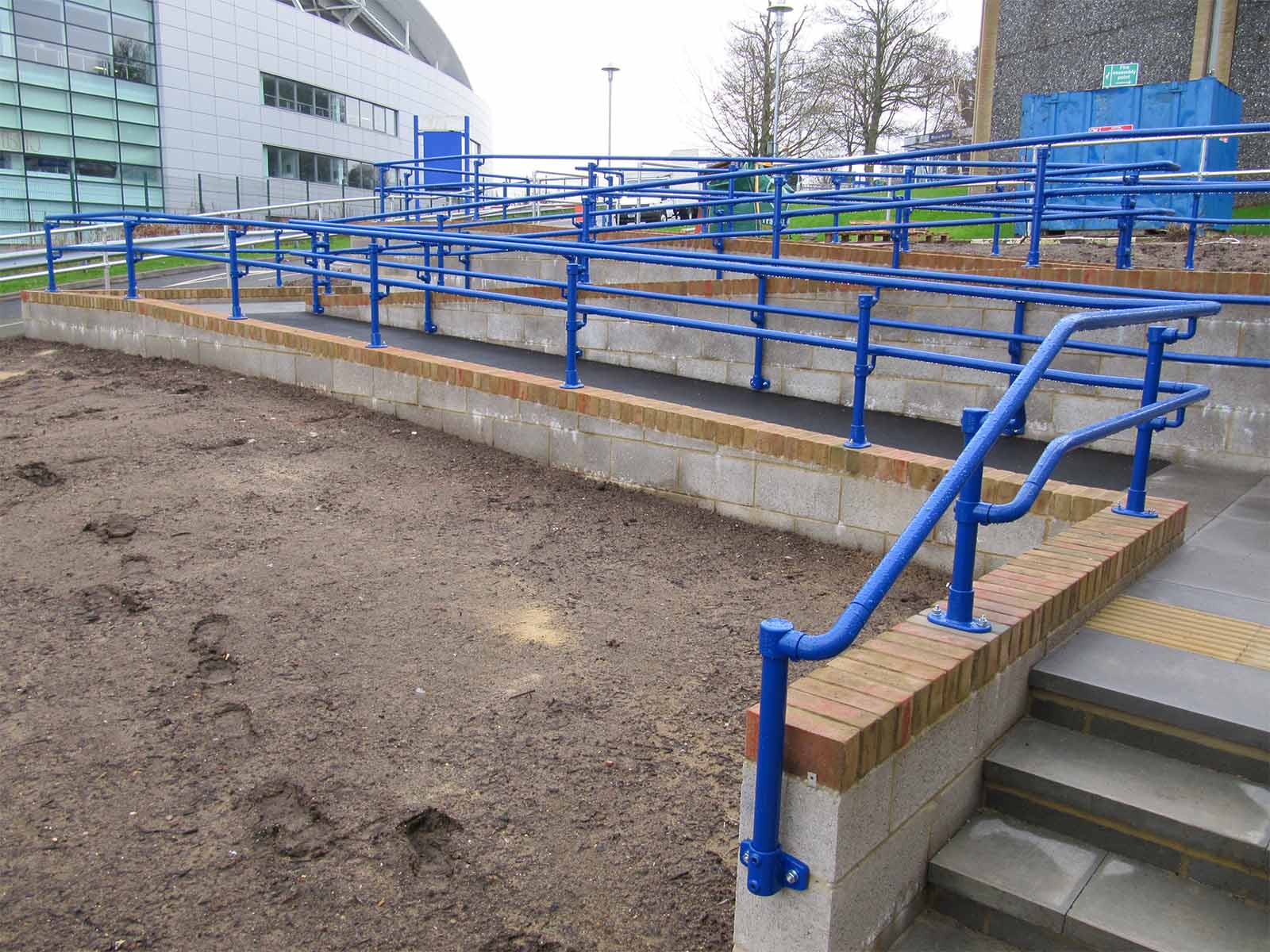
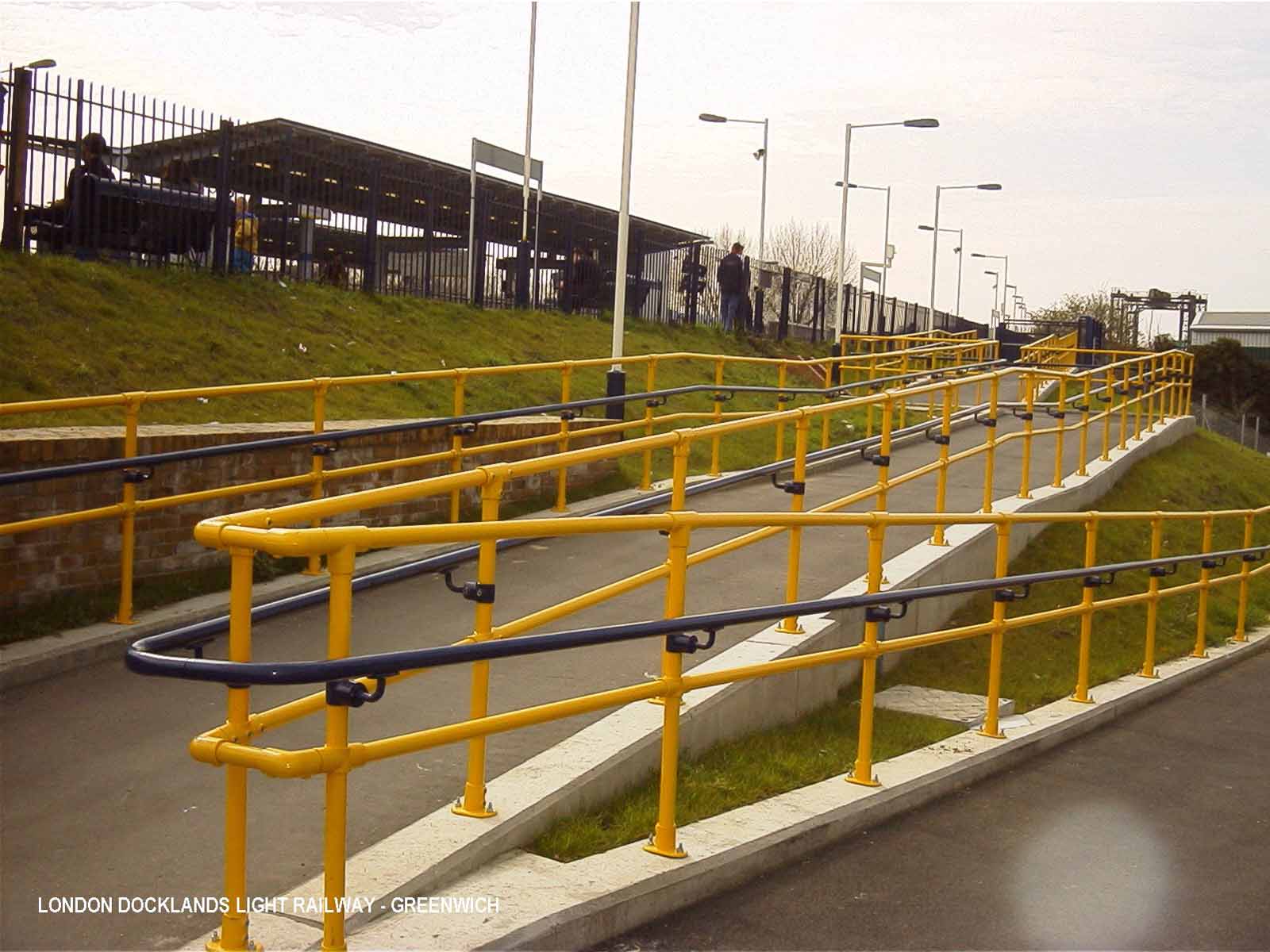
This railing system is fully modular, allowing for simple, welding-free installation, expansion, or fitting onto existing staircases, ramps, and walkways.
Code-Compliant
Engineered to meet ADA Standards for Accessible Design and OSHA regulations, this railing system ensures compliance for public infrastructure, businesses, and workplaces.
PROBLEMS WE SOLVE
Making Spaces Accessible & Safe
Many buildings and public areas lack proper handrails, creating a safety risk for individuals with disabilities and failing to meet compliance requirements. An ADA-compliant railing system ensures safe, stable support on ramps, stairs, and walkways, preventing falls and improving accessibility for everyone.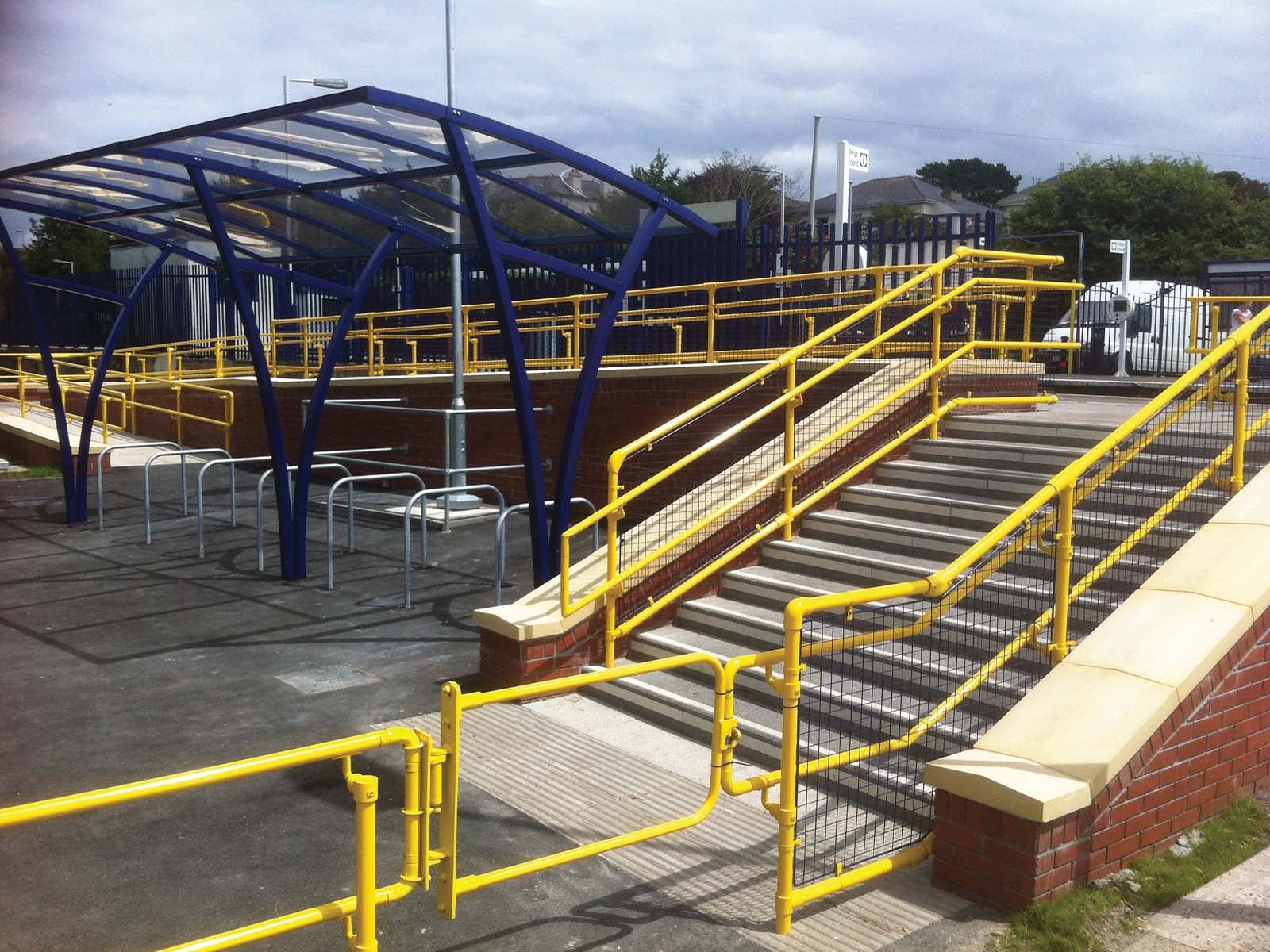
Areas of Application for ADA Railings
- Infrastructure Development
- Education
- Theme Park, Stadium and Theater
- Government and Military
- Building Access and Maintenance

Infrastructure Development

Education

Theme Park, Stadium and Theater
Government and Military

Building Access and Maintenance


Answers to
Key Questions
What is the OSHA requirement for the top guardrail?
Where a railing serves as a guard against a fall, OSHA requires the top rail at 42 inches, plus or minus 3 inches, above the walking surface, able to withstand 200 pounds of outward or downward force (29 CFR 1910.29(b)). An ADA railing carries a second function: the ADA Standards for Accessible Design govern the handrail people grip for support on ramps and walkways. A single railing system frequently has to satisfy both, an accessibility handrail at grip height and a guard at OSHA height, and Tritech engineers ADA railing to meet the two functions in one assembly.
At what height is fall protection required?
Under OSHA’s general industry standard, fall protection is required at 4 feet above a lower level (29 CFR 1910.28(b)(1)); on construction work, the trigger is 6 feet (29 CFR 1926.501(b)(1)). Ramps, raised walkways, and loading areas at permanent facilities fall under general industry, so wherever the drop beside a ramp or walkway reaches 4 feet, the railing must function as a guard, not only as a handrail.
What are the 4 types of fall protection?
Fall protection is usually grouped by the hierarchy of controls: elimination, passive prevention (guardrails, covers, and other physical barriers that need no worker action), active fall restraint or fall arrest (harness-and-anchor systems), and administrative controls (warning lines, training, and procedures). A fixed railing along a ramp or walkway is passive prevention: it protects every person who uses the route, employees and visitors alike, without any action on their part.
CONTACT
Ensure ADA Compliance with a Safe & Accessible Railing System
Our team is ready to help you implement a code-compliant, durable accessibility solution for your facility.
Let’s Discuss Your Project
"*" indicates required fields