


SOLUTIONS
Rigid Track Lifeline System
A Secure and Rigid Fall Protection Solution
Superior Fall Arrest Performance
The rigid rail system stays firm with little to no flex, stopping falls instantly and reducing the drop distance. This makes it ideal for low-clearance areas where a quick response is critical.
Smooth & Unrestricted Movement
The track system moves effortlessly along the track, letting workers travel freely and securely without resistance or interruptions while working at height.
OSHA & ANSI Compliance
Engineered to meet OSHA and ANSI ensuring safe and compliant fall protection in demanding work environments.


PROBLEMS WE SOLVE
Reducing Fall Risks in Overhead & Confined Workspaces
Cable lifeline systems, when properly designed and installed, provide an essential safety feature, but are subject to certain deflections under load. Rigid track systems stay firm, delivering immediate fall protection—especially in low-clearance environments where every inch counts.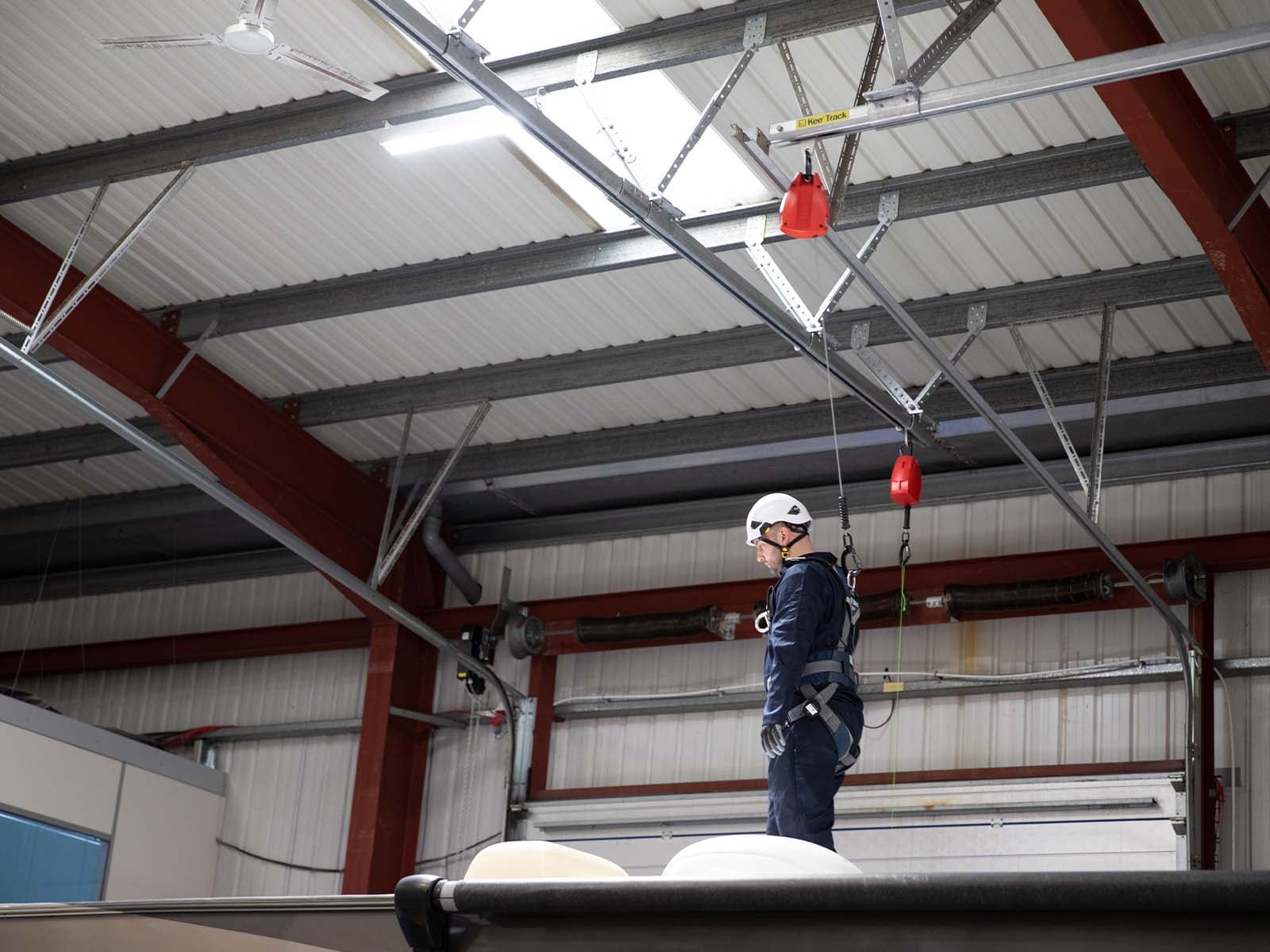
Areas of Application for Rigid Track Systems
- Manufacturing & Industrial Facilities
- Railcar & Transportation
- Supply Chain Management
- Energy & Utilities
- Government & Military

Manufacturing & Industrial Facilities

Railcar & Transportation

Supply Chain Management

Energy & Utilities
Government & Military


Answers to
Key Questions
What is the difference between a rigid rail carrier and a cable carrier?
A rigid rail carrier is a trolley that rides along a fixed, structural track that barely deflects under load. A cable carrier rides along a tensioned wire rope that stretches and sags when a fall is arrested. The rigid track arrests a fall in inches and holds the worker’s connection point high, which is why it suits low-clearance overhead spaces. A cable system flexes more and spans longer distances, which suits open rooftops where there is room below.
Who can install horizontal lifelines?
A horizontal lifeline, rigid or cable, must be designed, installed, and used under the supervision of a qualified person, per OSHA 29 CFR 1910.140(c)(11) and 1926.502(d)(8). Tritech manages the entire process: assessment, engineered design, installation by manufacturer-trained crews, and recertification.
Can a rigid rail system be customized for complex work areas?
Yes. Rigid track lifelines are modular and adaptable to curved layouts, tight spaces, and areas with overhead obstructions. A single track can be engineered for multiple users and pass-by capability, so a crew stays continuously attached across the span.
Does a rigid rail system comply with OSHA?
Yes. A properly engineered rigid rail system meets the criteria of OSHA 29 CFR 1910.140 and 1926.502 and is designed to the ANSI/ASSP Z359 series. Tritech documents the design basis so the system holds up under inspection.
CONTACT
Enhance Workplace Safety with a Rigid Track Lifeline System
Our team is ready to help you implement a code-compliant, high-performance fall protection solution for your facility.
Let’s Discuss Your Project
"*" indicates required fields