



SOLUTIONS
Metal Roof Guardrail
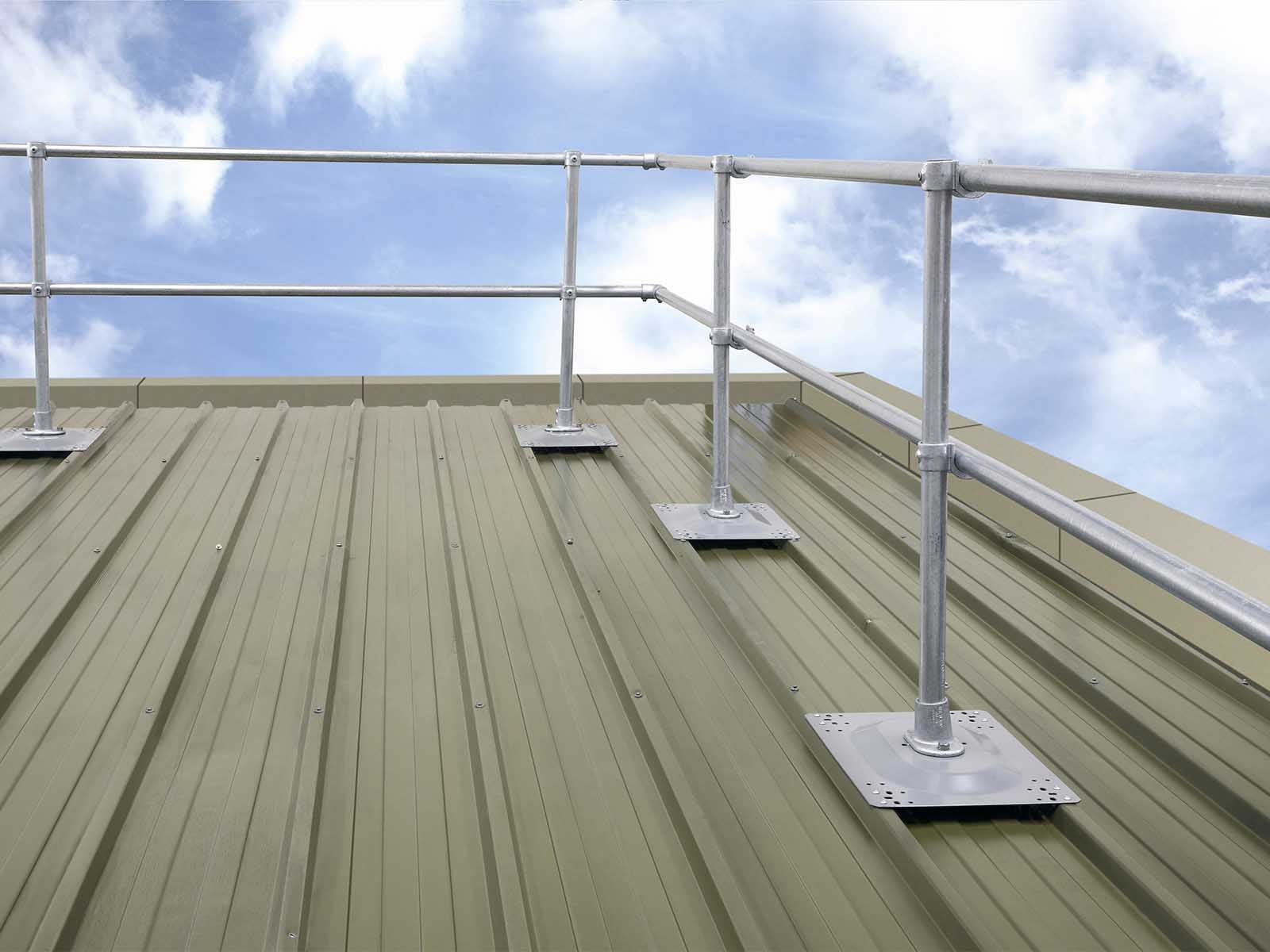
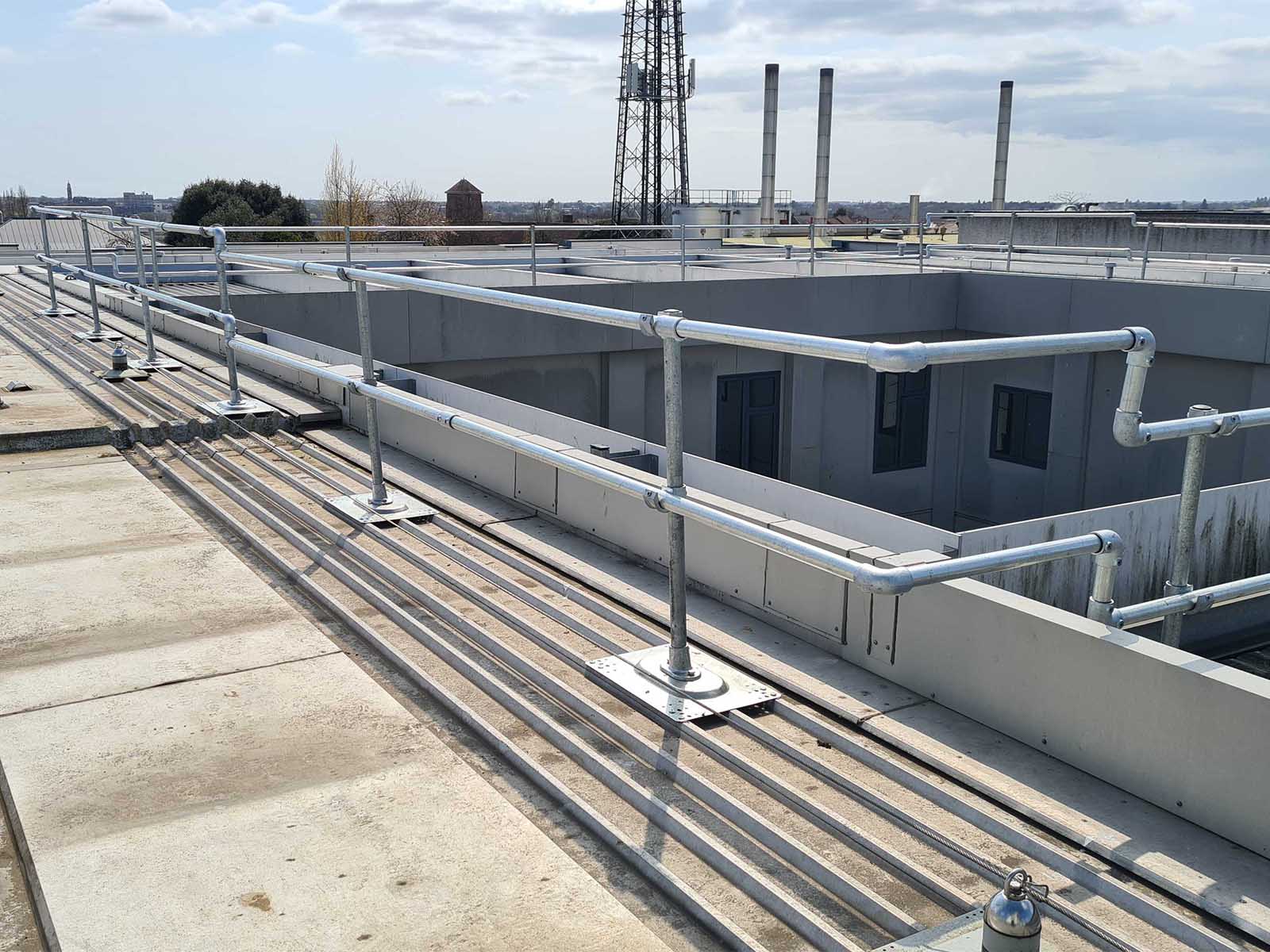
A Secure, Non-Penetrating Guardrail for Metal Roof Fall Protection
Non-Penetrating Attachment
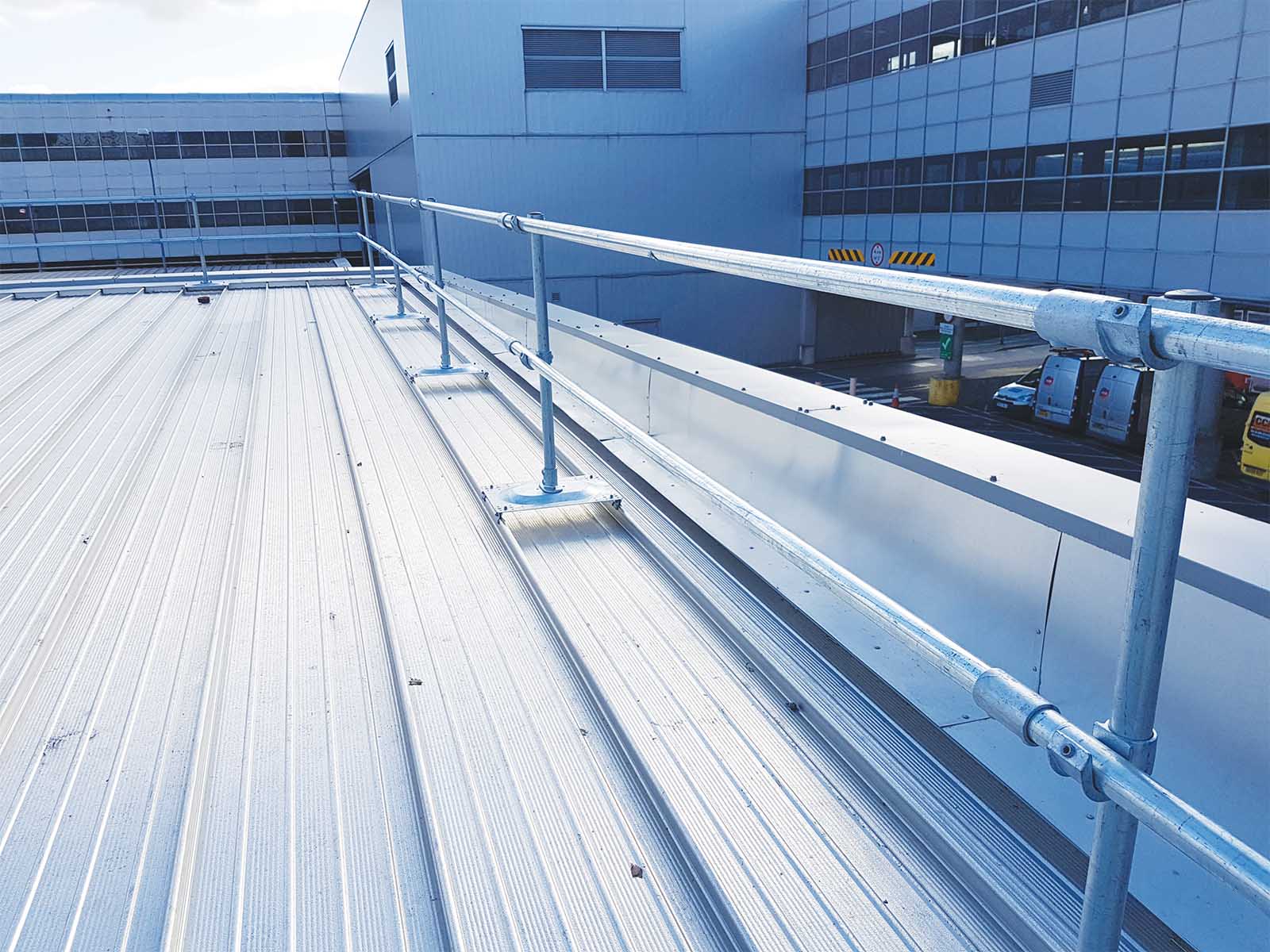
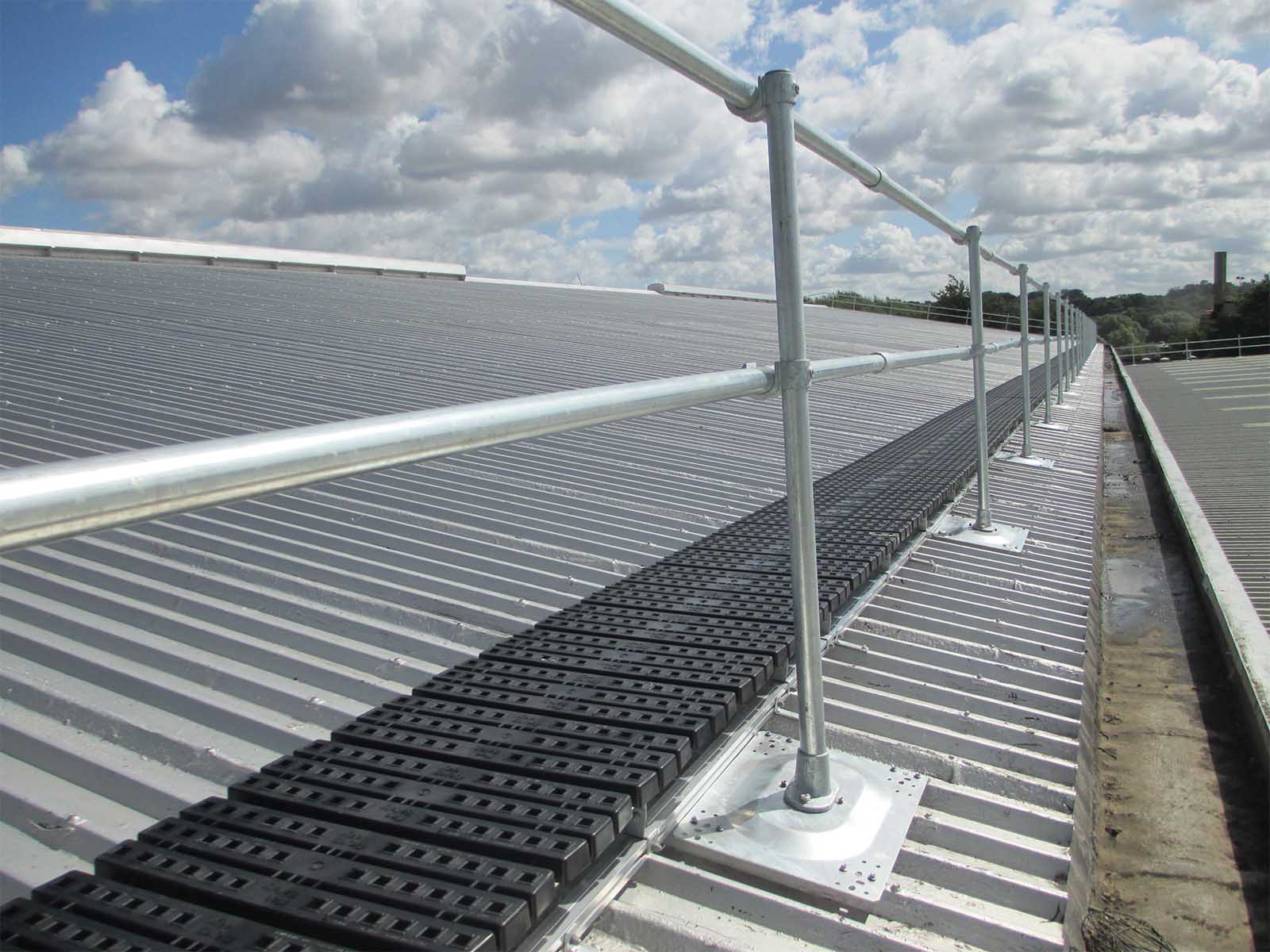
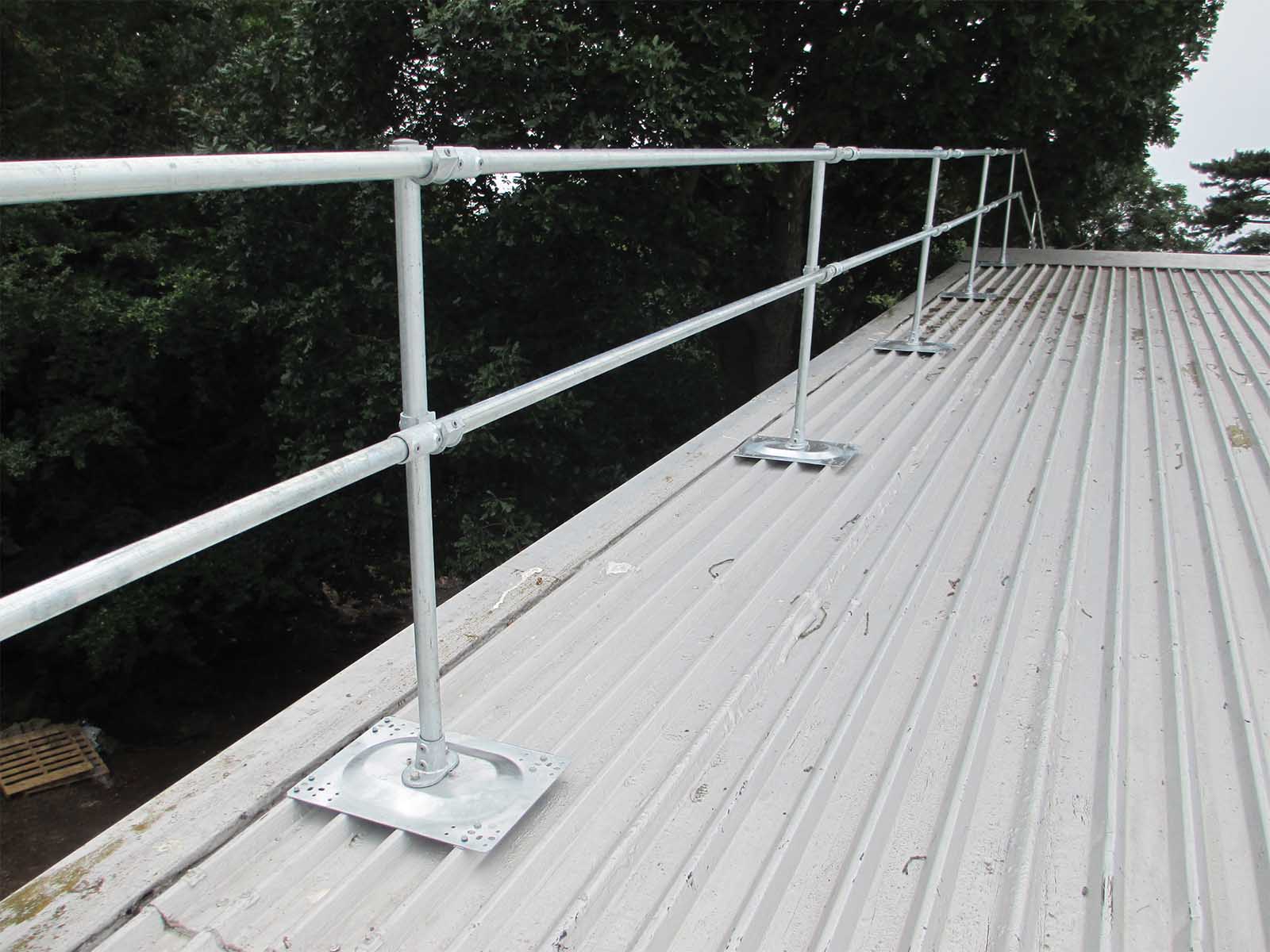
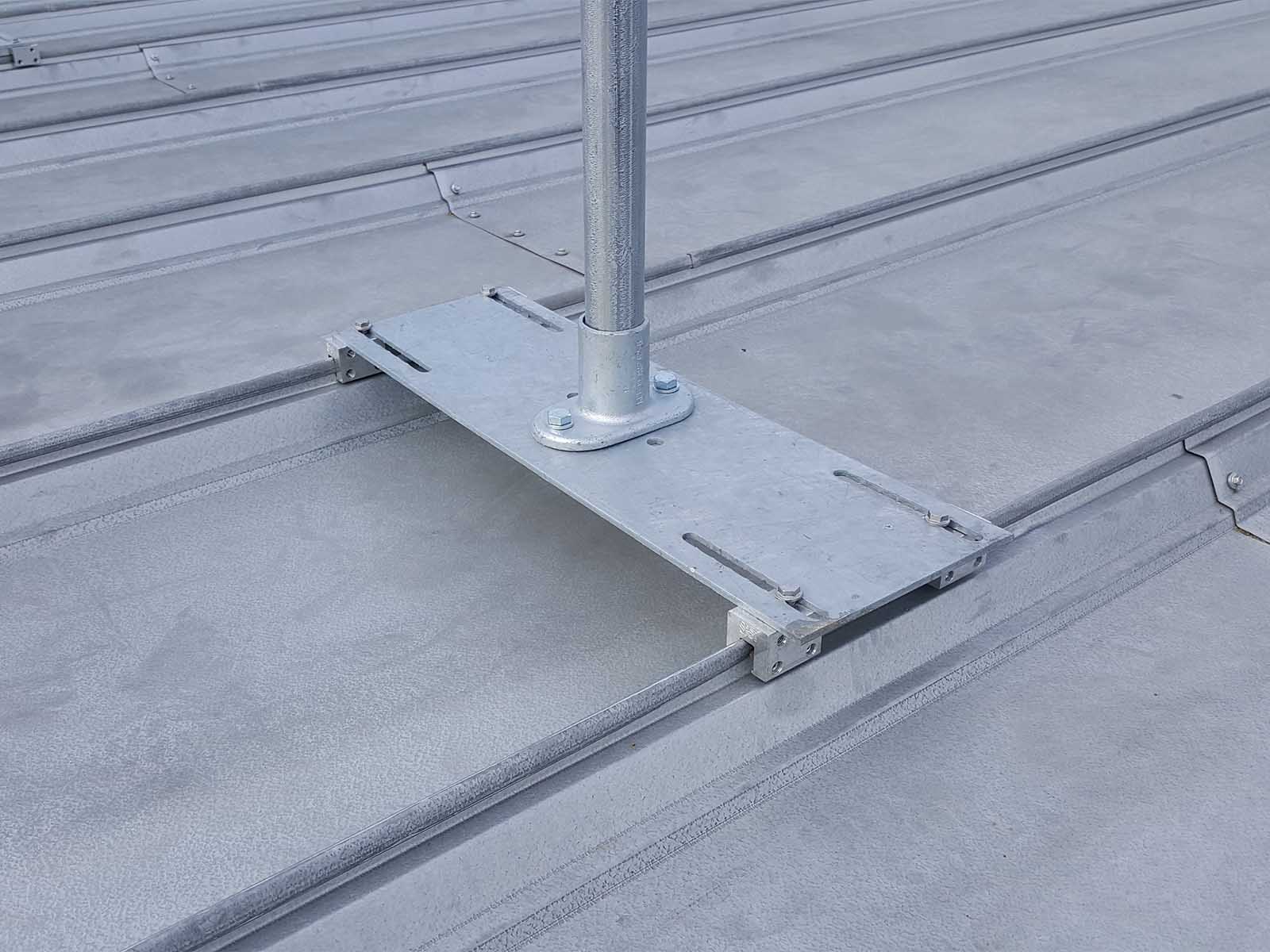
The system uses seam clamps and specialized brackets, eliminating any need for drilling. This ensures that the roof remains leak-proof and maintains its structural integrity.
Designed for Sloped Roofs
Unlike traditional guardrails, this system is engineered to be installed on metal roofs with slopes up to 45°, making it ideal for a wide range of industrial and commercial buildings.
OSHA & ANSI Compliant
This system meets and exceeds OSHA requirements for fall protection. It has been tested to ANSI standards and is built to withstand extreme weather conditions.
PROBLEMS WE SOLVE
The Unique Challenges of Metal Roof Safety
Due to low friction surfaces, steep inclines, and environmental conditions like rain, snow, or ice, metal roofs pose serious fall risks. Workers performing routine maintenance, inspections, or installations need a permanent fall protection system; ensuring safety and peace-of-mind without active engagement.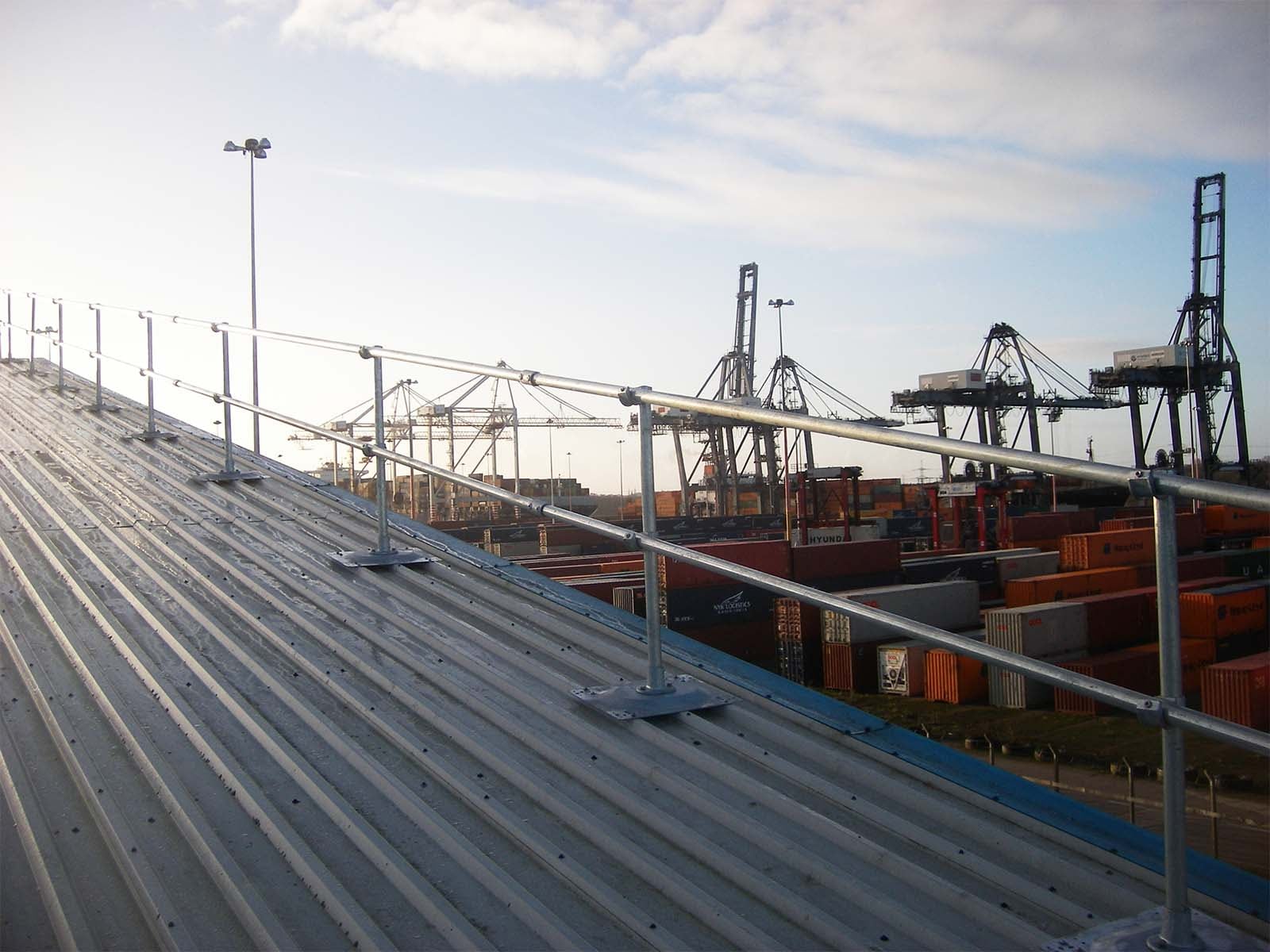
Areas of Application for Metal Roof Guardrails
- Energy & Utilities
- Manufacturing
- Railcar & Transportation
- Supply Chain Management
- Government & Military

Energy & Utilities

Manufacturing

Railcar & Transportation

Supply Chain Management
Government & Military


Answers to
Key Questions
What are the requirements for a roof guardrail?
OSHA requires a top rail 42 inches, plus or minus 3 inches, above the walking-working surface, and the guardrail must withstand 200 pounds of outward or downward force (29 CFR 1910.29(b) general industry; 29 CFR 1926.502(b) construction). On a standing seam or corrugated metal roof, the engineering question is how to meet those criteria without penetrating the panels: clamp-mounted systems grip the seams and counterweighted systems rest on the deck. Tritech engineers and installs both mounting styles, matched to the roof profile and documented for inspection.
What is the OSHA requirement for the top guardrail?
The top rail must sit 42 inches, plus or minus 3 inches, above the walking-working surface and withstand a 200-pound outward or downward force (29 CFR 1910.29(b)). The height is measured from the surface workers stand on, so on a metal roof the rail is set to the walking surface at the edge, whatever the panel profile underneath.
What is the minimum height for fall protection?
Under OSHA’s general industry standard, fall protection is required when a worker is exposed to a fall of 4 feet or more to a lower level (29 CFR 1910.28(b)(1)). The construction trigger is 6 feet (29 CFR 1926.501(b)(1)). Routine maintenance on a metal facility roof is general industry work, so the 4-foot trigger governs the roof edge on nearly every metal building.
What is the new OSHA standard for fall protection?
The 2016 update to OSHA 1910 Subpart D (Walking-Working Surfaces), effective January 2017, is the current general industry standard. It aligned general industry with construction, set the 4-foot trigger, and phased out fixed-ladder cages in favor of ladder safety and fall arrest systems. For building owners, it is the rule that put routine rooftop maintenance exposures, including metal roof edges, squarely under the 1910.28 fall protection duties.
CONTACT
Protect Your Metal Roof and personnel alike with a Secure Guardrail System
Our professional technicians are ready to assist you in designing a code-compliant, non-penetrating fall protection system for your facility.
Let’s Discuss Your Project
"*" indicates required fields