



SOLUTIONS
Roof Hatch Guardrail
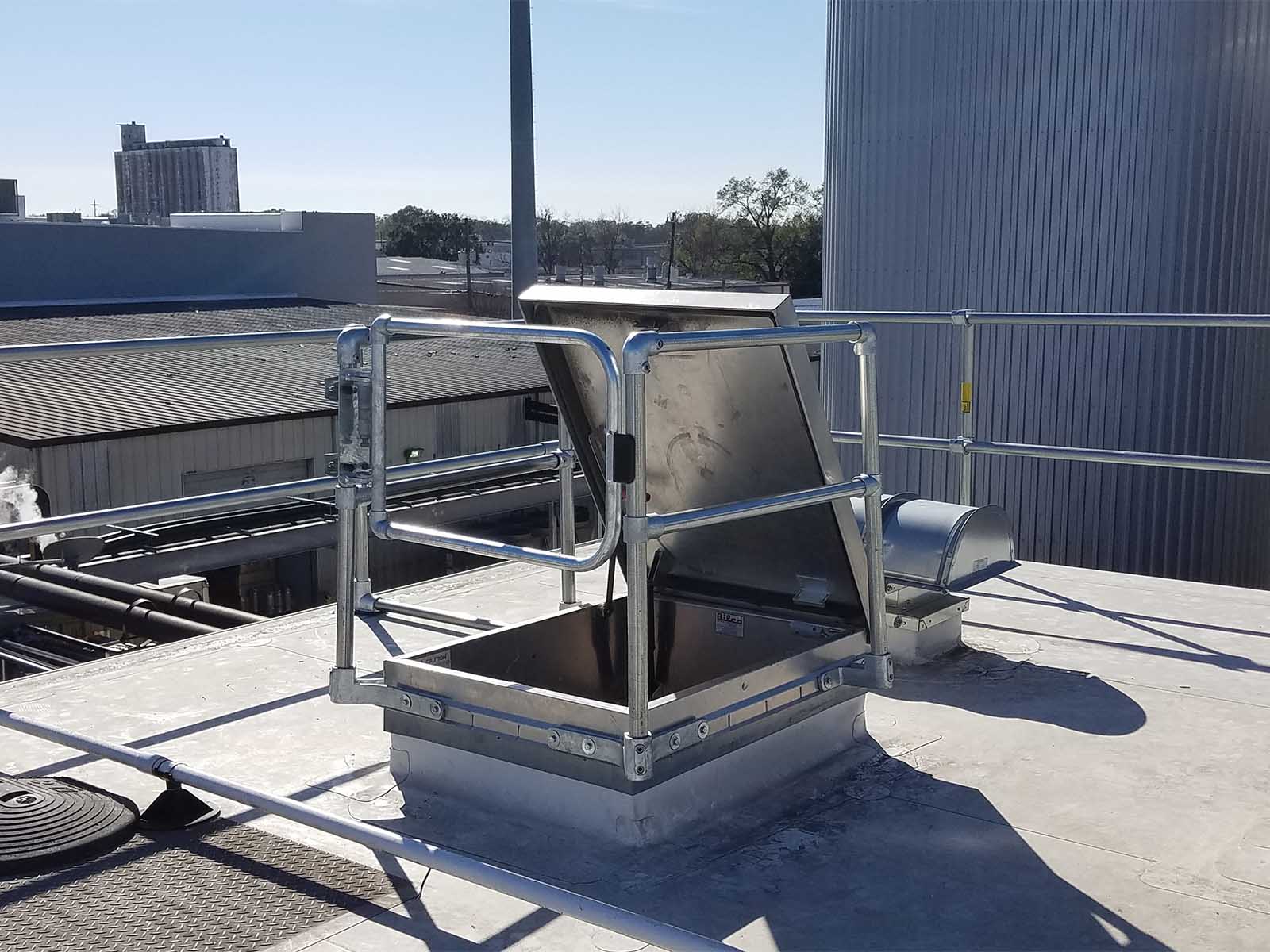
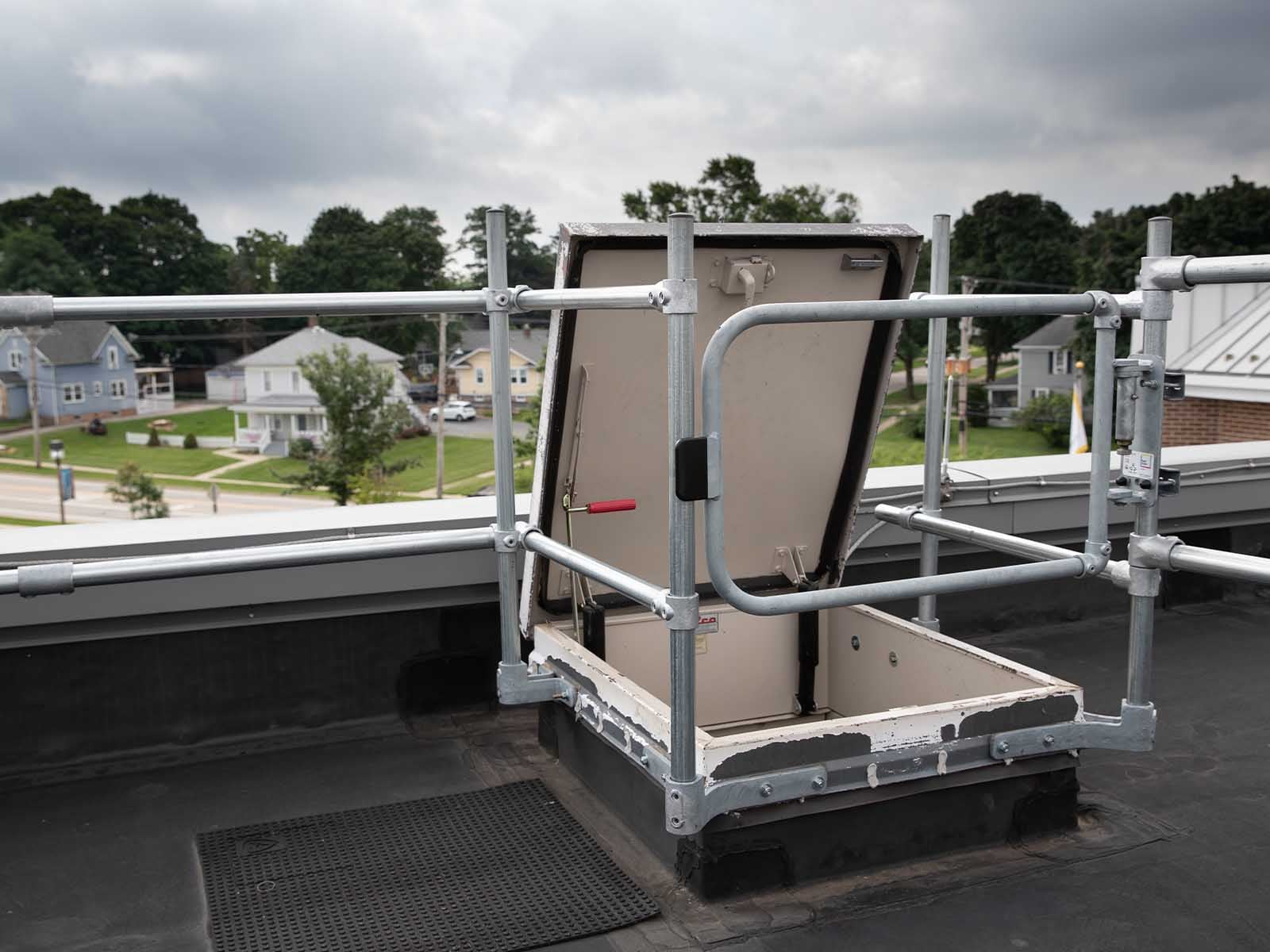
A Self-Contained, OSHA-Compliant Safety System for Roof Hatches
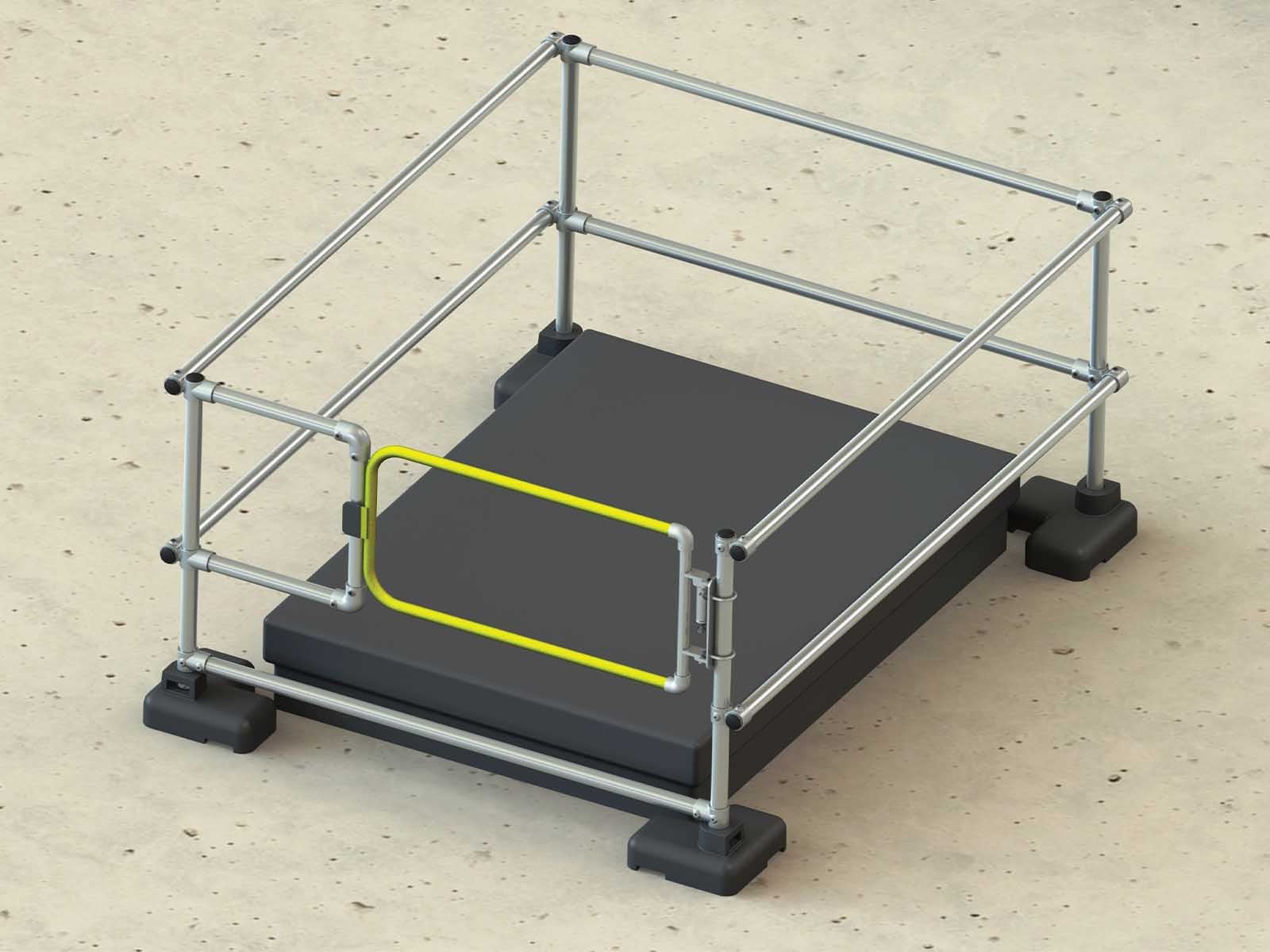
Full Perimeter Protection
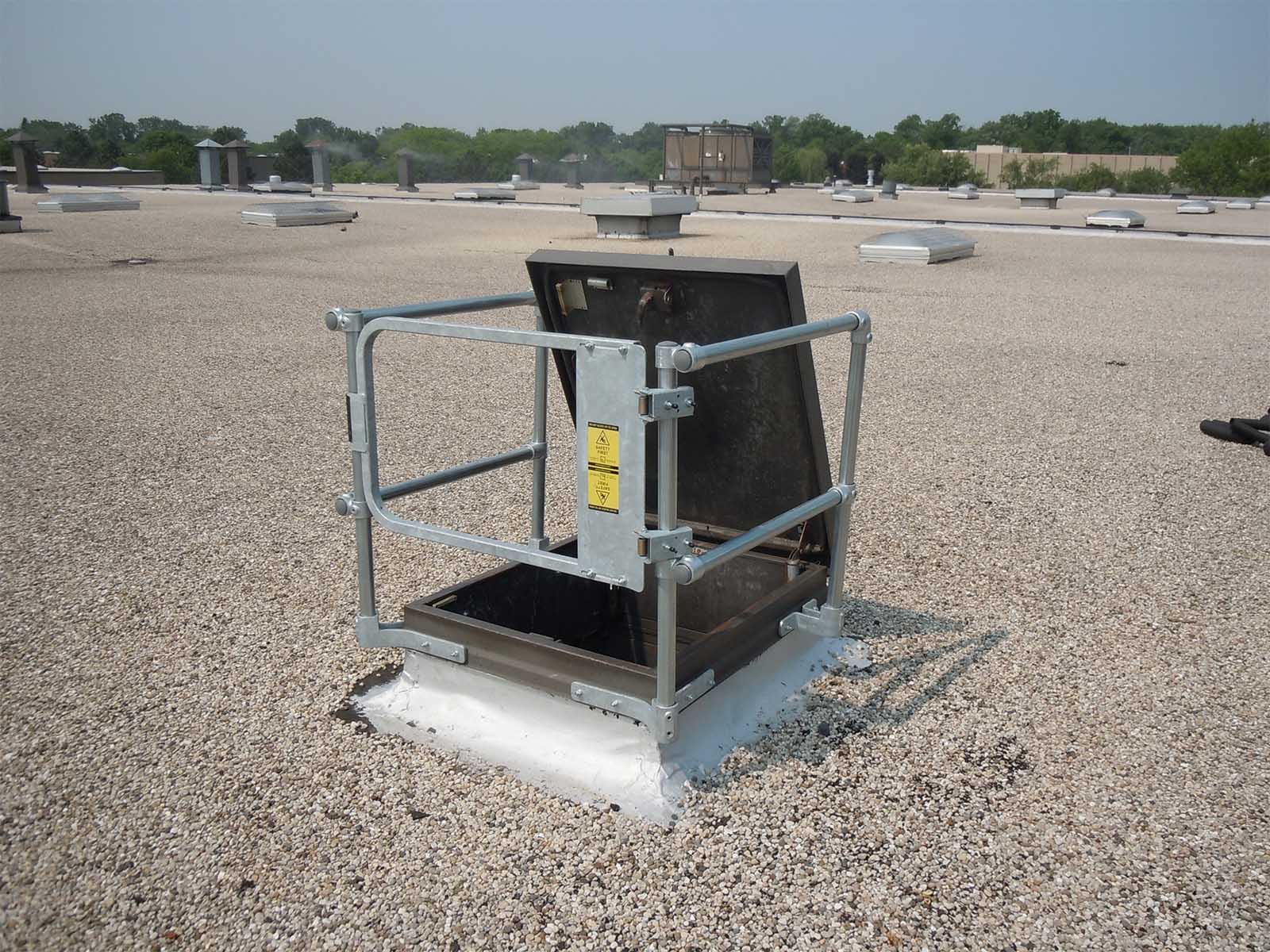
Designed to completely surround the roof hatch, this system prevents falls when the hatch is left open, protecting workers on the roof.
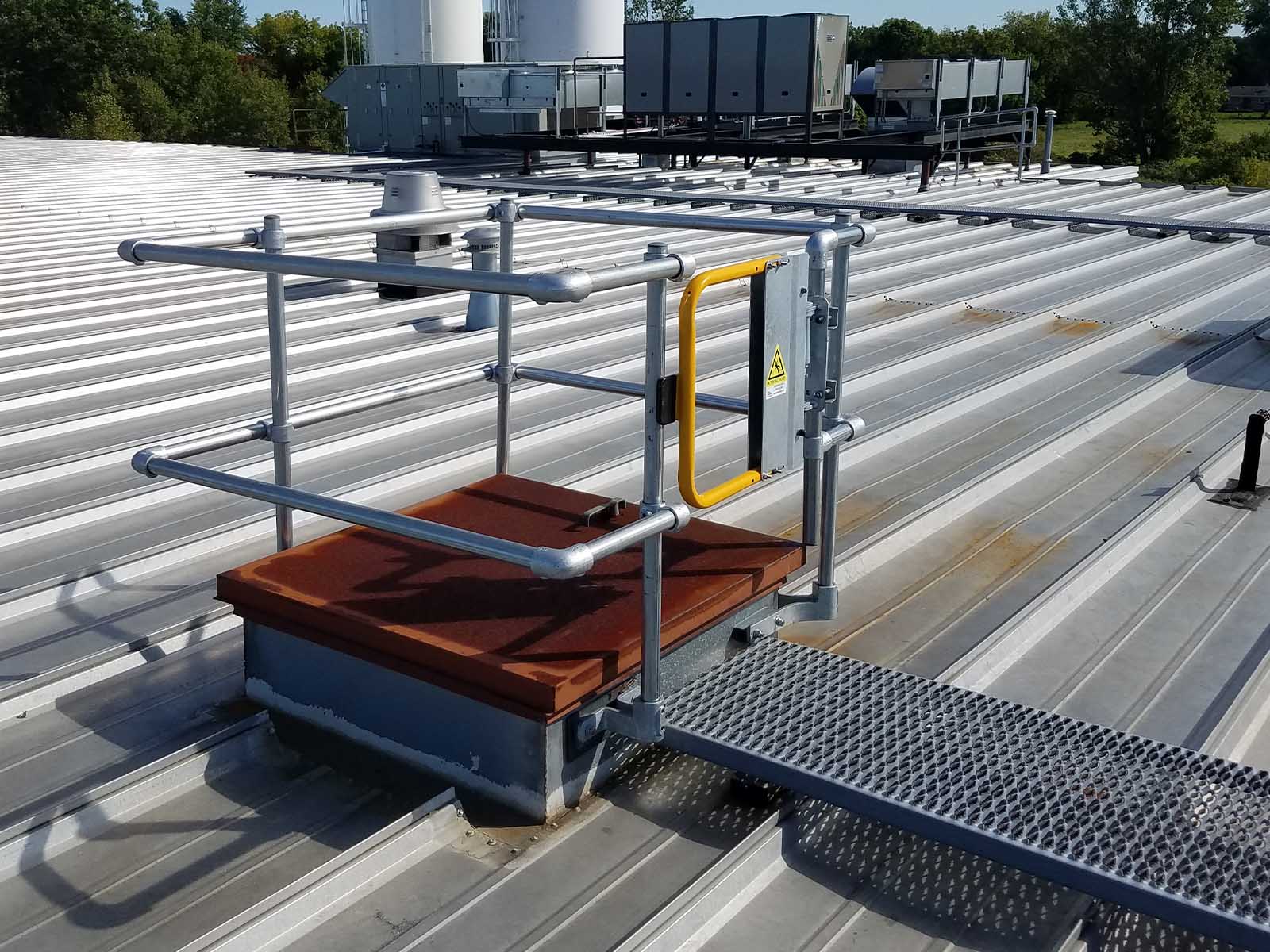
Self-Closing Safety Gate
The integrated self-closing gate ensures continuous protection by automatically returning to a closed position after use, eliminating the danger of accidental falls.
Code-Compliant
This system meets and exceeds OSHA fall protection standards. It has been tested to ANSI requirements and provides long-lasting durability with galvanized or powder-coated steel.

PROBLEMS WE SOLVE
Unprotected Roof Hatches: A Hidden Risk
An open roof hatch creates an immediate fall-through hazard, putting workers at risk of serious injury. Whether accessing rooftops for maintenance, inspections, or solar panel installation, a roof hatch guardrail system provides constant protection with no need for personal fall arrest equipment.
Areas of Application for Roof Hatch Guardrails
- Building Access and Maintenance
- Energy and Utilities
- Manufacturing
- Infrastructure Development
- Government and Military

Building Access and Maintenance

Energy and Utilities

Manufacturing

Infrastructure Development
Government and Military


Answers to
Key Questions
Are guardrails required at roof hatches?
A roof hatch is an opening in the walking-working surface, and the area around an open hatch is a fall exposure. OSHA requires ladderway and hatch openings to be guarded (29 CFR 1910.28(b)(3)), and a fixed guardrail around the hatch with a self-closing gate at the access side is the standard way to do it: the protection stays in place whether or not the cover is shut. The exposure is worst at the moment a worker steps off the ladder onto the roof, which is exactly where a hatch guardrail puts the barrier.
What is the OSHA requirement for the top guardrail?
The top rail must sit 42 inches, plus or minus 3 inches, above the walking-working surface and withstand 200 pounds of outward or downward force (29 CFR 1910.29(b)). A hatch guardrail meets the same criteria as any other guardrail; the hatch location changes the layout, not the rail requirement.
What are the 4 types of fall protection?
Fall protection is usually grouped by the hierarchy of controls: elimination, passive prevention (guardrails, covers, and other physical barriers that need no worker action), active fall restraint or fall arrest (harness-and-anchor systems), and administrative controls (warning lines, training, and procedures). A hatch guardrail with a self-closing gate is passive prevention: it protects every person who climbs through the hatch without depending on training or attention. Tritech engineers and installs hatch guardrail with self-closing gates as part of complete rooftop systems.
At what height is fall protection required?
Under OSHA’s general industry standard, fall protection is required at 4 feet above a lower level (29 CFR 1910.28(b)(1)); on construction work, the trigger is 6 feet (29 CFR 1926.501(b)(1)). A fall through an open hatch is a fall to the floor below, a drop that exceeds the general industry trigger in nearly every building, so the opening must be guarded wherever workers use the roof.
CONTACT
Ensure Safe Roof Access with a Hatch Guardrail
Our team is ready to help you implement a code-compliant, reliable fall protection system for all your roof access points.
Let’s Discuss Your Project
"*" indicates required fields