



SOLUTIONS
Horizontal Lifeline System
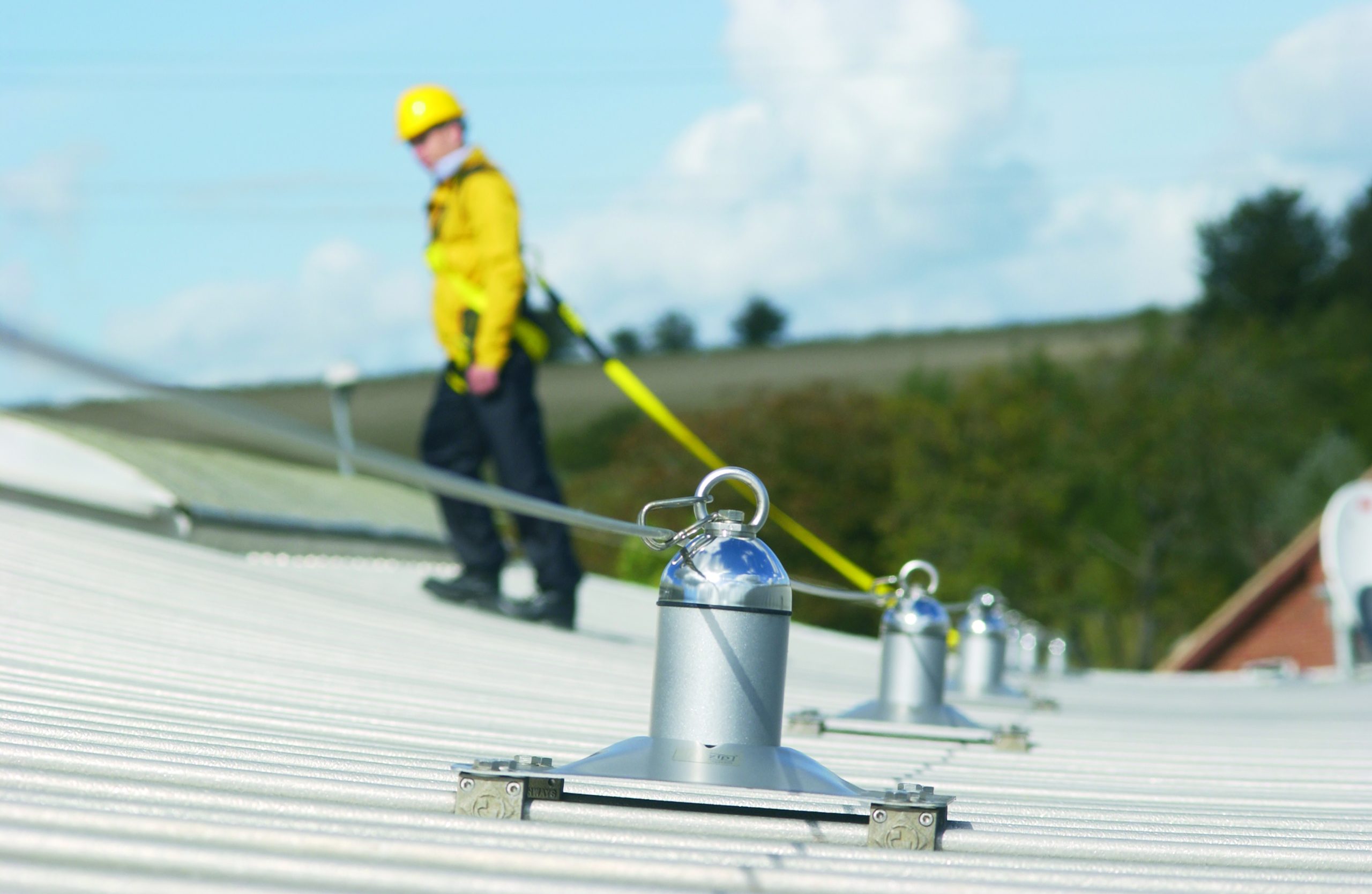
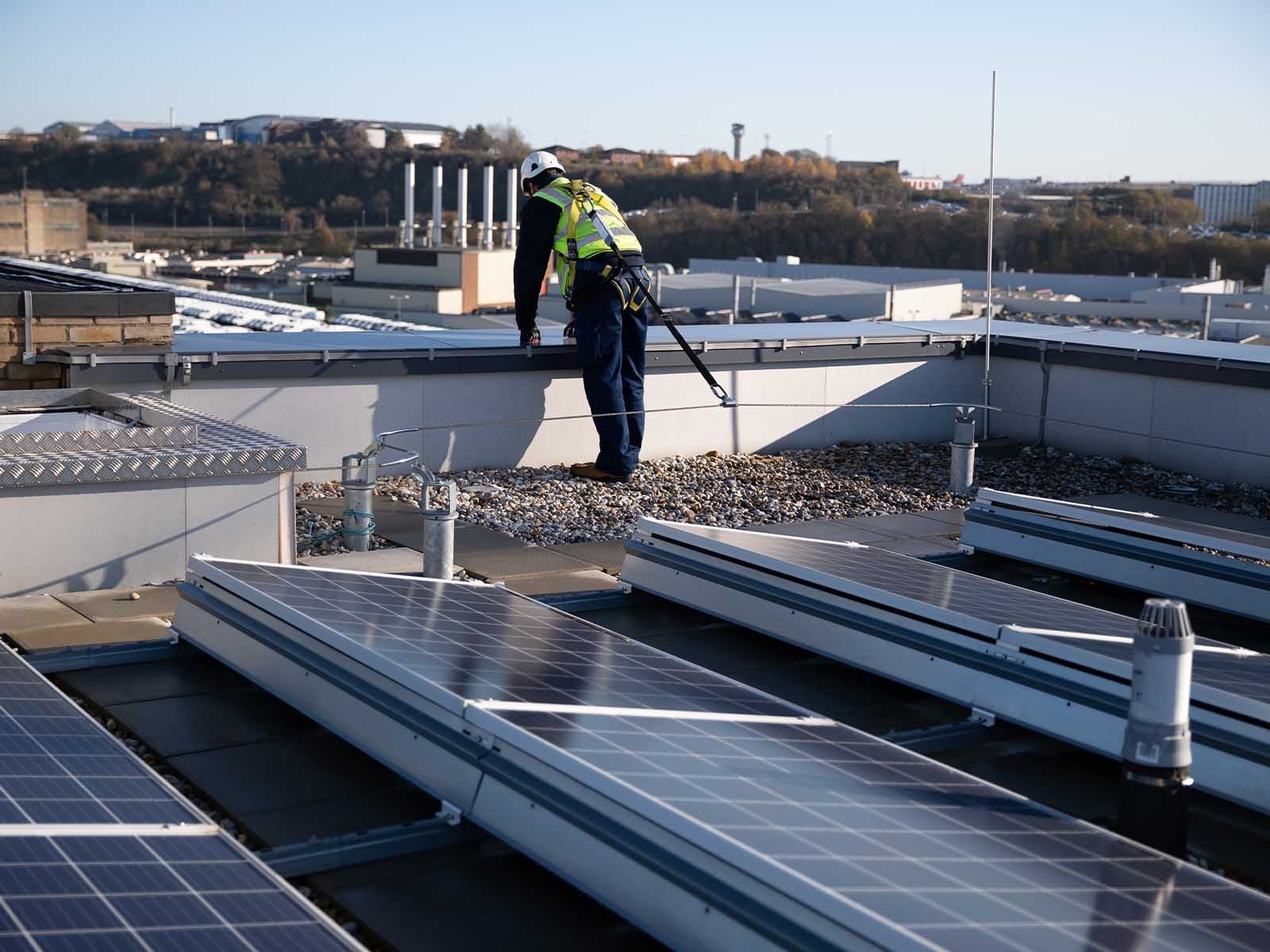
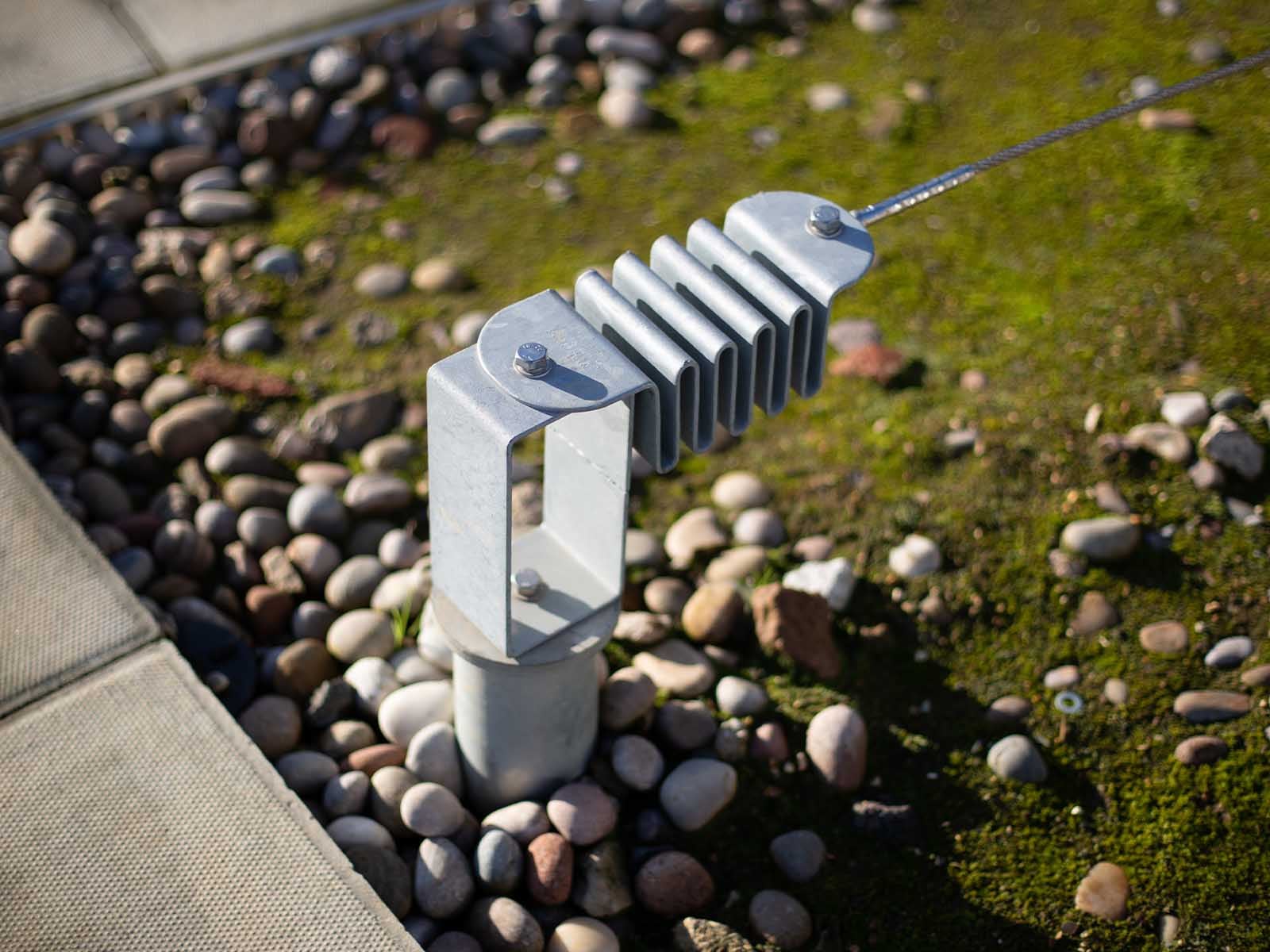
A Versatile and Reliable Roof Lifeline System for Extended Work Areas
Uninterrupted Safety for Large-Scale Worksites
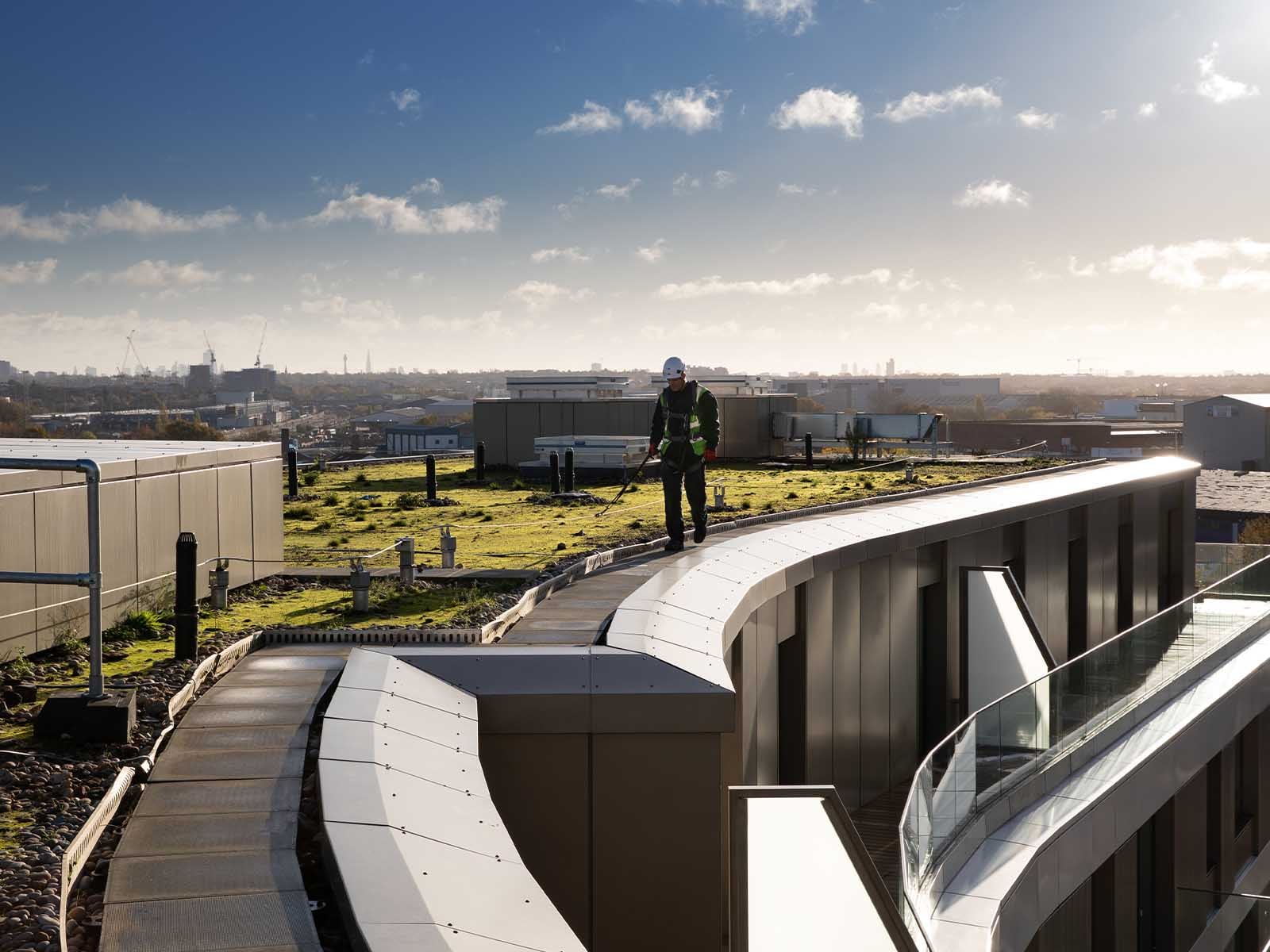
The system allows workers to move freely along the entire length of the lifeline, eliminating the need for frequent disconnection and reconnection.
Customizable & Adaptable
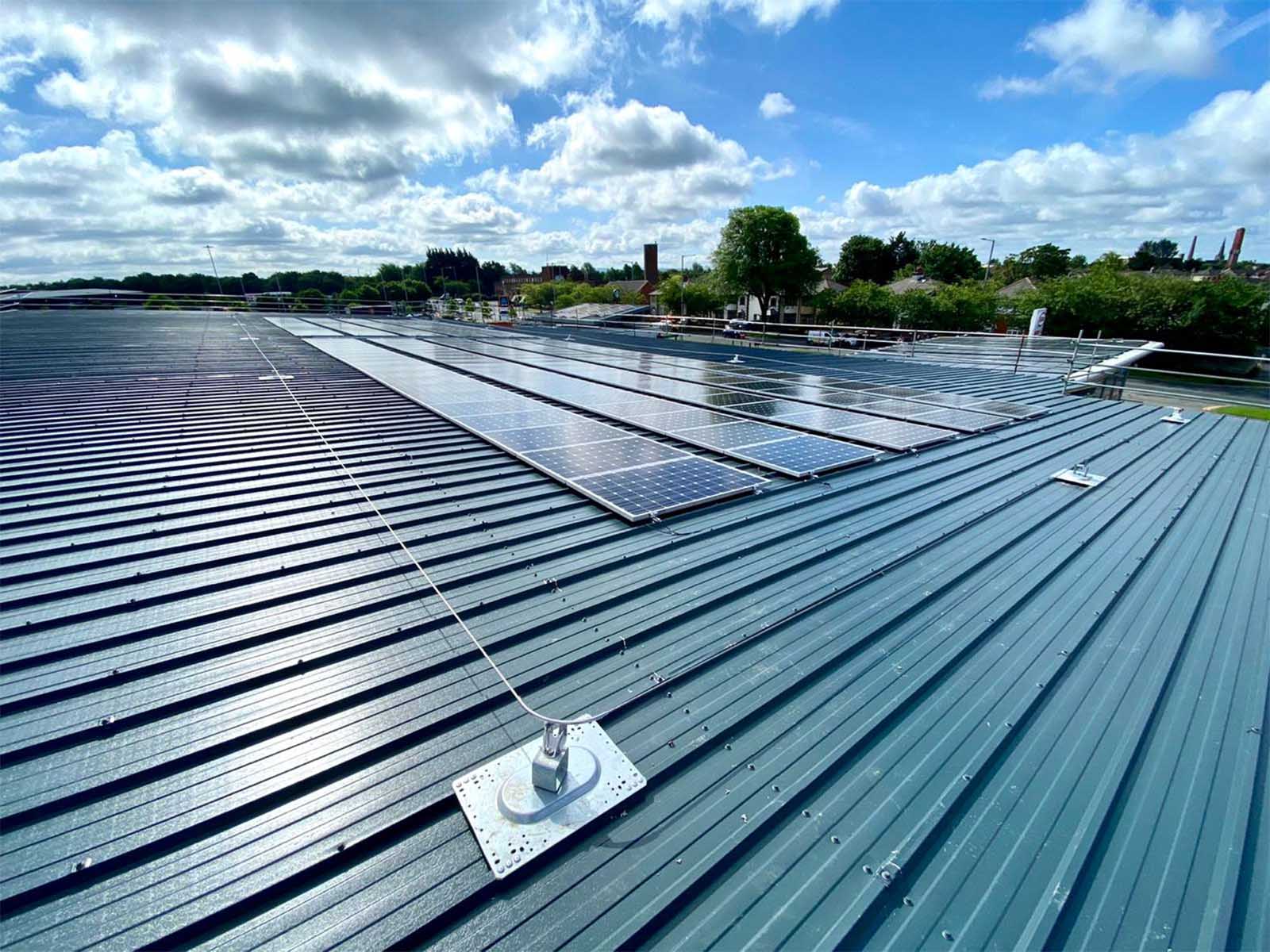
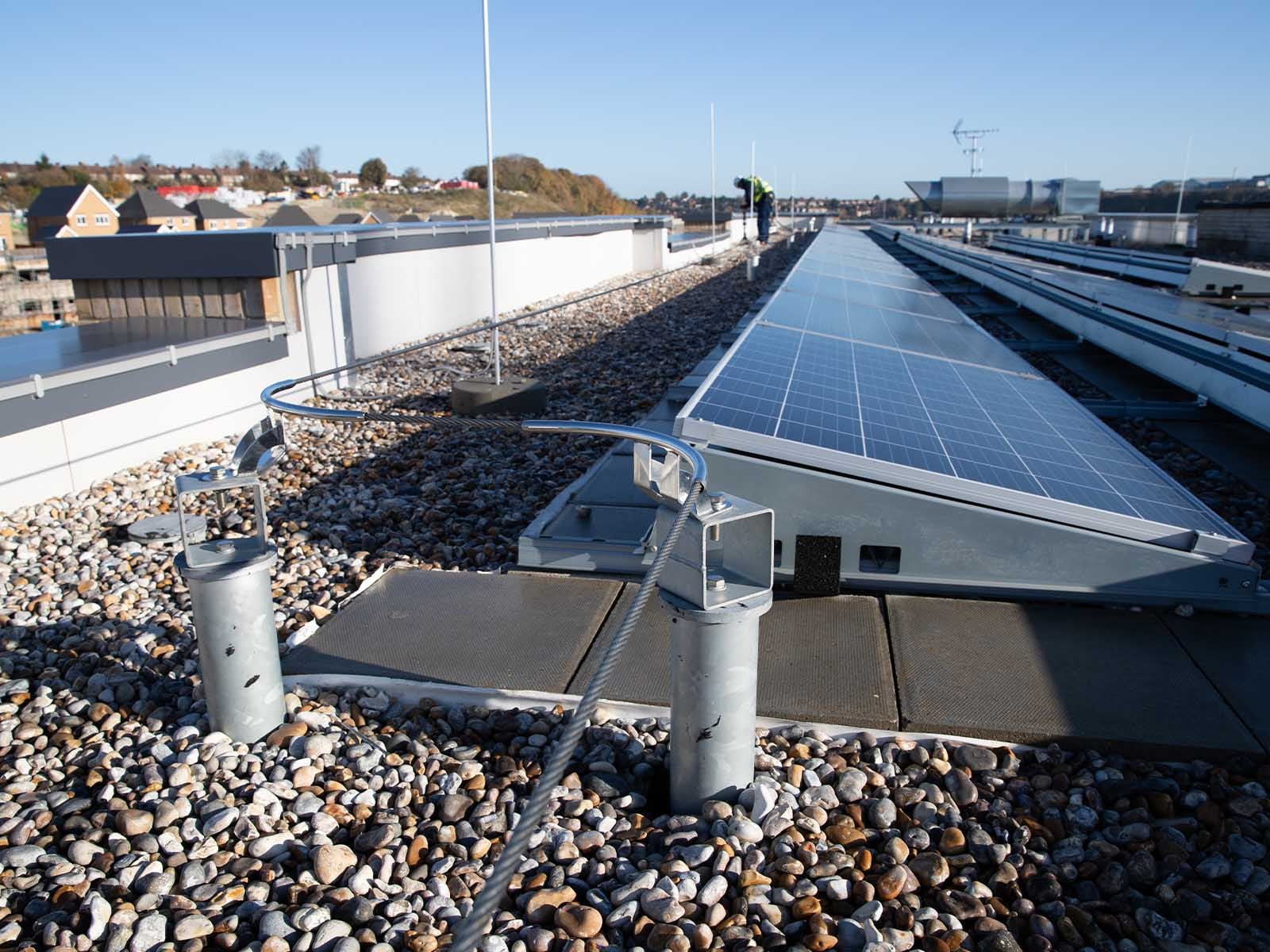
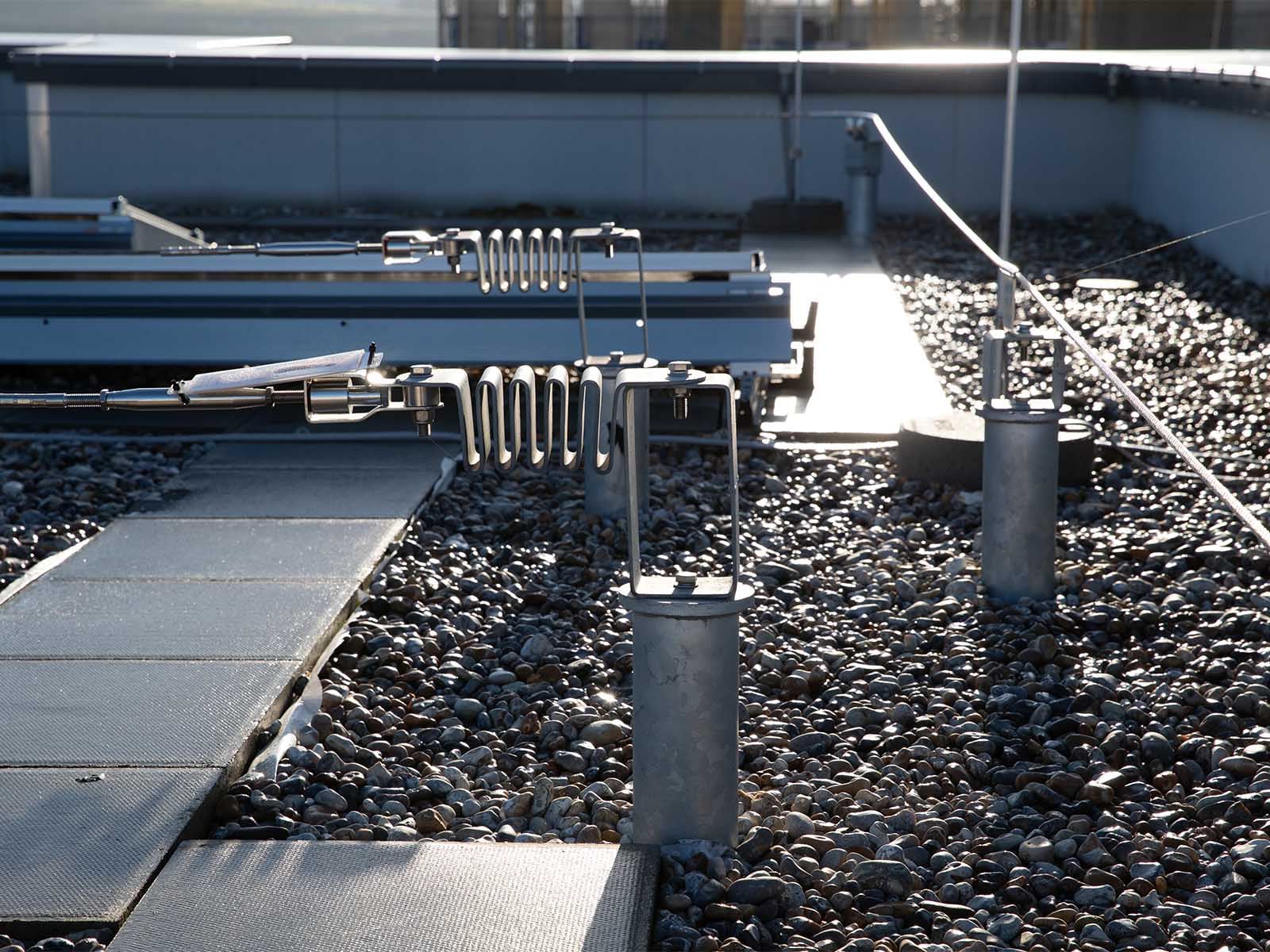
Designed for rooftops, horizontal lifelines can be configured to fit various worksite layouts, including straight runs, curves, and multiple connection points.
OSHA & ANSI Compliance
Engineered to meet OSHA and ANSI standards, horizontal lifeline systems provide compliant fall protection for open-edge and elevated work areas.




PROBLEMS WE SOLVE
Ensuring Safe Movement Across Elevated Work Areas
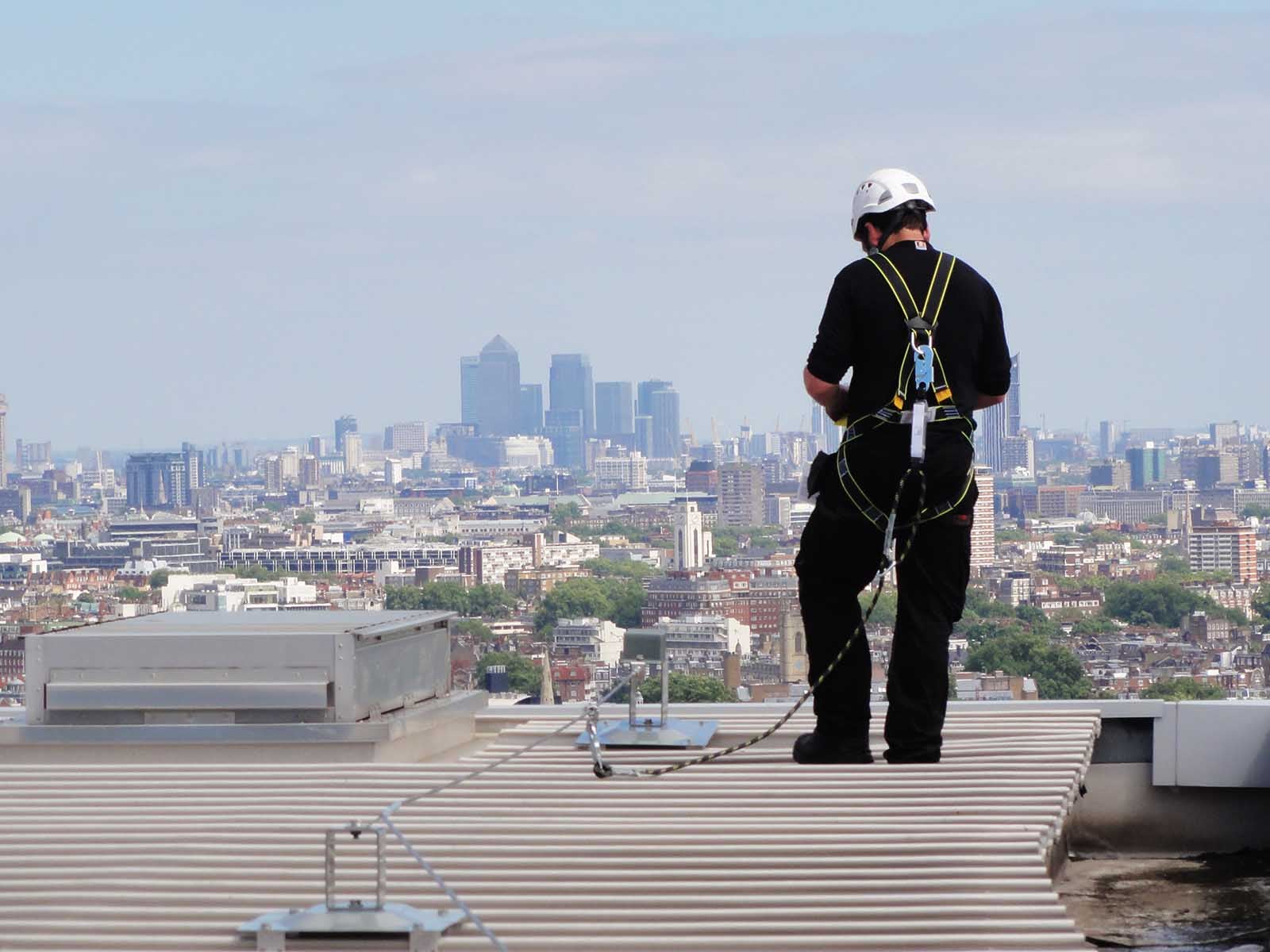
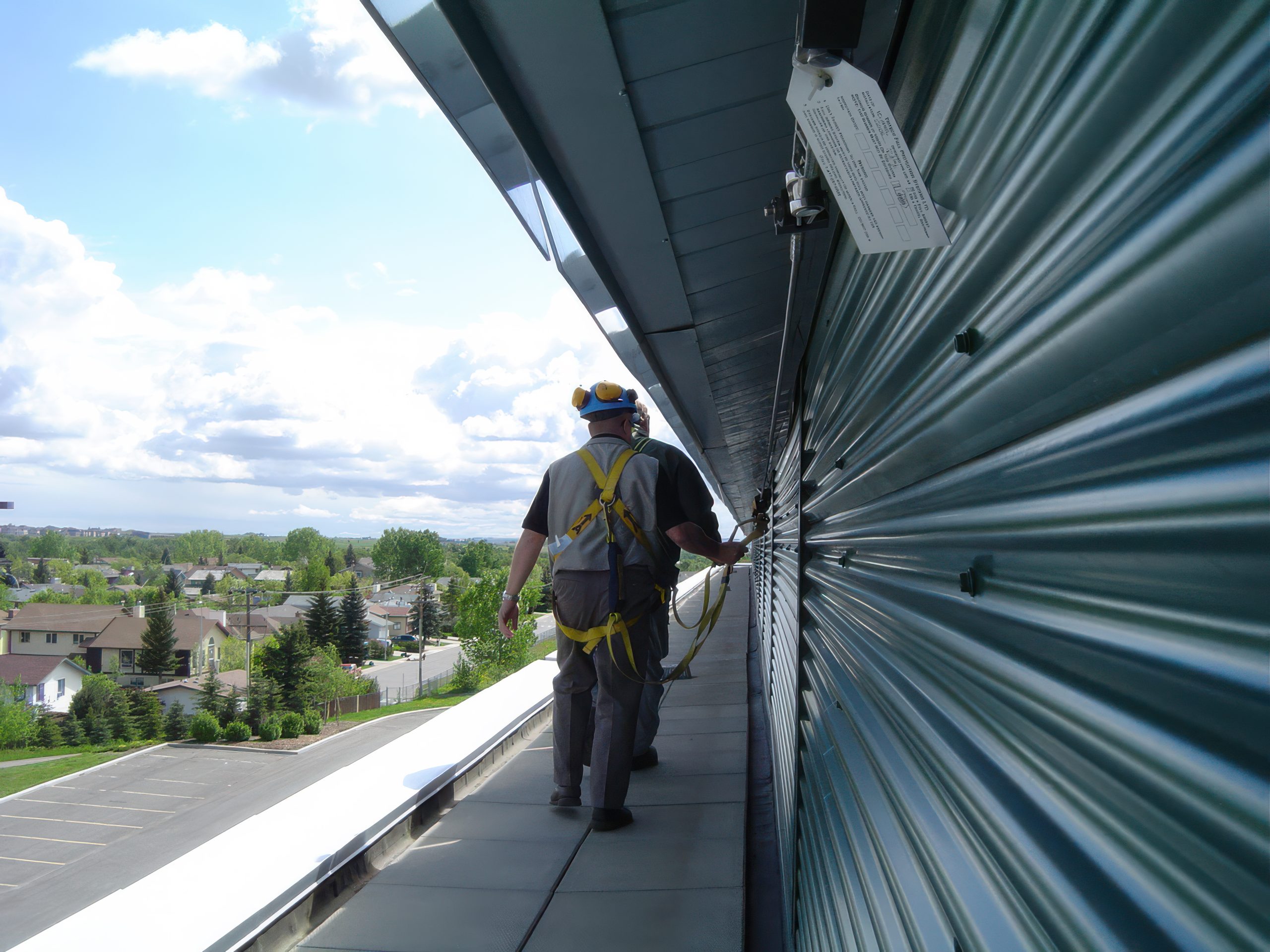
Traditional fall protection solutions can restrict mobility, making it difficult to work efficiently across large areas. Horizontal lifeline systems allow continuous movement, enabling safe and unrestricted access along rooftops, catwalks, and industrial structures—just to name a few.
Areas of Application for Horizontal Lifeline System
- Agriculture
- Building Access & Maintenance
- Industrial Equipment Access
- Infrastructure Development
- Railcar and Transportation
- Theme Park, Stadium, Theater

Agriculture

Building Access & Maintenance

Industrial Equipment Access

Infrastructure Development

Railcar and Transportation
Theme Park, Stadium, Theater


Answers to
Key Questions
What is a horizontal lifeline system?
A horizontal lifeline is an engineered system in which a worker’s fall-arrest or restraint equipment connects to a cable or rail running horizontally between anchor points, letting the worker move along the line while staying continuously attached. It’s used where guardrails aren’t practical: long roof edges, equipment yards, and rooftop mechanical runs. OSHA governs the components as part of a personal fall arrest system under 29 CFR 1926.502 (construction) and 29 CFR 1910.140 (general industry), and Tritech engineers each system to the ANSI/ASSP Z359 fall protection code.
What is the difference between vertical and horizontal lifelines?
A vertical lifeline protects a worker moving up and down, such as on a fixed ladder or a vertical climb, and runs vertically with a fall arrester that travels with the worker. A horizontal lifeline protects a worker moving across a level or near-level path, such as a roof edge or catwalk, and runs horizontally between anchors. Both keep the worker continuously tied off; the orientation of the work decides which one applies.
Who can install horizontal lifelines?
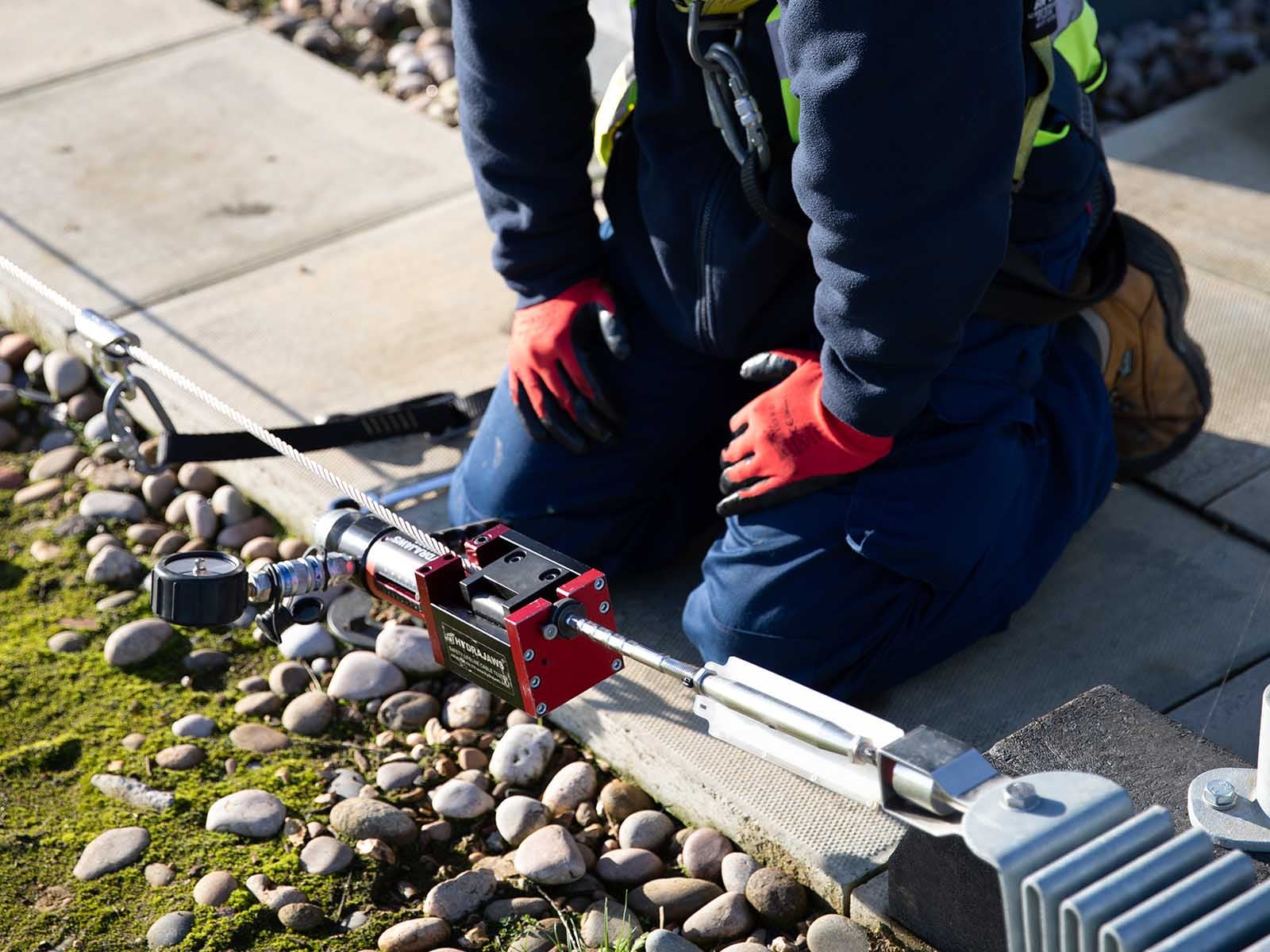
A horizontal lifeline should be installed by a qualified fall protection contractor working from engineered, typically PE-stamped drawings, because the anchors and cable must be sized to the structure and the arrest forces involved. OSHA requires the system to be designed and installed under the supervision of a qualified person (29 CFR 1926.502(d)(8)). Tritech engineers, fabricates, and installs with one accountable team, then documents the system for ongoing inspection.
What is the difference between a rigid rail carrier and a cable carrier?
A rigid rail carrier is a trolley that rides a fixed structural track that barely deflects under load, so it arrests a fall within inches and keeps the worker’s connection point high. A cable carrier rides a tensioned wire rope that stretches and sags when a fall is arrested but spans longer distances between anchors. Rigid rail suits low-clearance overhead work; cable suits open rooftops where there is room below.
What is the OSHA standard for horizontal lifelines?
There is no standalone OSHA standard for horizontal lifelines; OSHA regulates them as part of a personal fall arrest system. In construction, 29 CFR 1926.502(d)(8) requires the system to be designed, installed, and used under the supervision of a qualified person, as part of a complete personal fall arrest system that maintains a safety factor of at least two. General industry applies the personal fall protection criteria of 29 CFR 1910.140, and the ANSI/ASSP Z359 series supplies the design detail engineered systems are built to.
CONTACT
Enhance Workplace Safety with a Horizontal Lifeline System
Our team is ready to help you implement a code-compliant, continuous fall protection solution for your facility.
Let’s Discuss Your Project
"*" indicates required fields