


SOLUTIONS
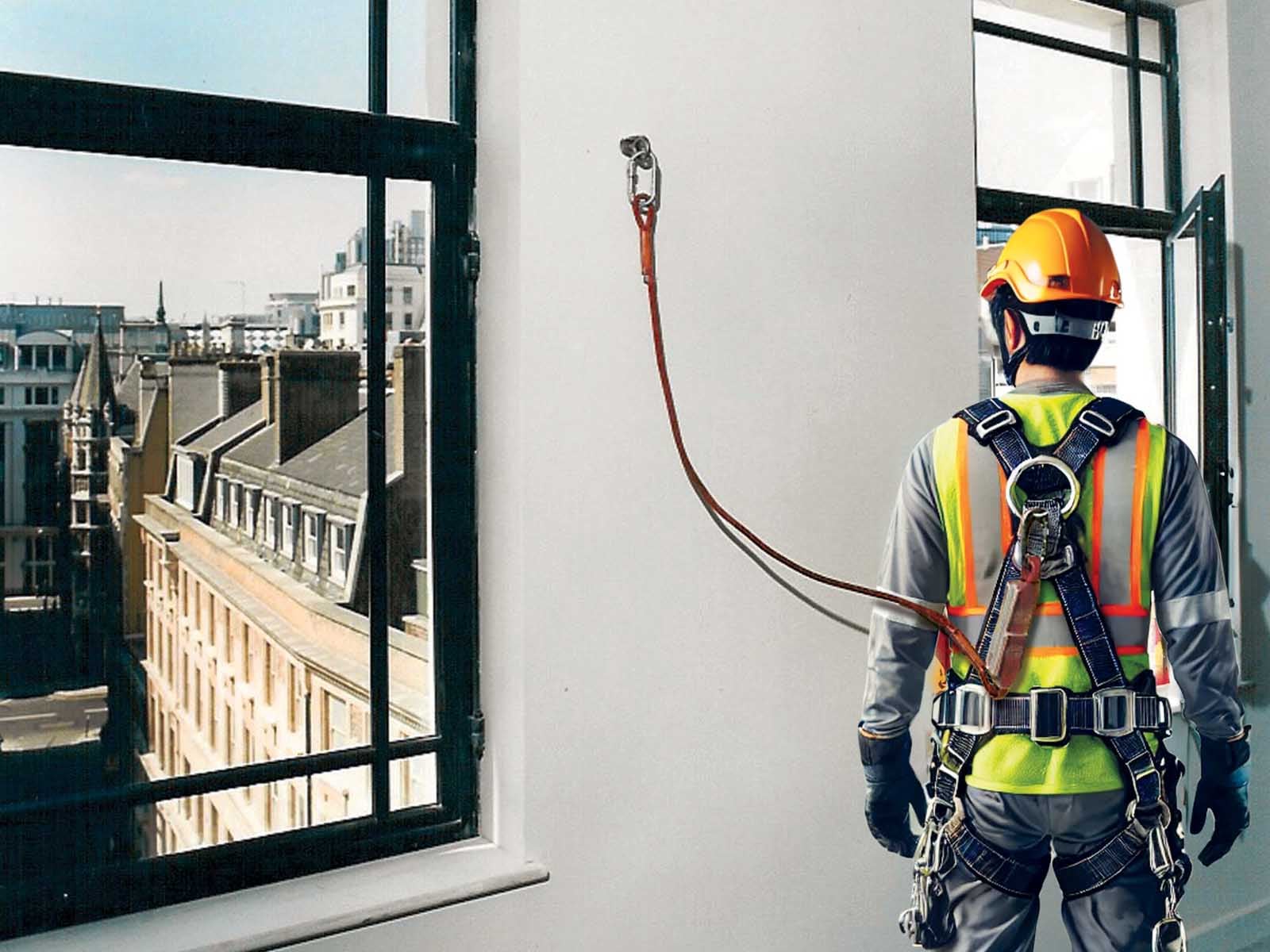
Single Point Anchor System
A Compact and Reliable Tie-Off Solution for Focused Work at Height
Simple, Targeted Protection
Designed for tasks performed in a small area, inspection, or equipment checks.
Flexible Mounting Options
Can be permanently installed or used with non-penetrating bases for temporary jobs. Compatible with concrete, steel, and other surfaces.
OSHA & ANSI Compliant
Each anchor is rigorously tested and meets or exceeds OSHA 29 CFR 1926.502(d) and ANSI Z359.18 standards for fall protection anchorages.



PROBLEMS WE SOLVE
Efficient Fall Protection for Limited-Access Tasks
Not every job needs a full lifeline system. Single point anchors are perfect when workers need to stay secured while working in one place like near a rooftop unit or at a fixed access point. They offer the safety you need without overcomplicating the setup.
Areas of Application for Single Point Anchors
- Rooftop Access & Maintenance
- Industrial Equipment Access
- Energy & Utilities
- Infrastructure Development
- Government & Military

Rooftop Access & Maintenance

Industrial Equipment Access

Energy & Utilities

Infrastructure Development
Government & Military


Answers to
Key Questions
What is the OSHA 5000 lb requirement?
OSHA requires an anchorage used for personal fall arrest to support at least 5,000 pounds for each employee attached, or to be designed, installed, and used under the supervision of a qualified person as part of a complete personal fall arrest system that maintains a safety factor of at least two (29 CFR 1910.140(c)(13) general industry; 29 CFR 1926.502(d)(15) construction). The requirement is written per employee, and a single point anchor serves one attached worker, so the full load duty rests on that one point and its connection to the structure. The substrate the anchor fastens to matters as much as the anchor itself, which is why the installation should be engineered rather than simply bolted down.
At what height is fall protection required?
Under OSHA general industry rules (29 CFR 1910.28), fall protection is generally required at 4 feet above a lower level; under construction (29 CFR 1926.501), the trigger is generally 6 feet. A single point anchor supports compliance wherever one worker needs a certified tie-off at or above those heights and a guardrail is not feasible: a hatch approach, an isolated rooftop unit, a fixed work position at an edge.
What are the 4 types of fall protection?
Fall protection generally sorts into four approaches: elimination or prevention (removing the hazard or guarding it with passive systems like guardrails), fall restraint (keeping a worker back from the edge so a fall cannot start), fall arrest (stopping a fall in progress with a harness, connector, and anchor), and administrative controls (warning lines, training, and procedures). A single point anchor serves the restraint and arrest tiers, covering a defined work position rather than a travel path. Tritech engineers and installs single point anchors sized to the structure they fasten to.
CONTACT
Keep It Simple—And Safe
Contact us to learn how single point anchors can provide safe, straightforward protection for your team.
Let’s Discuss Your Project
"*" indicates required fields