TL;DR
OSHA is phasing out ladder cages in favor of ladder safety systems or personal fall arrest systems. New ladders must already comply, and all existing ladders must be upgraded by November 18, 2036. These modern systems provide real fall arrest protection, unlike cages. Companies should start planning now by assessing existing ladders, selecting the right system, and implementing compliant solutions to improve safety and avoid costly penalties.
Fixed ladders are a staple in industries ranging from construction and manufacturing to telecommunications and facility maintenance.
However, despite their everyday use, they remain one of the leading causes of workplace injuries and fatalities in the United States.
That’s why the Occupational Safety and Health Administration (OSHA) updated its Walking-Working Surfaces standard under 29 CFR 1910.29(b), introducing stricter requirements for fixed ladder fall protection.
Now, with the November 18, 2036 deadline approaching, U.S. employers, safety professionals, and facility managers must act to ensure their fixed ladder systems are compliant not just for legal reasons, but to improve worker safety.
What’s Changing in Ladder Cage Regulations?
OSHA’s updates outline a two-stage compliance requirement:
- Post-November 19, 2018 – All new fixed ladders must include a ladder safety system or a personal fall arrest system (PFAS).
- By November 18, 2036 – All existing fixed ladders with cages must be retrofitted with a ladder safety system or PFAS to meet updated OSHA standards.
These updates reference:
- 29 CFR 1910.29(b) – Design criteria for fall protection systems.
- 29 CFR 1910.140 – Requirements for personal fall protection equipment.
Why the Change Matters
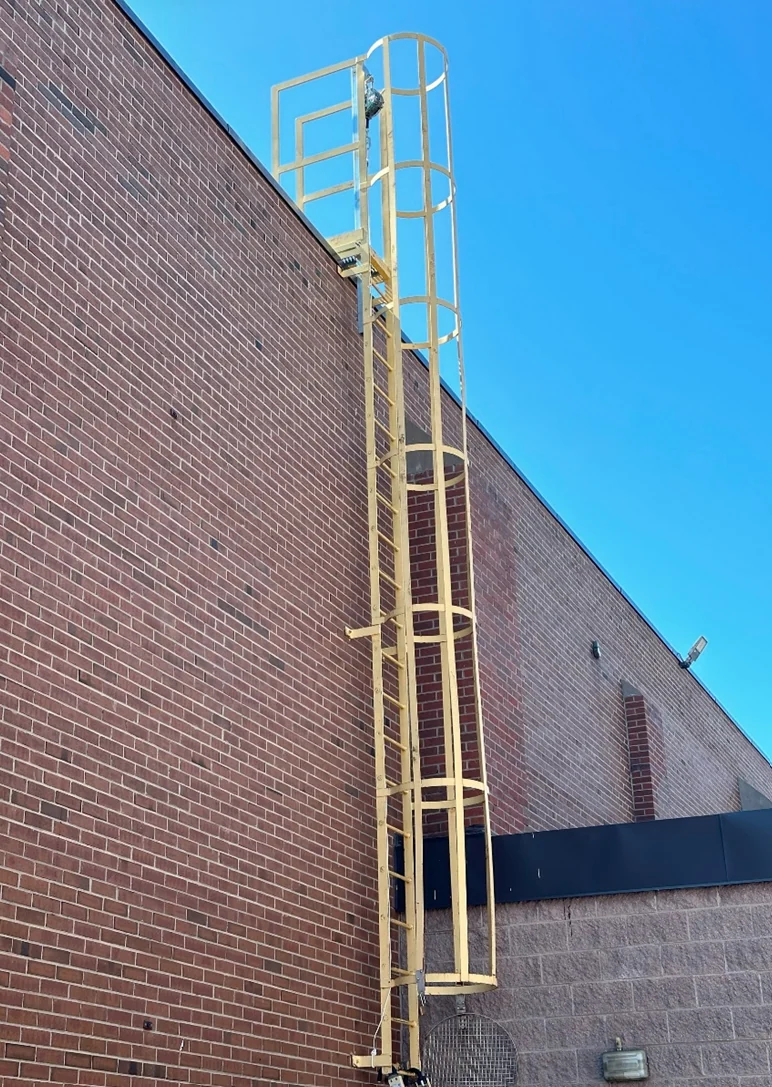
Ladder cages were originally designed to contain a fall, not to arrest it — meaning they often provide minimal real protection. Modern research and field data have shown that cages don’t effectively prevent injury during a fall.
Failure to comply with the updated OSHA standards could result in:
- OSHA citations and fines up to $161,323 per violation.
- Increased liability exposure and worker injury risks.
- Higher insurance premiums and operational disruptions.
For a deeper look at engineered solutions for ladders, see our page on Vertical Lifeline Systems.
Ladder Safety System vs. Vertical Lifeline System
When retrofitting your ladders, two of the most common solutions are ladder safety systems and vertical lifeline systems.
| System Type | Pros | Cons |
|---|---|---|
Ladder Safety System
|
|
|
Vertical Lifeline System
|
|
|
For applications with multiple users or tall access points, explore our Fall Arrest Systems to see which solution best fits your facility.
How Tritech Can Help
At Tritech Fall Protection, we provide turnkey fixed ladder compliance solutions from start to finish.
Our Services Include:
- Site Assessments – Inspection of ladders, walking-working surfaces, and elevated edges to recommend the best OSHA-compliant solutions.
- System Design – Custom-engineered PFAS, ladder safety systems, guardrails, and swing gates to meet 29 CFR 1910.29(b).
- Turnkey Installations – Certified installation of Vertical Lifeline Systems, Fall Arrest Solutions, and Guardrail Systems.
- Training & Certification – Hands-on training aligned with OSHA 29 CFR 1910.140 standards.
Get Ready for 2036 – Start Your Compliance Plan Today
Don’t wait until the deadline is near. Upgrading your ladders now not only avoids compliance issues but also creates a safer environment for your workers.
Let’s Talk About Protecting Your Team
"*" indicates required fields