
TL;DR
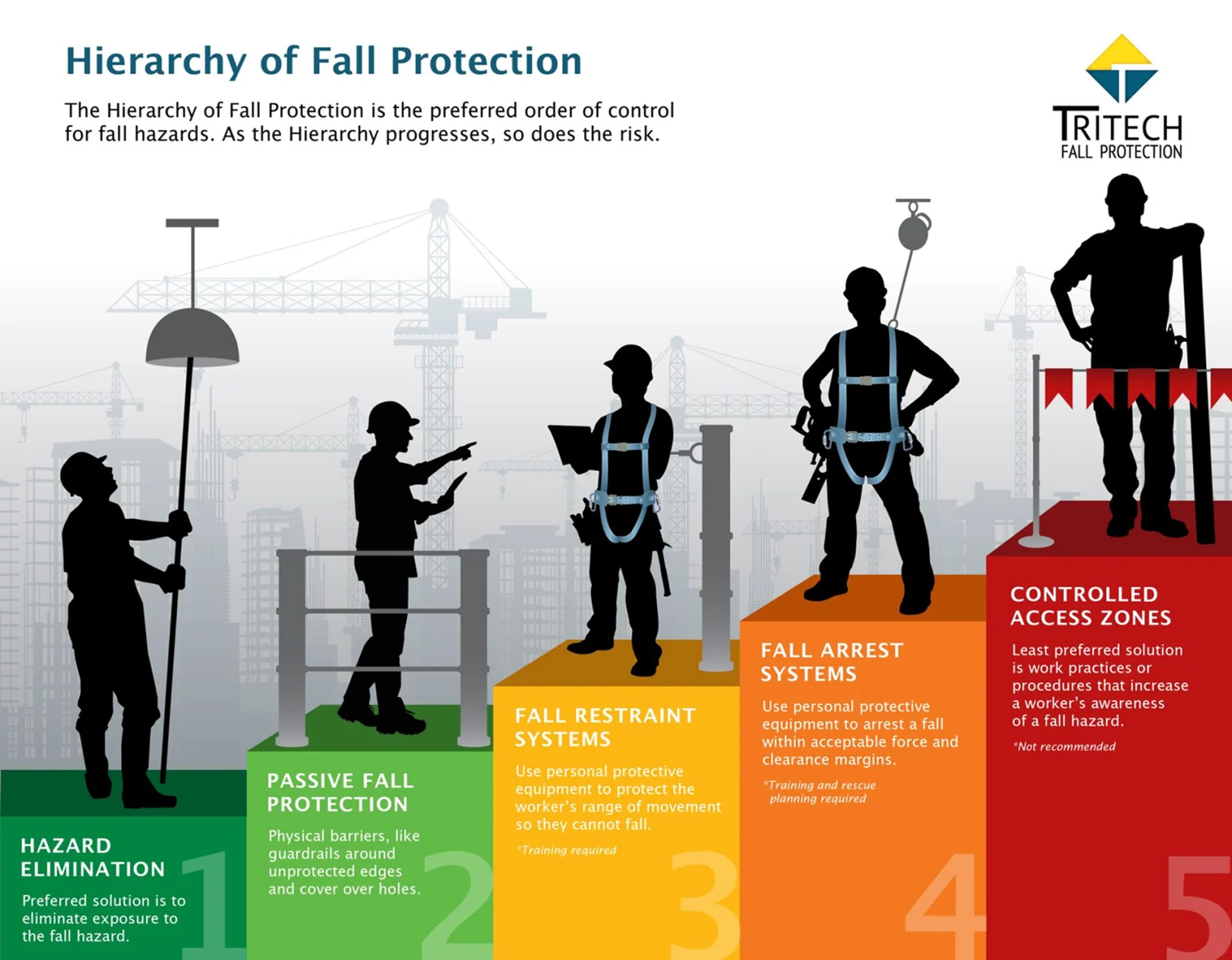
The hierarchy of fall protection ranks safety controls from most to least effective: eliminate the hazard, use passive protection like guardrails, apply fall restraint, rely on fall arrest as a last line of defense, and support everything with training and procedures. The higher you stay on this hierarchy, the safer your workers are—because true protection comes from preventing falls, not just stopping them.
There’s no second doubt that falls are the leading causes of injury or worse in workplace industries where workers need to work at heights. OSHA has made it clear by providing the guidelines to follow to make sure we minimize the risks of any injury.
That’s where the Hierarchy of Fall Protection comes in. Think of it like a ladder. Each steps represents a level of protection starting with the most effective and working down from there. The higher you stay on the ladder, the safer everyone is
Let’s climb the ladder of hierarchy of fall protection with some real-world examples.
1. Eliminate the Hazard
The safest fall is the one that can’t happen.
If there’s no risk, there’s no need for harnesses or rescue plans. That’s why eliminating the hazard is always the best option.
Example:
If you’re installing HVAC equipment, don’t send someone up to the roof. Build it on the ground and lift it into place with a crane. No one has to climb. No one is at risk.
2. Passive Fall Protection
Block access to the danger altogether.
This means using guardrails, covers, or barriers that protect people without them having to do anything. Once installed, they’re always working no reminders or special equipment needed.
Example:
Guardrails around a mezzanine or skylight covers. They’re simple, reliable, and always on duty.

3. Fall Restraint
Let workers move freely but not too close to danger.
This approach still uses gear, but it’s designed to prevent someone from reaching the edge in the first place. It’s proactive, not reactive.
Example:
A roofer connects to a fixed anchor using a short lanyard. They can move around the roof, but not close enough to fall off. It’s freedom with built-in protection.

4. Fall Arrest
This is the backup plan what happens if someone does fall.
Fall arrest systems are designed to stop a fall in progress. But they come with responsibilities: proper gear, proper setup, and thorough training. This is your last line of defense.
Example:
A worker slips while walking on a steel beam. Their harness and lifeline catch them before they hit the ground. It only works because the gear was inspected, the anchor was secure, and they knew how to use it.
Important:
- Always have a rescue plan in place
- Inspect gear before every use
- Make sure everyone is trained properly

5. Administrative Controls
These are your policies, signs, training sessions, and toolbox talks.
They help raise awareness and build good habits, but they rely on people doing the right thing every single time even when they’re tired, distracted, or in a rush.
Example:
You put up warning lines on a flat roof, hang safety signs, and hold briefings before shifts. These are good practices, but they won’t physically stop someone from falling.
Why the Hierarchy Matters
Too often, companies jump straight to harnesses because it feels like they’re doing something. But handing someone a harness doesn’t mean they’re safe. It just means you’re hoping everything else goes right.
Real safety starts before anyone leaves the ground. It starts with better questions:
- Do we even need someone up there?
- Can we build or install this differently?
- Is there something we can put in place to block access entirely?
Bottom Line
If you’re serious about protecting your people, follow the hierarchy. Start at the top and only move down when there’s truly no other choice.
Don’t just check the safety box. Build a system that actually keeps people safe.
That’s how you keep your team on their feet—and how everyone gets home safe.
Answers to key questions
What are the 5 levels of fall protection?
The five levels of the fall protection hierarchy, in order of preference, are elimination (remove the hazard or the need to work at height), passive prevention (guardrails, covers, and other barriers that need no worker action), fall restraint (a tether that keeps the worker from reaching the edge), fall arrest (a harness-and-anchor system that stops a fall in progress), and administrative controls (warning lines, training, and procedures). The order reflects reliability: the higher the control sits, the less it depends on a worker doing something correctly every time. Tritech works down this hierarchy on every project, specifying the highest control that is feasible for each exposure, whether the governing trigger is OSHA’s 4-foot general-industry rule (29 CFR 1910.28(b)(1)) or the 6-foot construction rule (29 CFR 1926.501(b)(1)).
What are the 4 types of fall protection?
The four-type framing is the same hierarchy condensed: fall elimination, fall prevention (passive barriers such as guardrails and covers), fall arrest (harness-based systems), and administrative controls. The five-level version separates fall restraint from fall arrest; the four-type version groups the harness-based controls together. Either way, passive prevention is preferred wherever it is feasible.
What are the three types of fall protection systems?
The common three-way cut is elimination, prevention, and arrest: remove the hazard, block access to it with a physical barrier, or stop the fall after it starts. Whether a source lists three, four, or five types, it is the same hierarchy sliced at different levels of detail, and the order of preference does not change: eliminate first, prevent second, and arrest only when the higher controls are not feasible.
What are the sources of fall protection?
In OSHA terms, the recognized system options are guardrail systems, safety net systems, and personal fall arrest systems; those are the compliant choices at the construction trigger under 29 CFR 1926.501(b)(1). General industry adds options for specific exposures, such as covers over holes and designated areas for temporary, infrequent work on low-slope roofs (29 CFR 1910.28(b)(13)). Which source fits a given exposure is exactly what the hierarchy decides.


