Industry Case Study | Engineered Fall Protection Systems
Fall Protection for Industrial Manufacturing, Aerospace & Defense
Compliant Engineered Fall Protection for Florida’s Manufacturing Corridors and Aerospace Facilities
Prepared by Tritech Fall Protection Systems | Orlando, Florida | tritechfallprotection.com | Truly Turnkey Since 1993
Executive Summary
Florida’s industrial landscape is one of the most diverse and rapidly expanding in the United States. From aerospace manufacturing corridors along the Space Coast to advanced manufacturing facilities in Jacksonville, Tampa, and Miami, workers are routinely exposed to fall hazards while working at heights across complex multi-level facilities.
This case study examines the specific fall protection and safe access challenges facing Florida’s industrial manufacturing and aerospace and defense sectors, and demonstrates why a turnkey, single-source approach to engineered fall protection systems delivers measurably better outcomes than fragmented strategies. Tritech Fall Protection Systems provides in-house engineering, custom design, professional installation, system certification, worker training, and ongoing inspection services—under one roof, one point of accountability.
Industrial Manufacturing: Fall Hazards and Solutions
Florida’s manufacturing sector employs hundreds of thousands of workers across facilities that produce everything from electronics and medical devices to building materials, plastics, and processed foods. These facilities present a wide spectrum of fall hazards that require engineered fall protection systems rather than portable equipment alone.
Elevated Process Equipment and Mezzanines
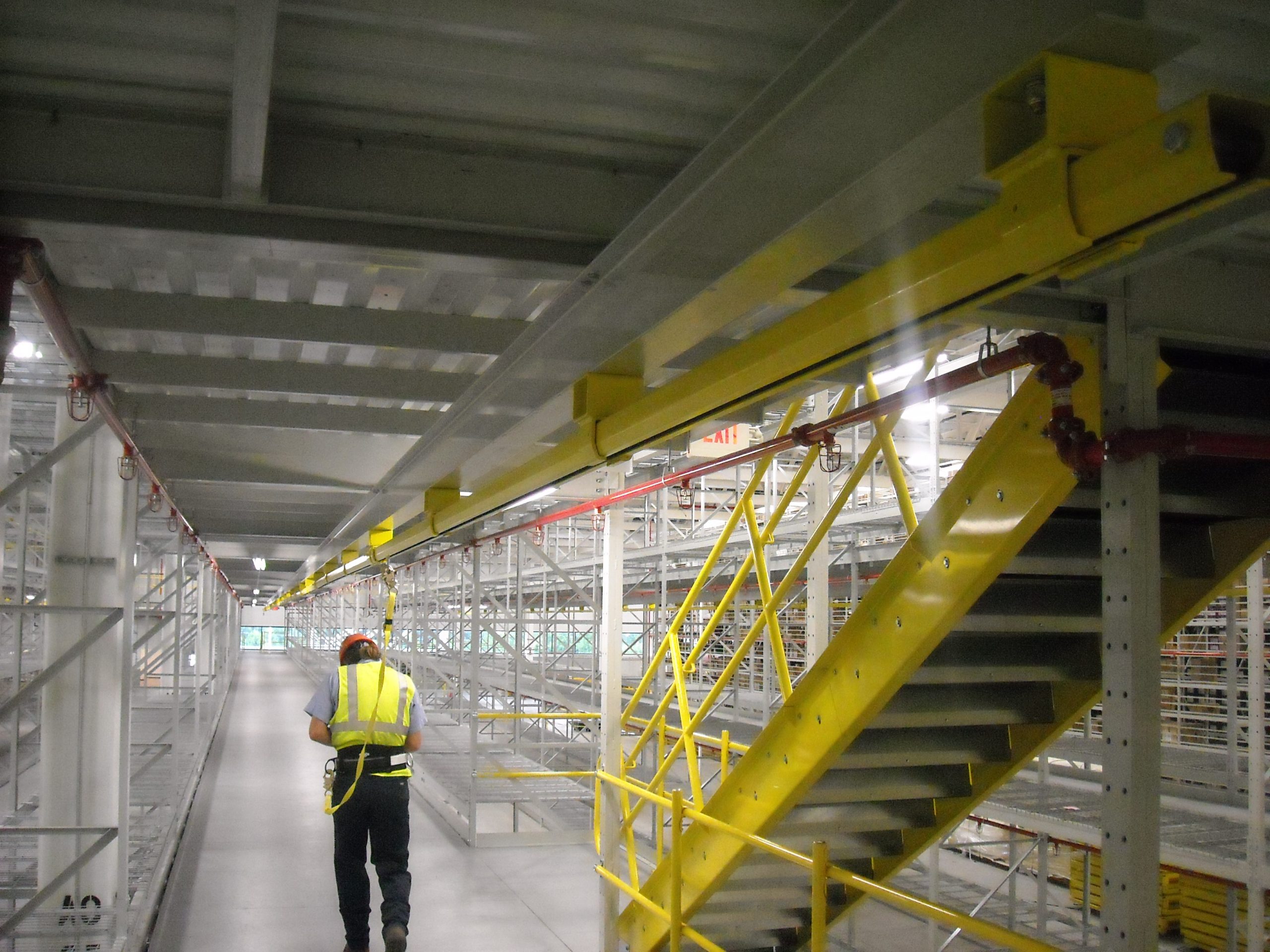
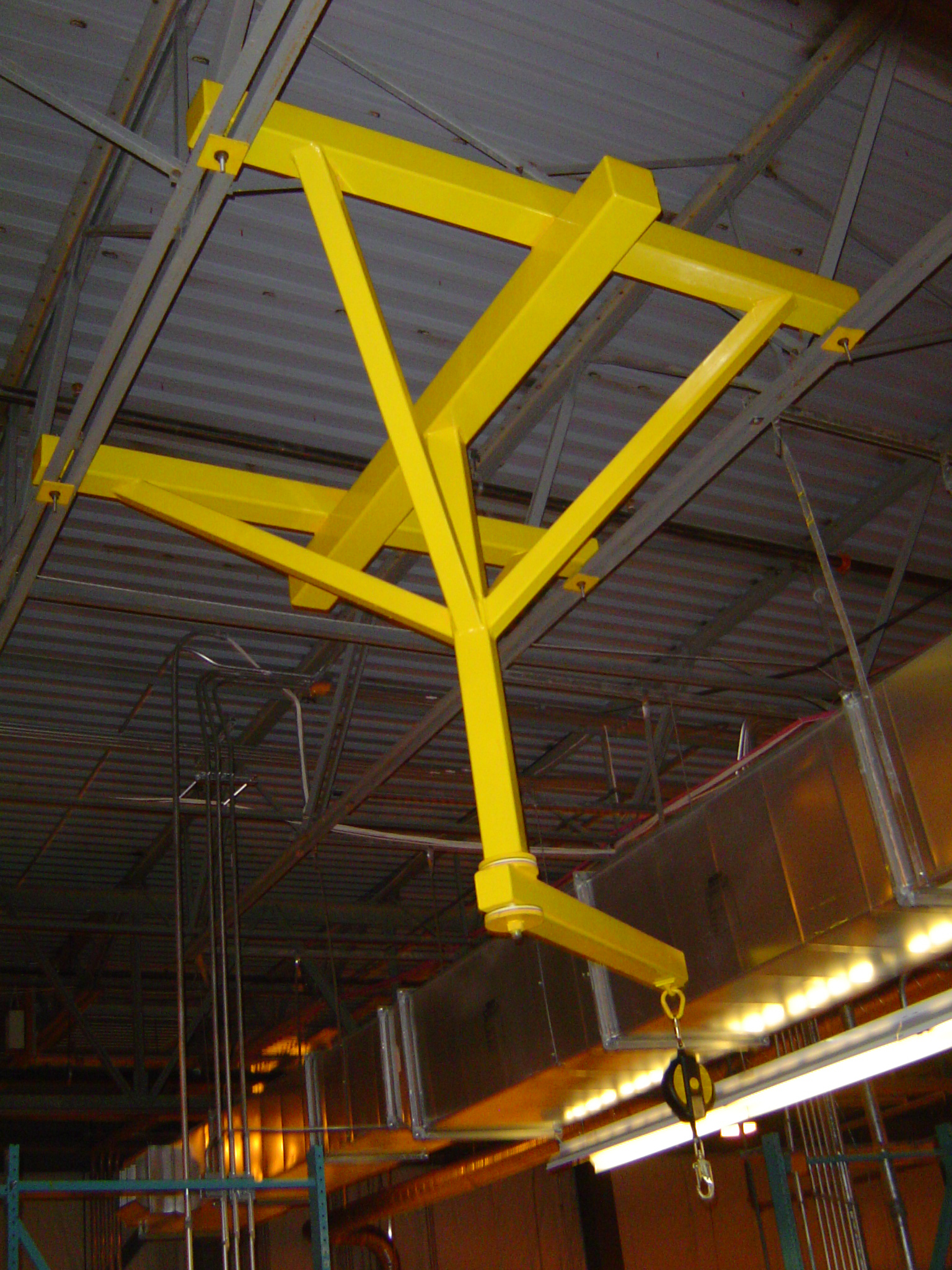
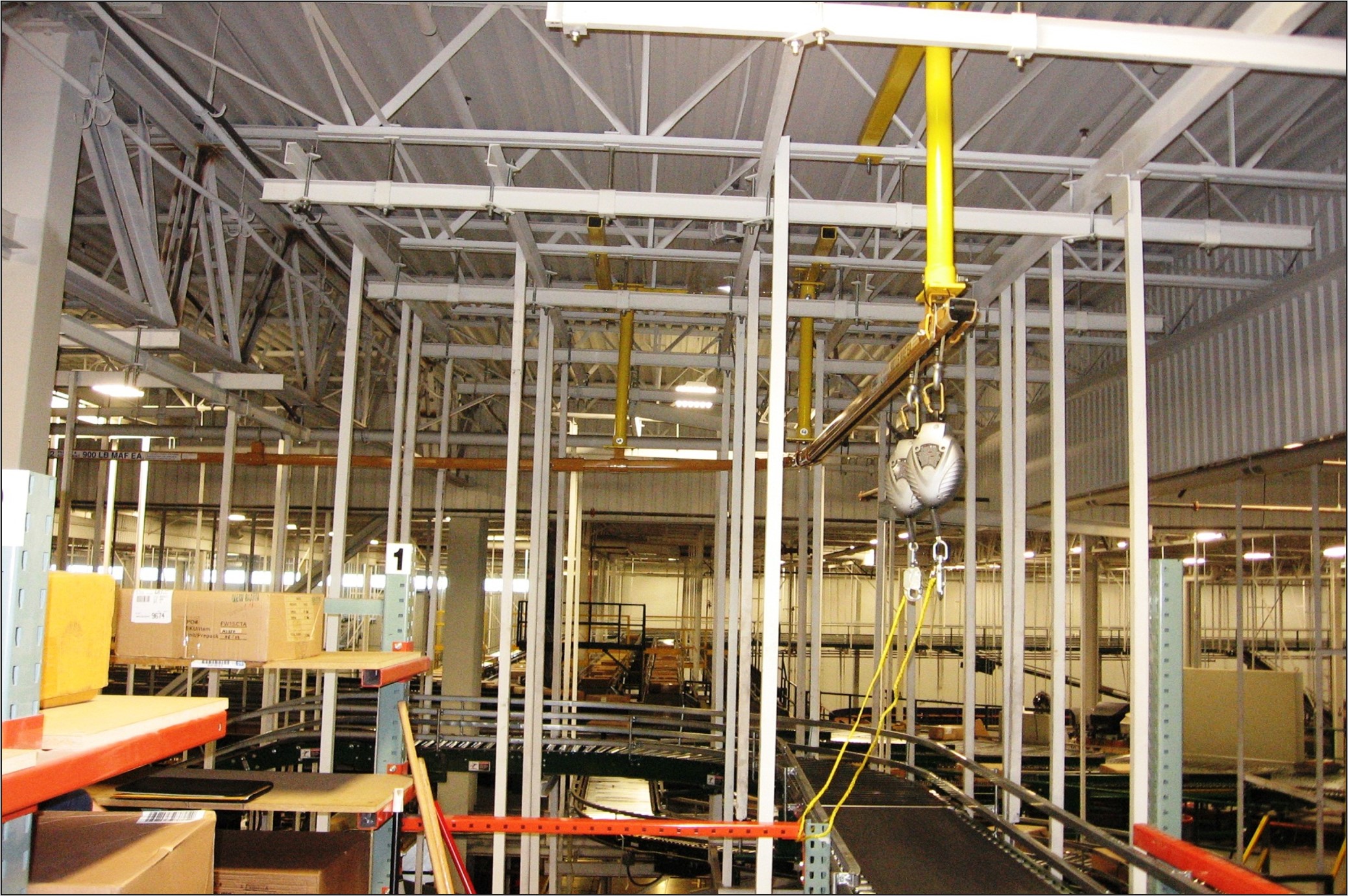
Manufacturing plants rely on multi-level production lines, conveyor systems, and elevated platforms that require frequent worker access for operation, maintenance, and quality control. Heights ranging from 10 to 50 feet are common, and the repetitive nature of these tasks can breed complacency—making engineered fall protection systems that provide passive, continuous protection through self-retracting lifelines (SRLs), rigid rail systems, and permanent anchor points essential to maintaining fall protection compliance.
Rooftop Mechanical Units and Leading Edge Hazards
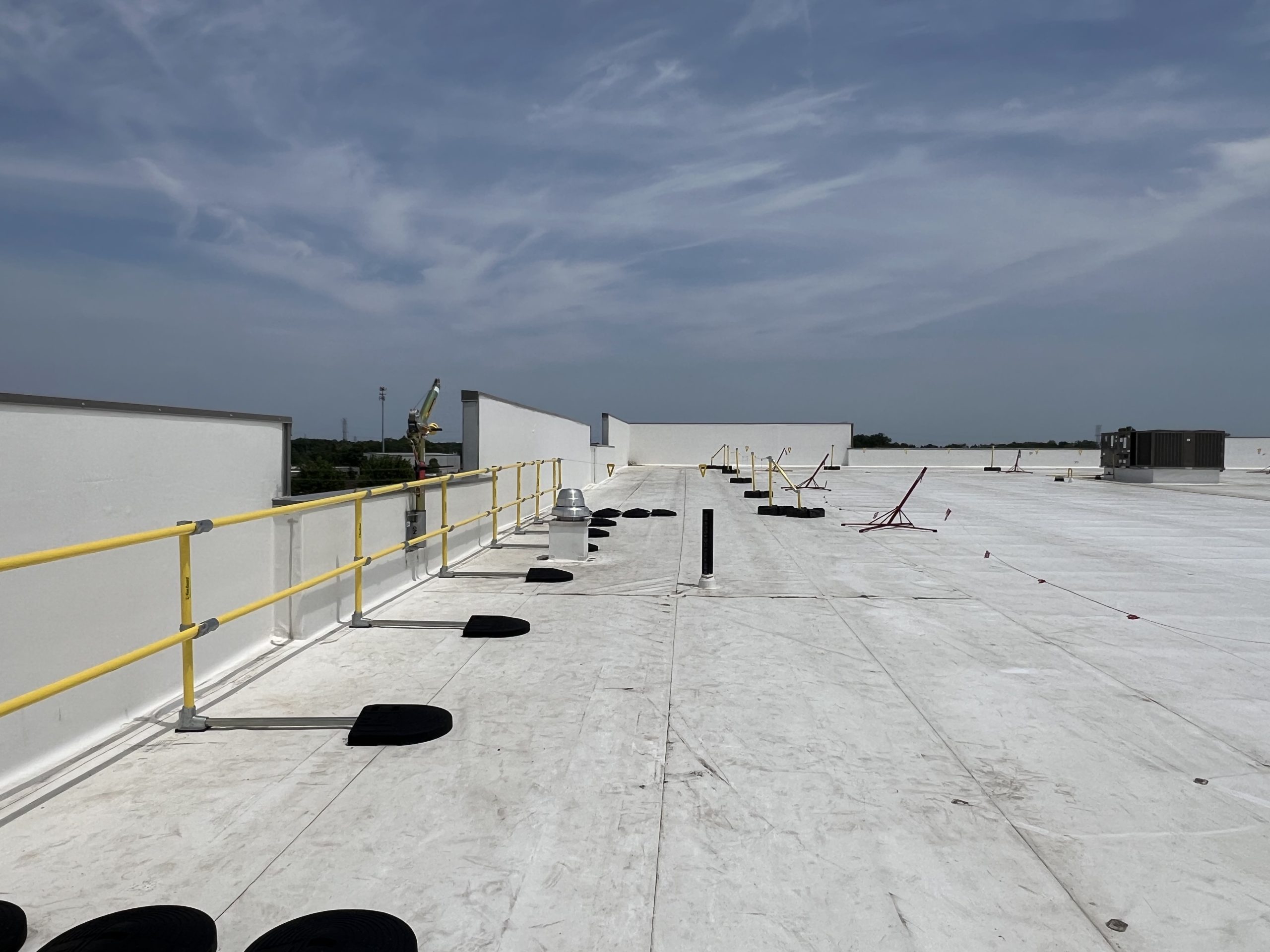
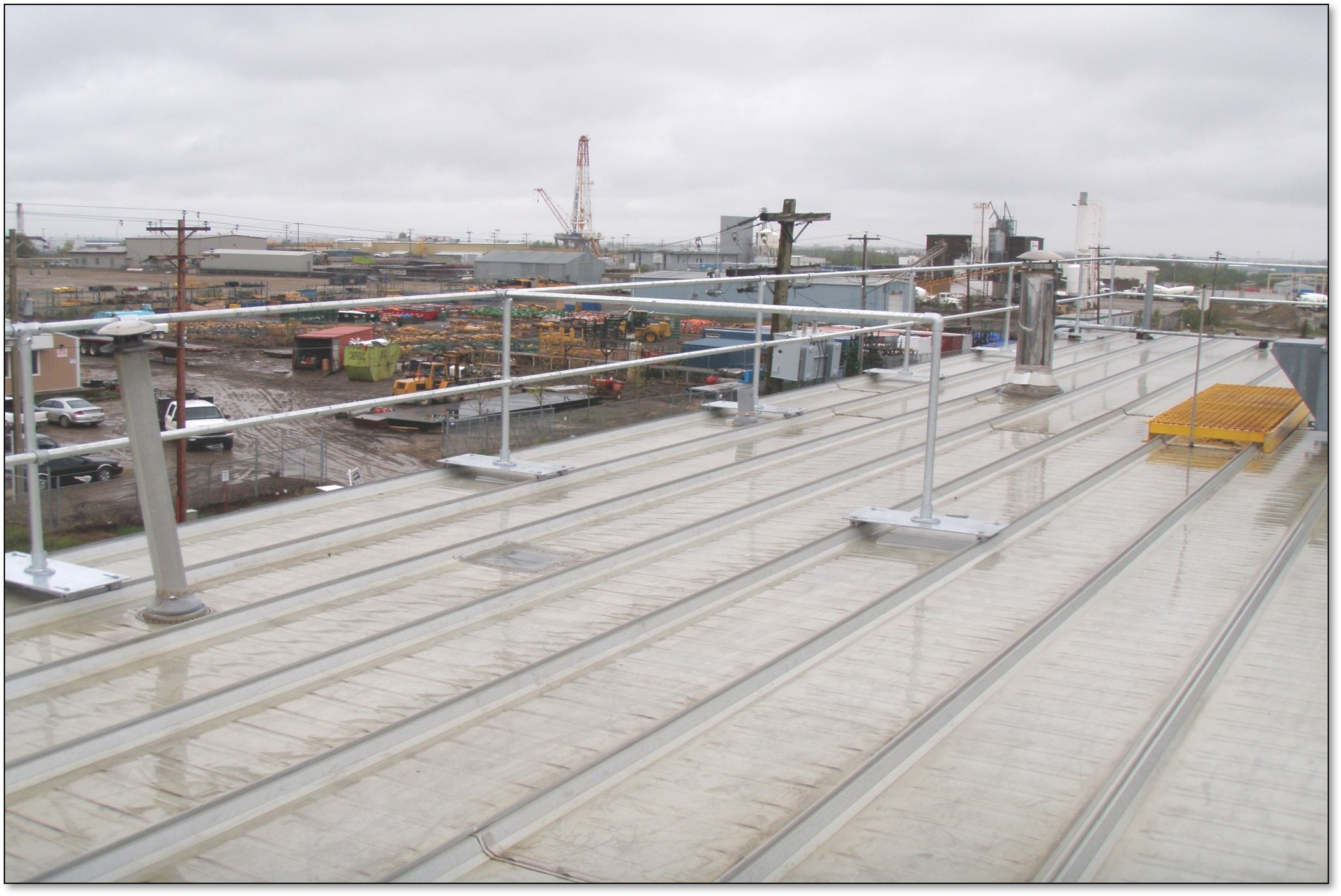
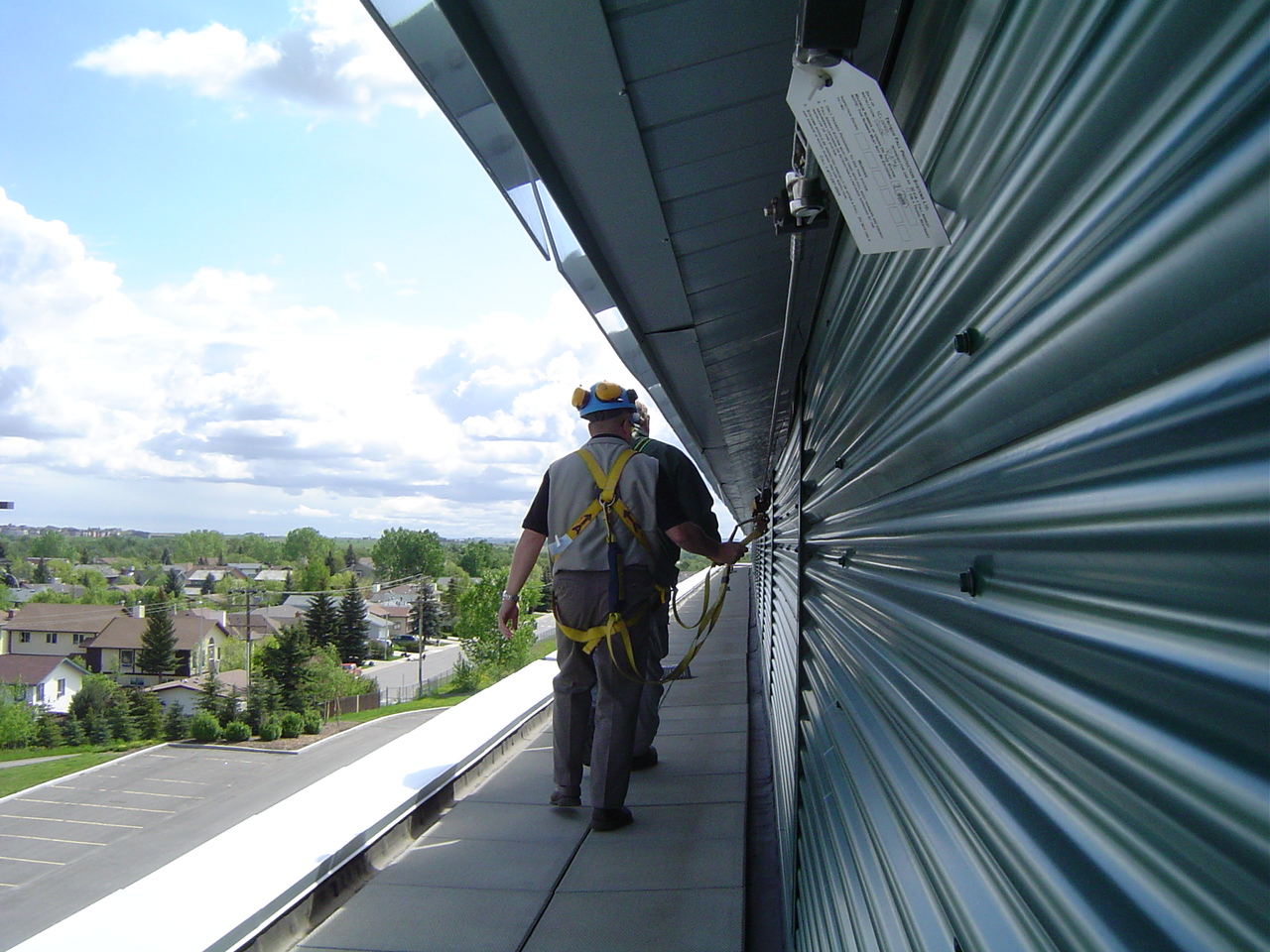
Florida’s climate demands extensive HVAC infrastructure on manufacturing facilities. Roof fall protection for these rooftop units requires permanent solutions—including safety railing, guardrail systems, and horizontal lifeline systems—to protect technicians from unprotected leading edges, skylights, and roof penetrations at heights that are frequently fatal in the event of a fall.
Loading Docks and Vehicle Access
Raw material receiving and finished product shipping involve fall hazards at loading docks, railcar access points, and tanker truck loading areas. Workers climbing on and off vehicles and accessing hatches require overhead horizontal lifeline systems or rigid rail fall arrest systems that allow free movement while maintaining continuous personal fall arrest system (PFAS) connection.
Tank and Silo Access
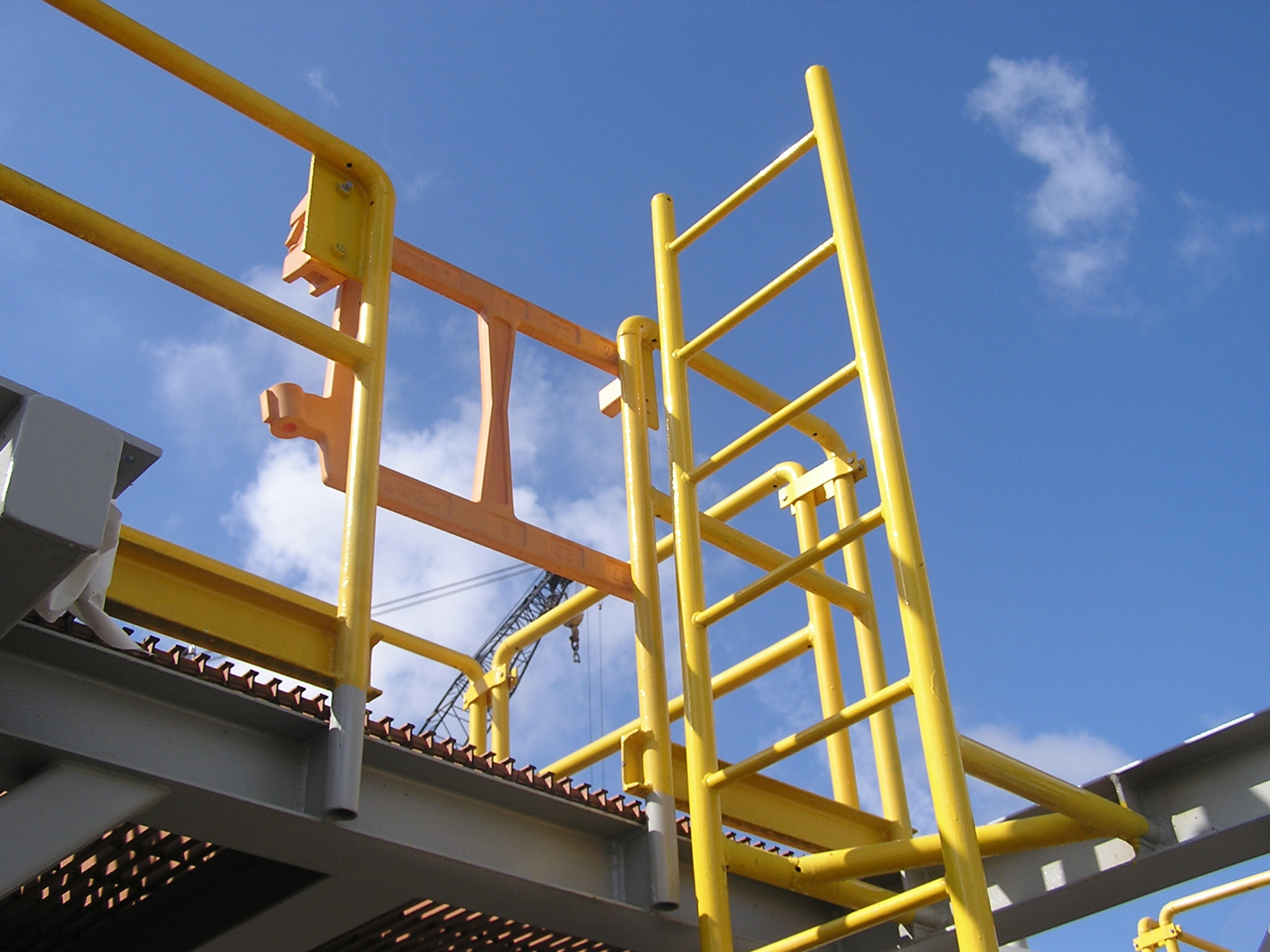
Bulk storage of raw materials, chemicals, and finished products in tanks and silos requires regular access for gauging, sampling, cleaning, and inspection—often at heights exceeding 40 feet. Vertical lifeline systems, engineered ladder safety systems, and certified tie-off points are critical for these high-exposure applications.
Aerospace and Defense: Fall Arrest at Every Scale
Florida’s aerospace sector—anchored by Kennedy Space Center, Cape Canaveral Space Force Station, and major manufacturing and maintenance facilities operating across the Space Coast and Central Florida—represents some of the most demanding environments for working at heights in any industry. The scale, geometry, and operational constraints of these facilities require custom-engineered fall protection systems that cannot be sourced from standard catalogues.
Aircraft Assembly and Maintenance
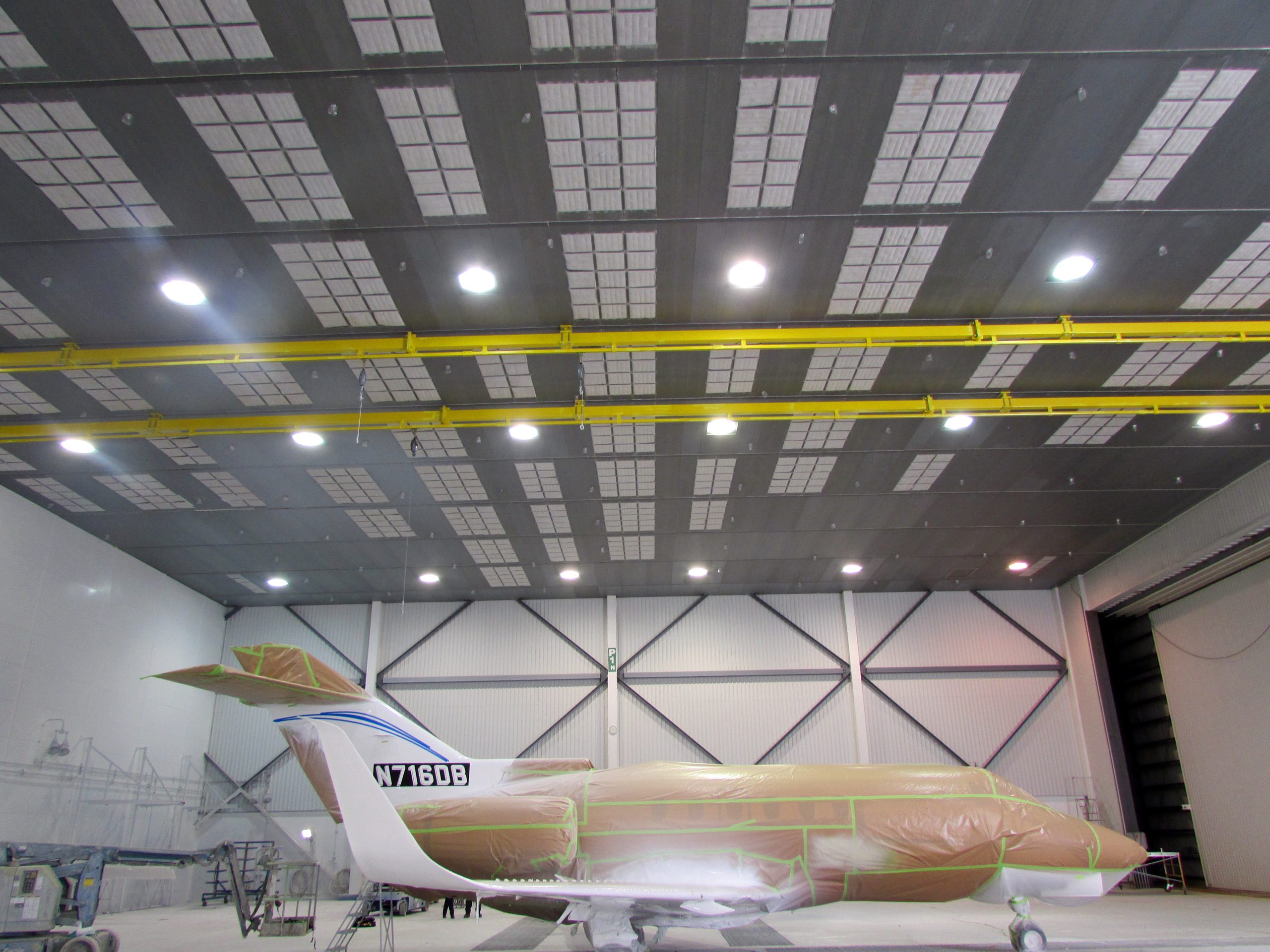
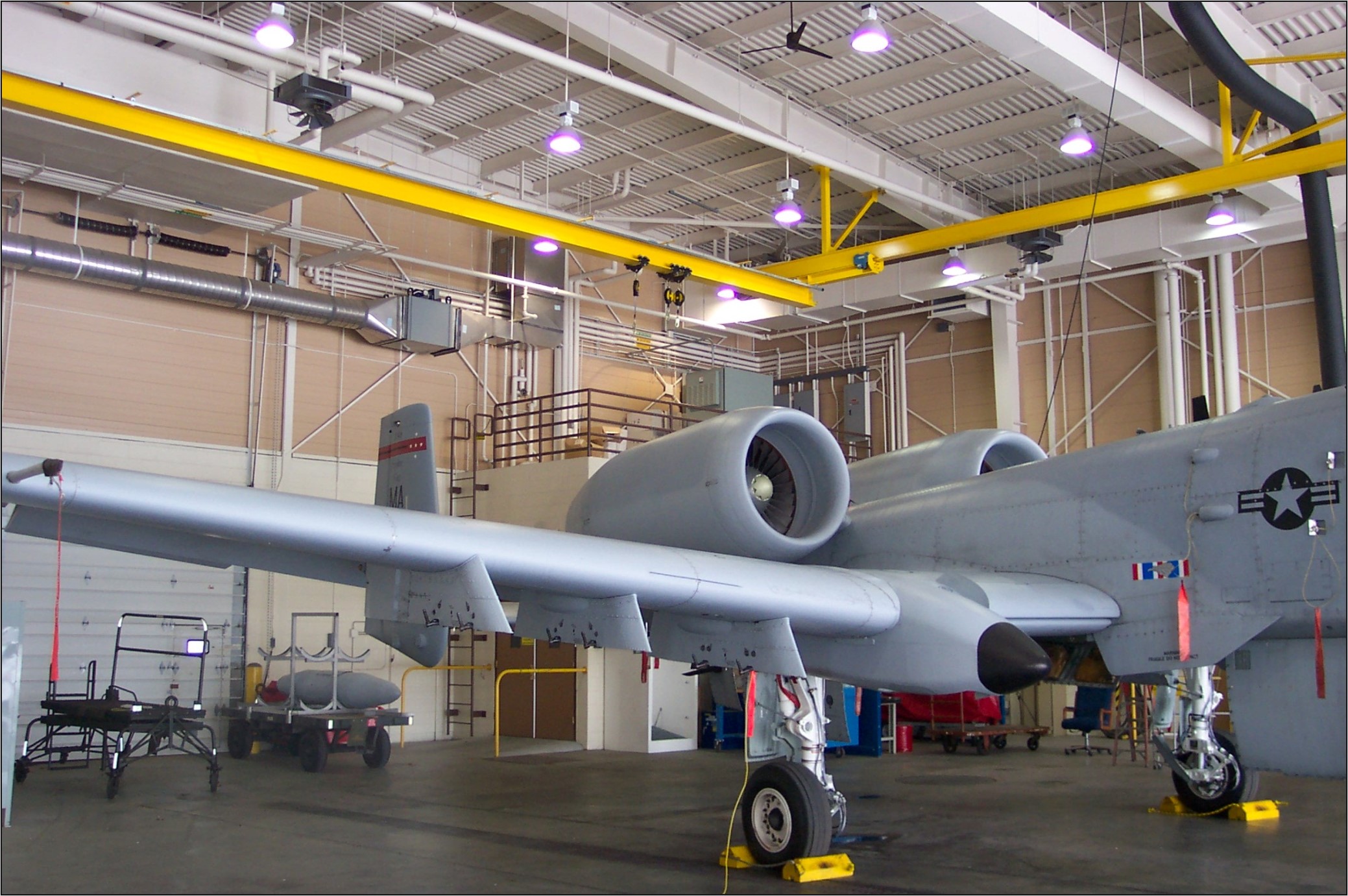
Workers performing assembly, inspection, and maintenance on aircraft and spacecraft operate at heights ranging from wing-level platforms to the tops of vertical assembly buildings exceeding 500 feet. Overhead rigid rail fall arrest systems and horizontal lifeline systems provide continuous PFAS coverage across these vast work zones, allowing maintenance crews to move freely while remaining connected to certified anchor points at all times.
Launch Infrastructure
Service structures, mobile launch platforms, and payload processing facilities at Florida’s spaceports present extreme-height fall hazards in environments where precision, cleanliness, and operational constraints add layers of complexity to fall protection system design.
Hangars and Maintenance Depots
Military and commercial aviation maintenance, repair, and overhaul facilities across Florida require overhead fall protection systems—typically rigid rail or horizontal lifeline systems—that accommodate the full wingspan and fuselage height of aircraft while allowing maintenance crews to work efficiently.
Satellite and Payload Processing
Clean room environments for satellite assembly and payload integration require fall protection systems that meet both working at heights safety standards and contamination control requirements—a dual challenge that demands engineering expertise beyond what general safety suppliers can provide.
Florida’s Environmental Factors for Industrial and Aerospace Sites
“The scale, geometry, and operational constraints of these facilities require custom-engineered fall protection systems that cannot be sourced from standard catalogues.”
Hurricane and High-Wind Engineering
Florida is the most hurricane-prone state in the nation. Fall protection systems installed on industrial rooftops, exterior facades, and elevated outdoor structures must be engineered to withstand sustained wind loads and wind-driven debris associated with major hurricane events. This requires structural analysis that accounts for uplift forces, dynamic wind loading, and the interaction between fall protection anchorage and the building’s structural system.
Coastal Corrosion and Material Selection
With over 1,350 miles of coastline and a significant concentration of industrial and aerospace facilities within the coastal zone, corrosion is a persistent threat to fall protection system integrity. Salt-laden air accelerates oxidation of carbon steel components, degrades cable assemblies, and compromises anchor points and tie-off points over time—often without visible surface indication until the damage is advanced. Facilities within 15 miles of the coast require marine-grade stainless steel, hot-dip galvanized structural members, and corrosion-resistant hardware as standard practice.
Extreme Heat and Lightning Exposure
Florida’s combination of sustained high temperatures, intense UV radiation, and the highest lightning density in the United States creates additional engineering considerations. UV degradation of synthetic webbing and cable coatings must be accounted for in material selection and inspection scheduling. Lightning risk at exposed elevated positions—particularly on launch structures and communication towers—requires grounding considerations in metallic fall protection system design.
Compliance for Industrial and Aerospace Facilities
Florida operates under federal OSHA jurisdiction. For aerospace and defense facilities, additional requirements under NASA safety standards and Department of Defense directives may apply, creating overlapping fall protection compliance obligations that demand specialized knowledge to navigate.
The Tritech Solution: Truly Turnkey Industrial & Aerospace Fall Protection
Tritech Fall Protection Systems has been delivering custom-engineered fall protection solutions across North America since 1993. Headquartered in Orlando, Florida, with territory managers serving the entire state and dedicated teams experienced in the specific demands of Florida’s industrial and aerospace sectors, Tritech is not a distributor, not a general contractor, and not a single-product manufacturer. Tritech is a full-service, vertically integrated fall protection partner—owning every aspect of the process from initial conversation through decades of ongoing service.
Our 10-Step Turnkey Process
Comprehensive site evaluations identifying every fall hazard—from elevated mezzanines and leading edges requiring guardrail systems to launch infrastructure needing overhead anchor points and tie-off points.
Custom proposals specifying the right mix of engineered fall protection systems—horizontal lifelines, personal fall arrest systems, guardrail systems, self-retracting lifelines—aligned to your operational requirements and budget.
A dedicated PM manages your project end-to-end, coordinating around your facility’s production schedule to minimize disruption during fall protection installation.
Qualified persons engineer fall arrest systems and anchor points using advanced structural analysis, accounting for Florida wind loads, coastal corrosion, and building-specific structural capacity.
Fall protection systems designed for ease of use, pass-through capability, and minimum operational impact—tailored to how your workers actually perform their tasks while working at heights.
Marine-grade stainless steel anchor points, corrosion-resistant SRLs, and hurricane-rated safety railing selected for Florida’s specific environmental conditions across all suppliers.
Manufacturer-trained installers execute every horizontal lifeline, guardrail system, and fall arrest system installation to exact engineering specifications with quality control documentation at every stage.
Rigorous testing ensures every fall protection system meets or exceeds applicable standards.
On-site, hands-on training on proper use of personal fall arrest systems, SRLs, and all installed fall protection equipment. Electronic training records provide audit-ready compliance documentation.
Complete electronic documentation, annual inspection and recertification programs for all anchor points, horizontal lifeline systems, and fall arrest systems, plus emergency response capability—one call for any fall protection need.
Measurable Outcomes
Unified Liability and Fall Protection Compliance
Fragmented fall protection strategies create liability exposure: installer doesn’t speak to the engineer; safety consultant doesn’t know what was actually installed; annual inspection company operates from incomplete documentation. Turnkey delivery from Tritech creates a single point of accountability and unified liability. One team engineered it, installed it, certified it, and stands behind it.
Reduced Fall Incident Rates
Engineered fall protection systems providing passive, continuous protection (overhead rigid rail, permanent horizontal lifelines) eliminate reliance on worker behavior and eliminate the potential for human error in harness donning, lanyard connection, or anchor point selection. Active engagement with custom-installed systems increases worker confidence and compliance.
Extended Fall Protection System Lifespan
Purpose-built, permanently installed fall protection systems—designed for your specific facility geometry and environmental conditions—outlast portable equipment by a factor of 5-10x. Stainless steel components, hot-dip galvanized hardware, and engineered corrosion mitigation preserve system integrity across decades of Florida’s coastal salt spray and UV exposure.
Lower Total Cost of Ownership
While permanently installed systems have higher upfront installation cost, total cost of ownership over 15-20 years is substantially lower than continual replacement of portable equipment, annual recertification labor, and emergency replacement costs. One turnkey installation delivers decades of reliable service under a single maintenance and inspection program.
Conclusion
Florida’s industrial manufacturing and aerospace sectors operate in an environment where compliant fall protection is complicated by factors most other states do not face. Hurricane-force winds that stress guardrail systems and anchor points, aggressive coastal corrosion that degrades horizontal lifeline systems and self-retracting lifelines, extreme heat affecting personal fall arrest system components, and a regulatory landscape that demands both federal OSHA compliance and adherence to NASA and DoD standards—these realities mean that fall protection must be engineered with the same rigor applied to the critical processes these facilities run.
Tritech Fall Protection Systems delivers this level of rigor through a truly turnkey process refined over three decades and thousands of installations. With in-house engineering, manufacturer-trained teams based in Orlando, and a 10-step process that covers every phase of the fall protection lifecycle, Tritech provides Florida industrial and aerospace facilities with single-source liability, complete compliant fall protection, and the peace of mind that comes from knowing every component was designed, installed, and certified by one team that stands behind it all.
Ready to protect your industrial or aerospace facility?
Contact Tritech Fall Protection Systems to schedule a comprehensive fall hazard assessment. One call. One partner. Complete compliant fall protection.