SOLUTIONS
Skylight Railing
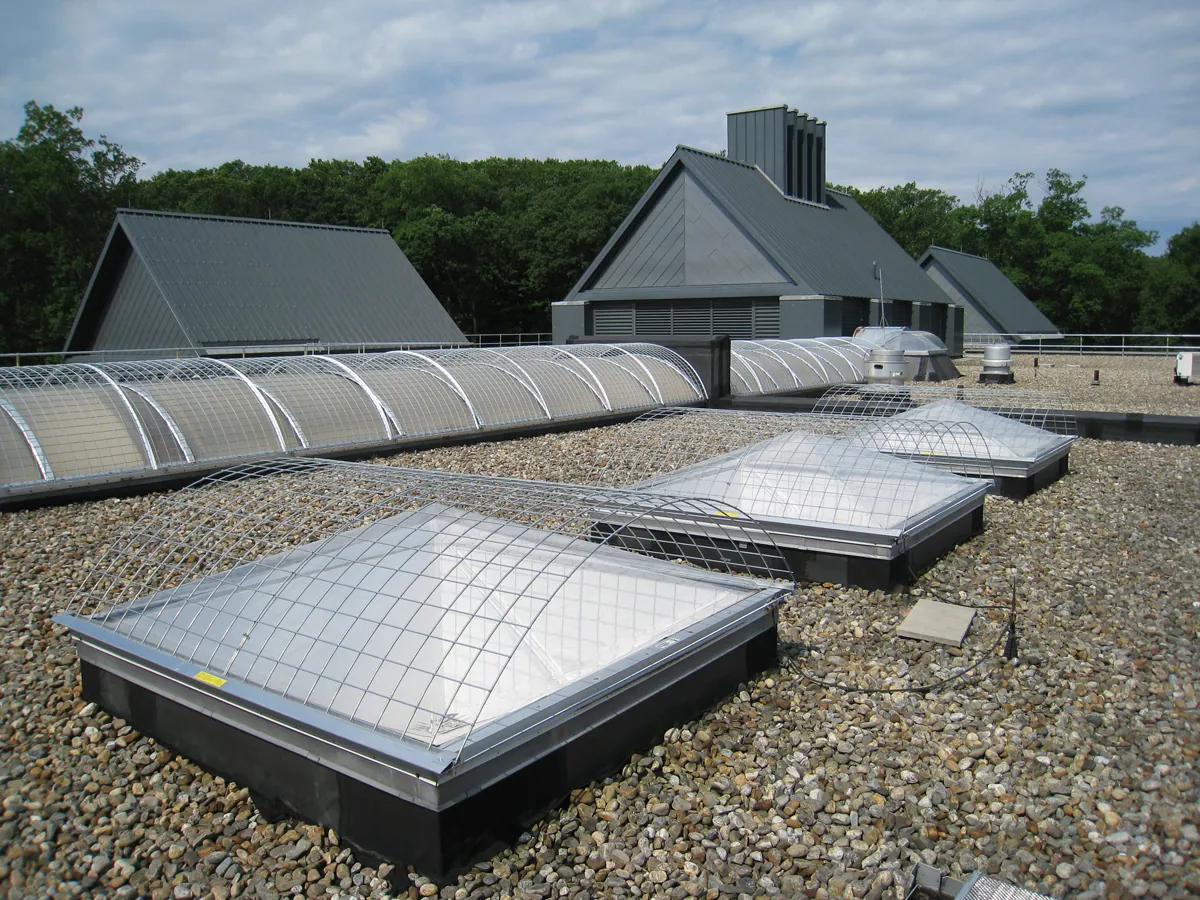
A free-standing skylight fall protection guardrail system that won’t penetrate your roof’s surface
Versatile
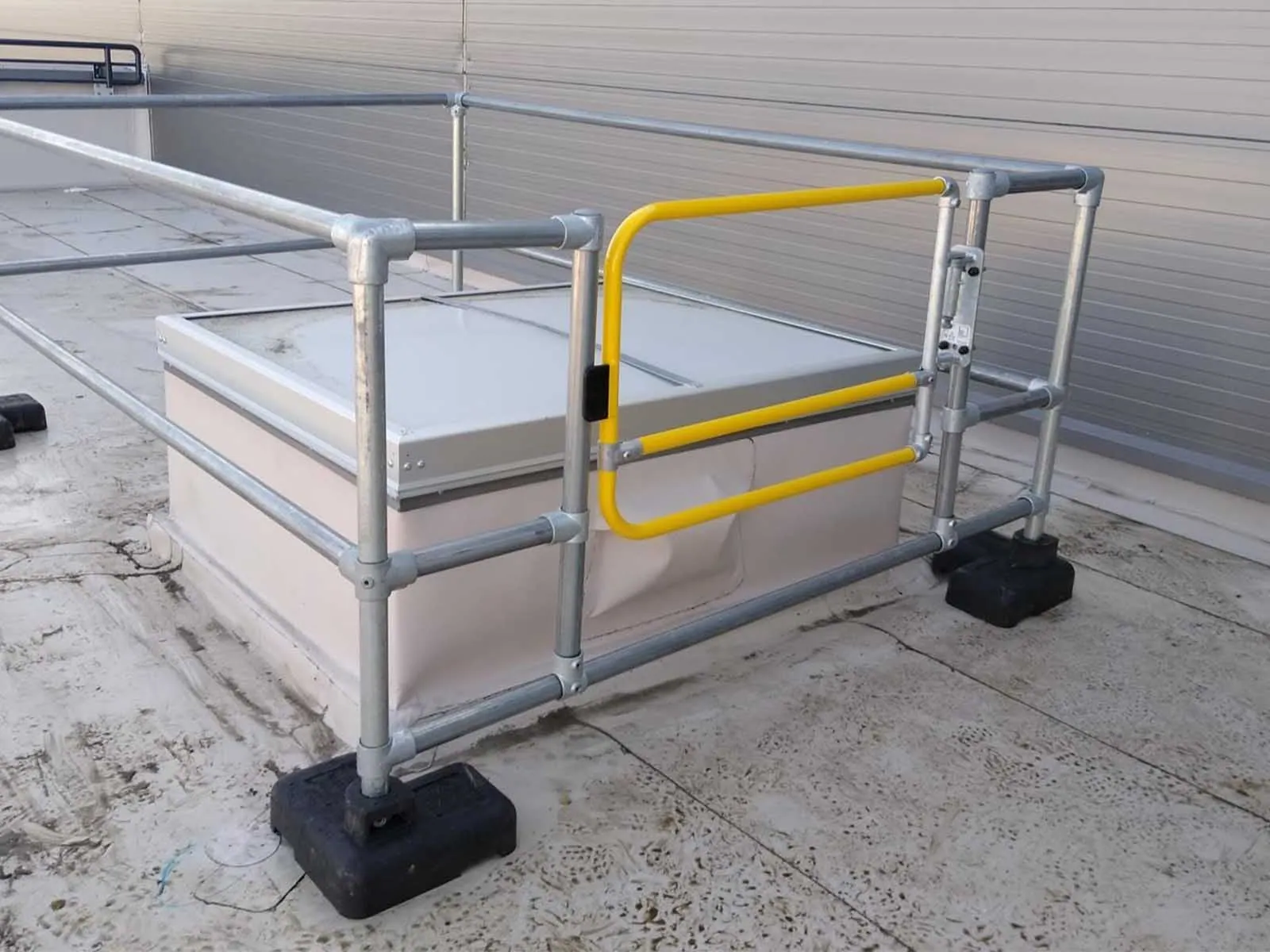
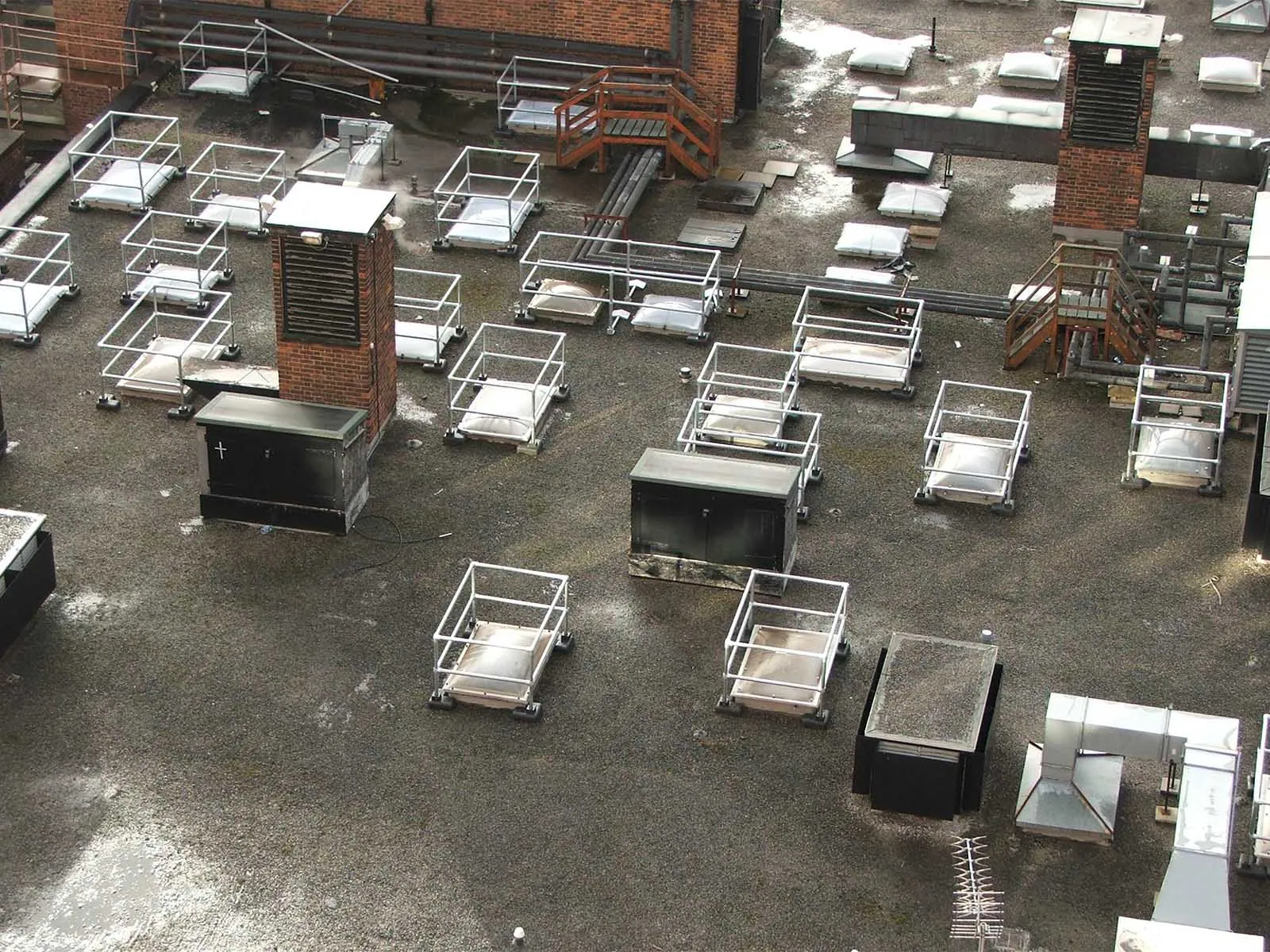
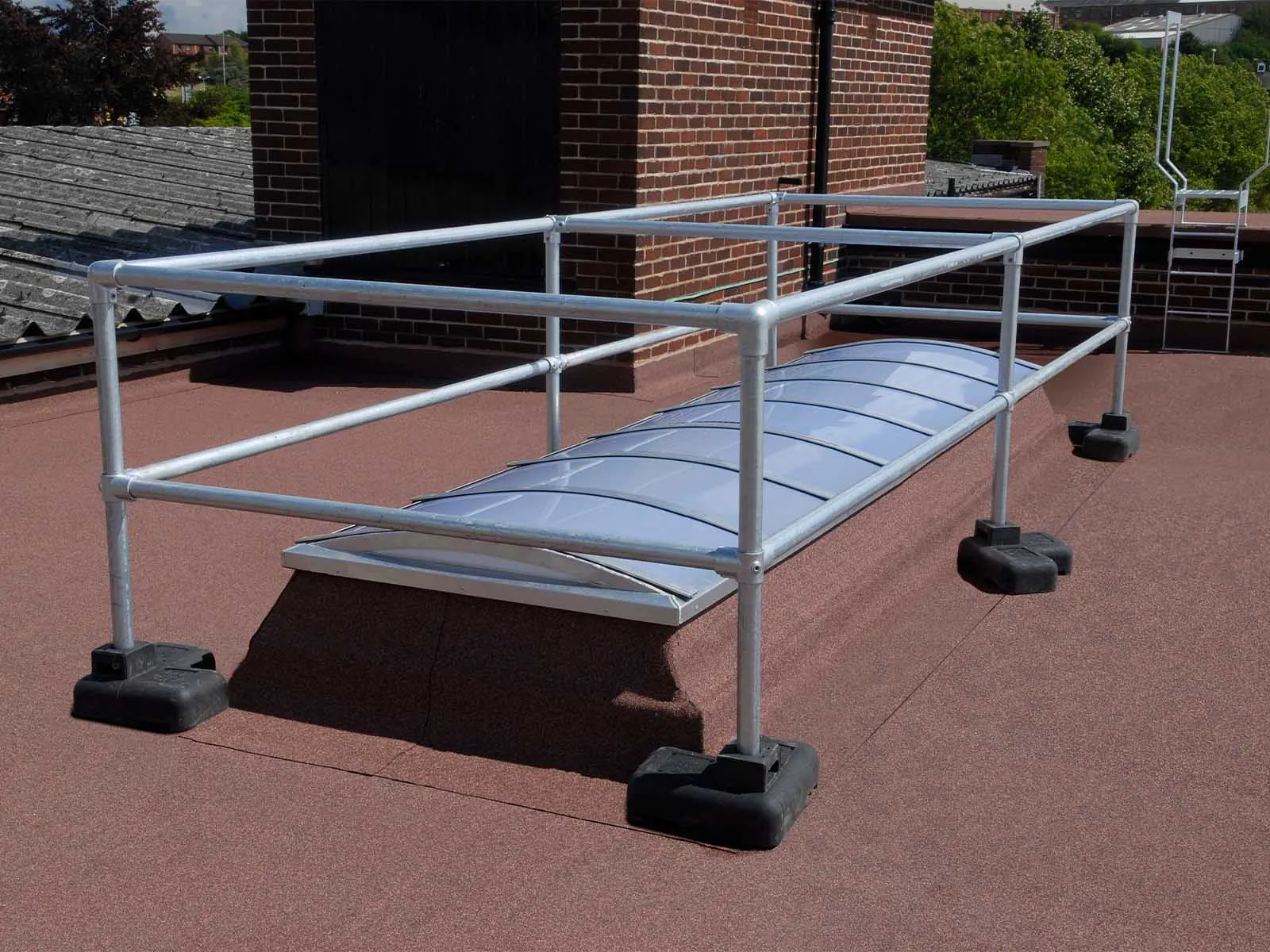
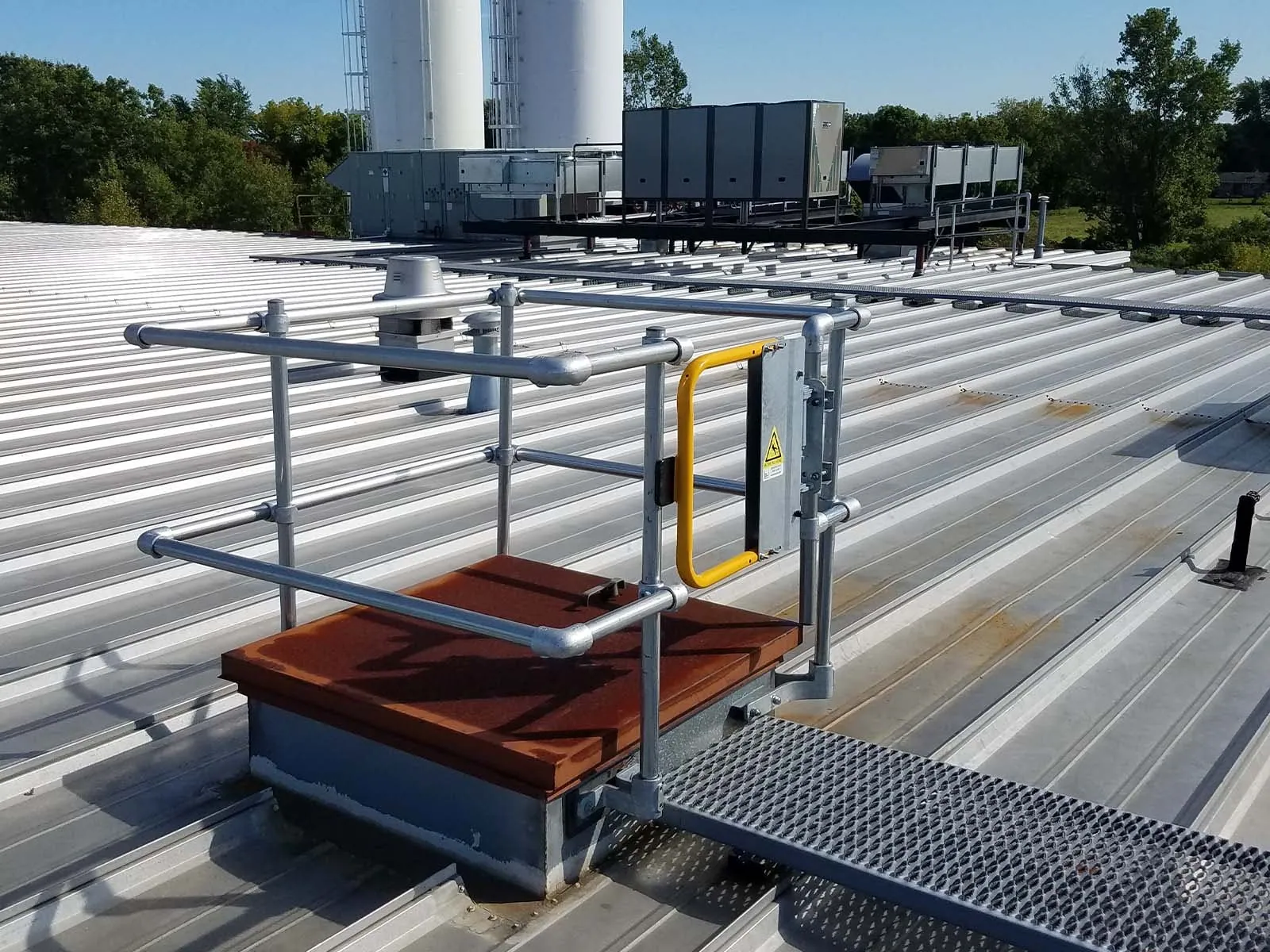
Our Skylight Railing system it’s comprised of standard components, such as: Vertical posts, hand and knee rails with associated 90° corner components, and special recycled PVC feet with clamping rings.
Modular
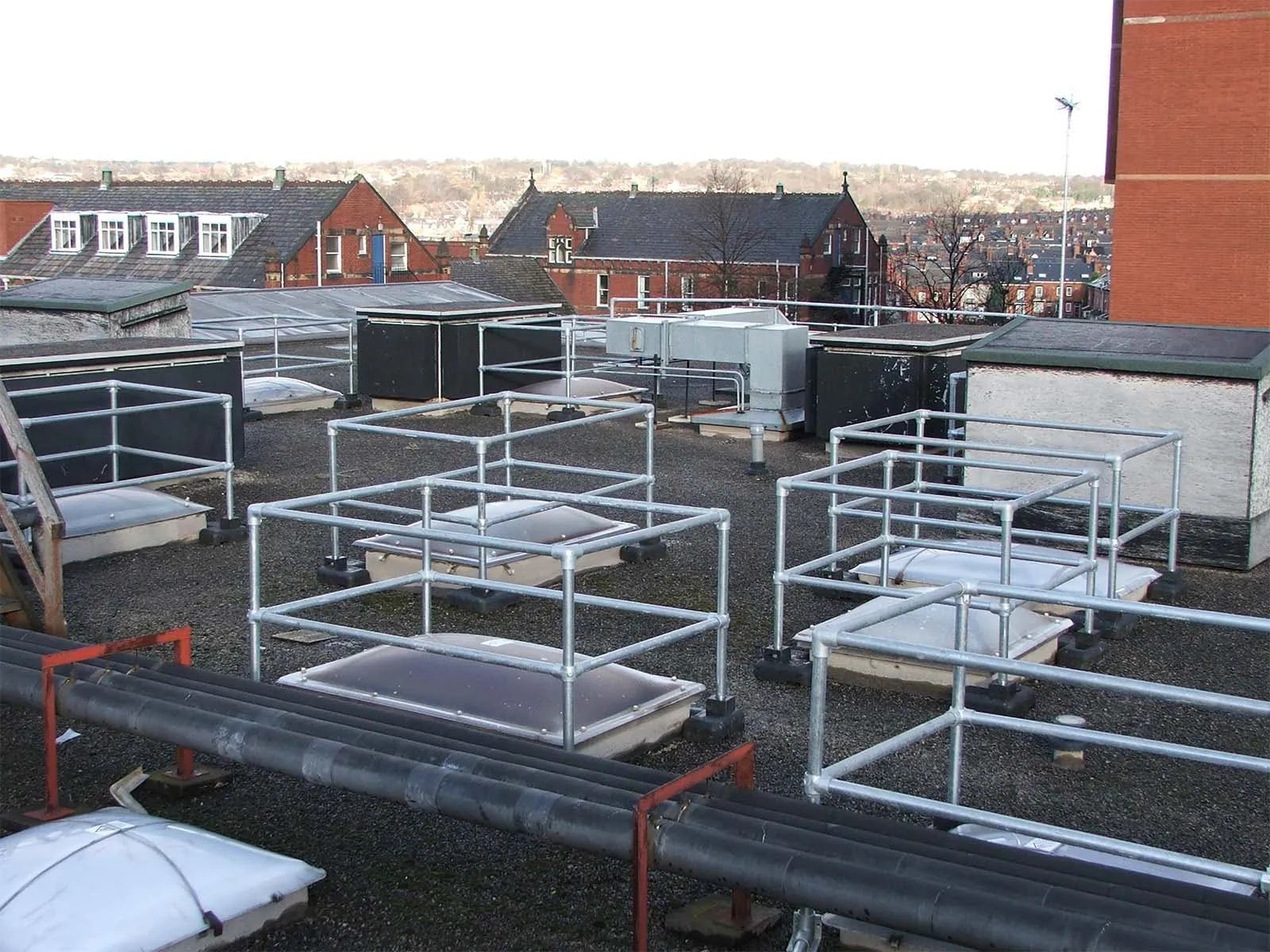
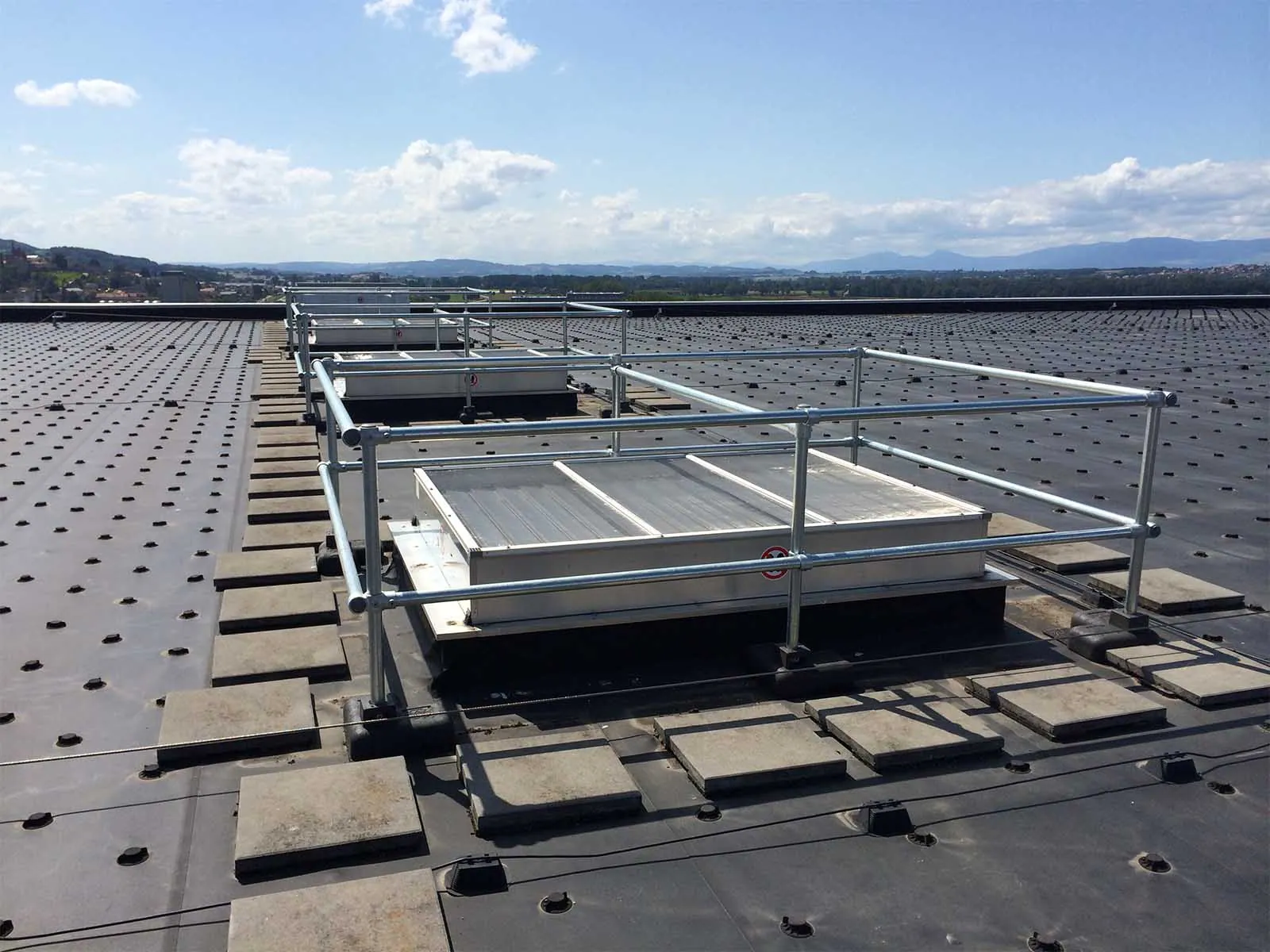
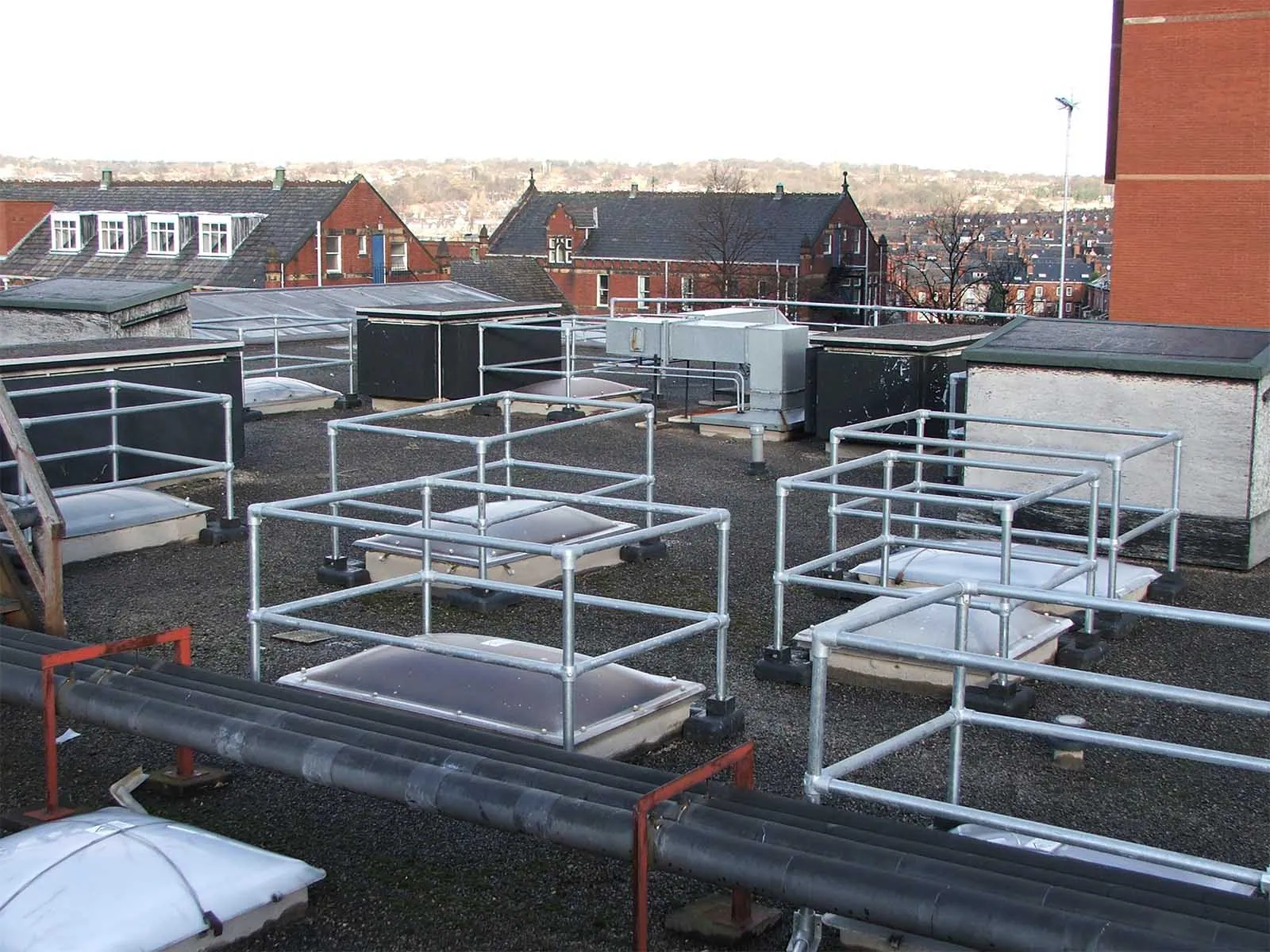
Even though it’s designed as a permanent solution, the Skylight Railing system is fully modular. It’s one solution that can be expanded for skylights of any size. The system is suitable for use on all roof surfaces, with a maximum pitch of 3°.
Compliant
Skylight Guardrail uses industry-leading components that are galvanized, making the system long-lasting and virtually maintenance-free. Our product has also been independently tested to OSHA Standard.
PROBLEMS WE SOLVE
Hidden Fall Hazards
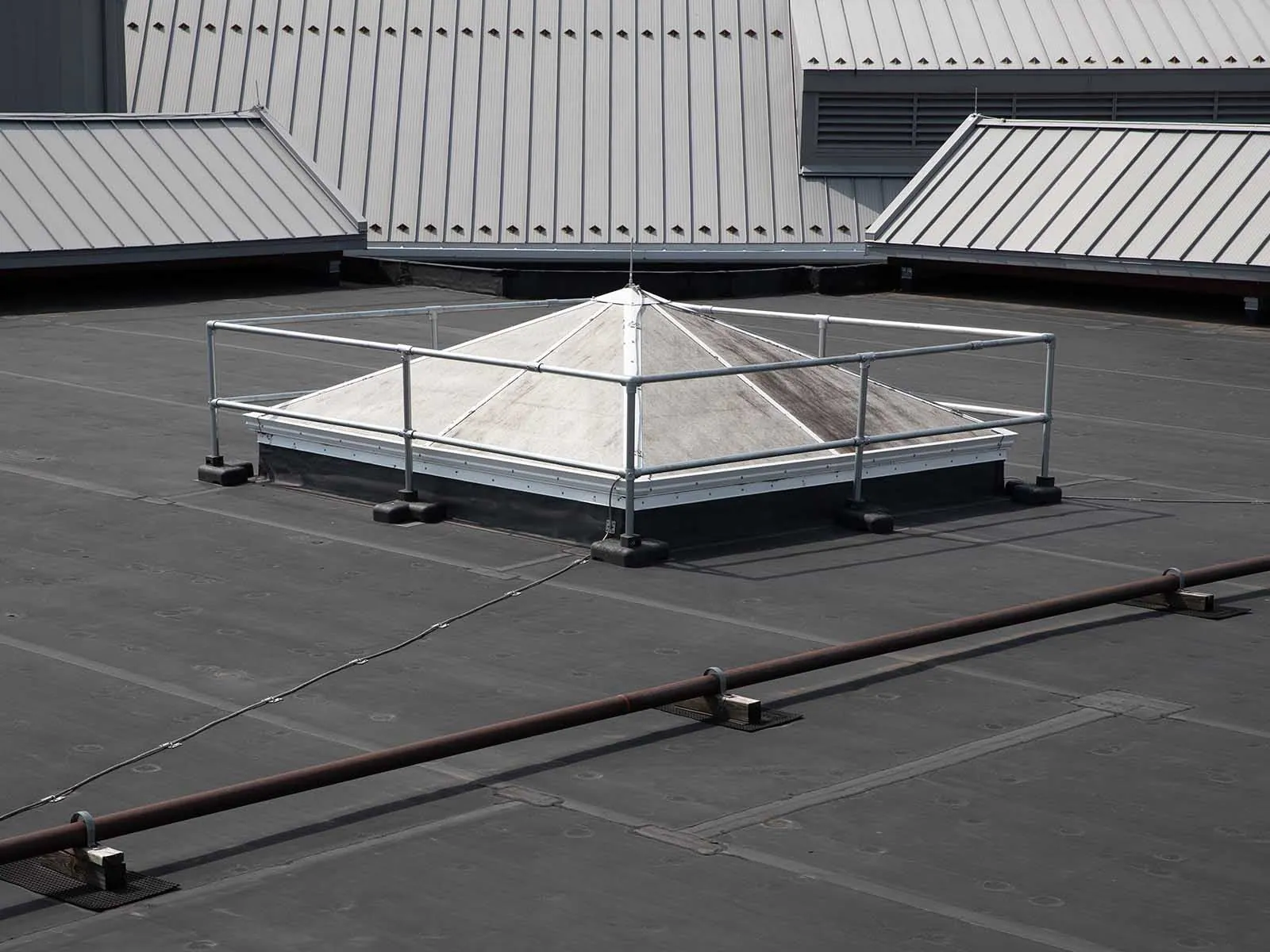
Unlike open edges or roof hatches, skylights can give a false sense of security, but pose a serious fall risk if not properly guarded. Workers sometimes mistake skylights for solid surfaces, especially when covered in dirt, snow, or debris, blending with the roof. This is why OSHA mandates skylight protection.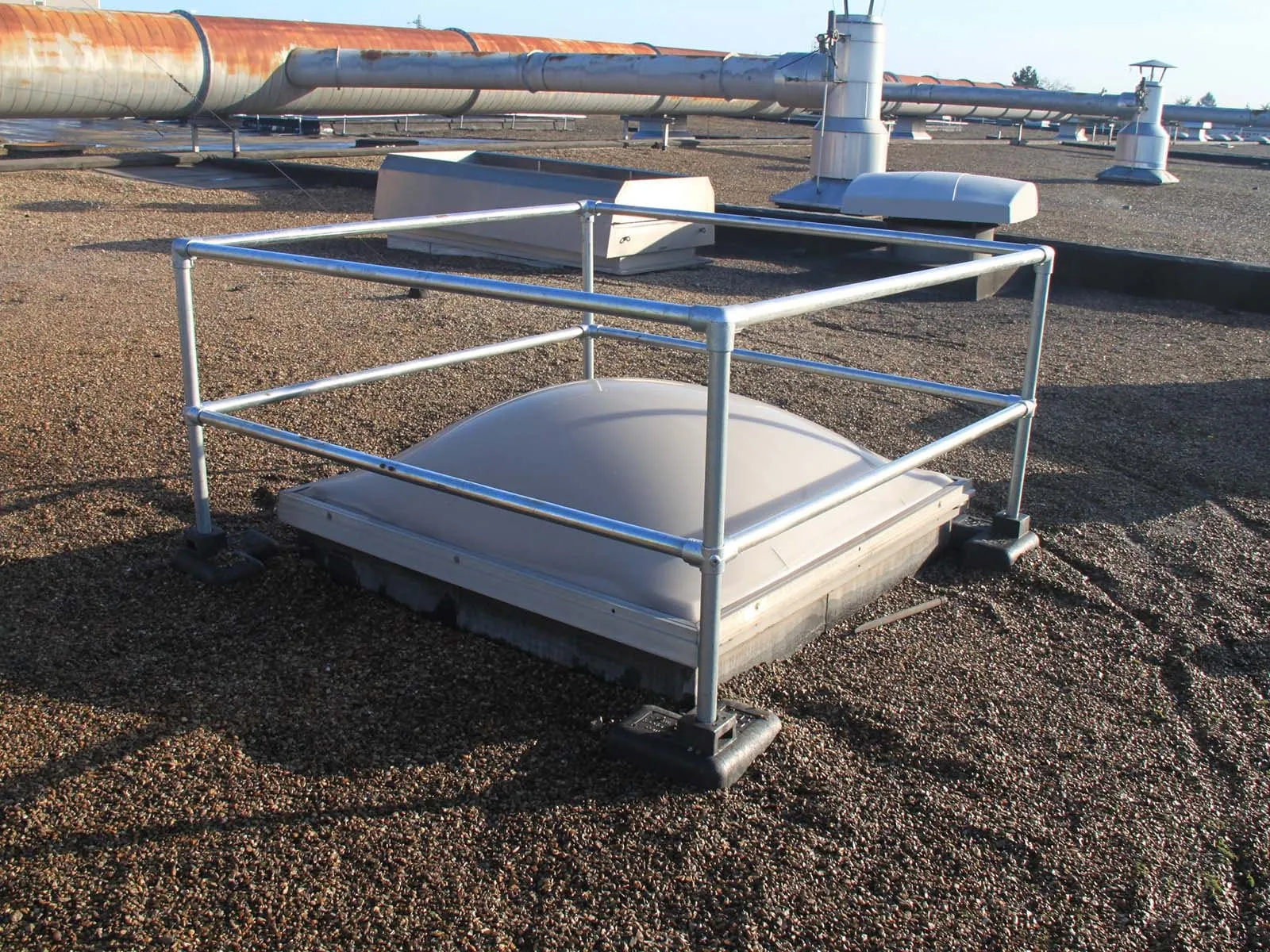
Areas of Application For Skylight Guards
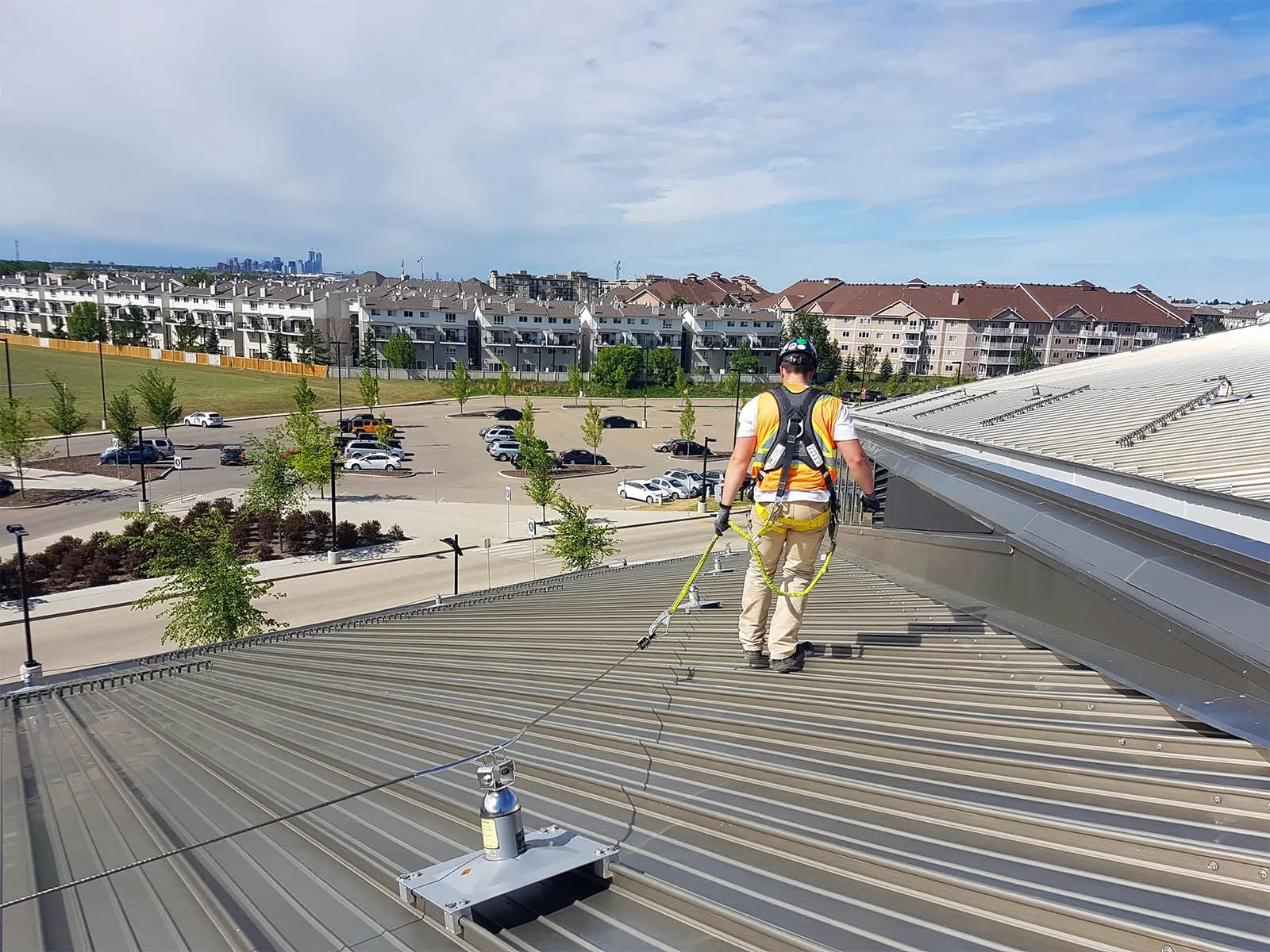
Building Access and Maintenance
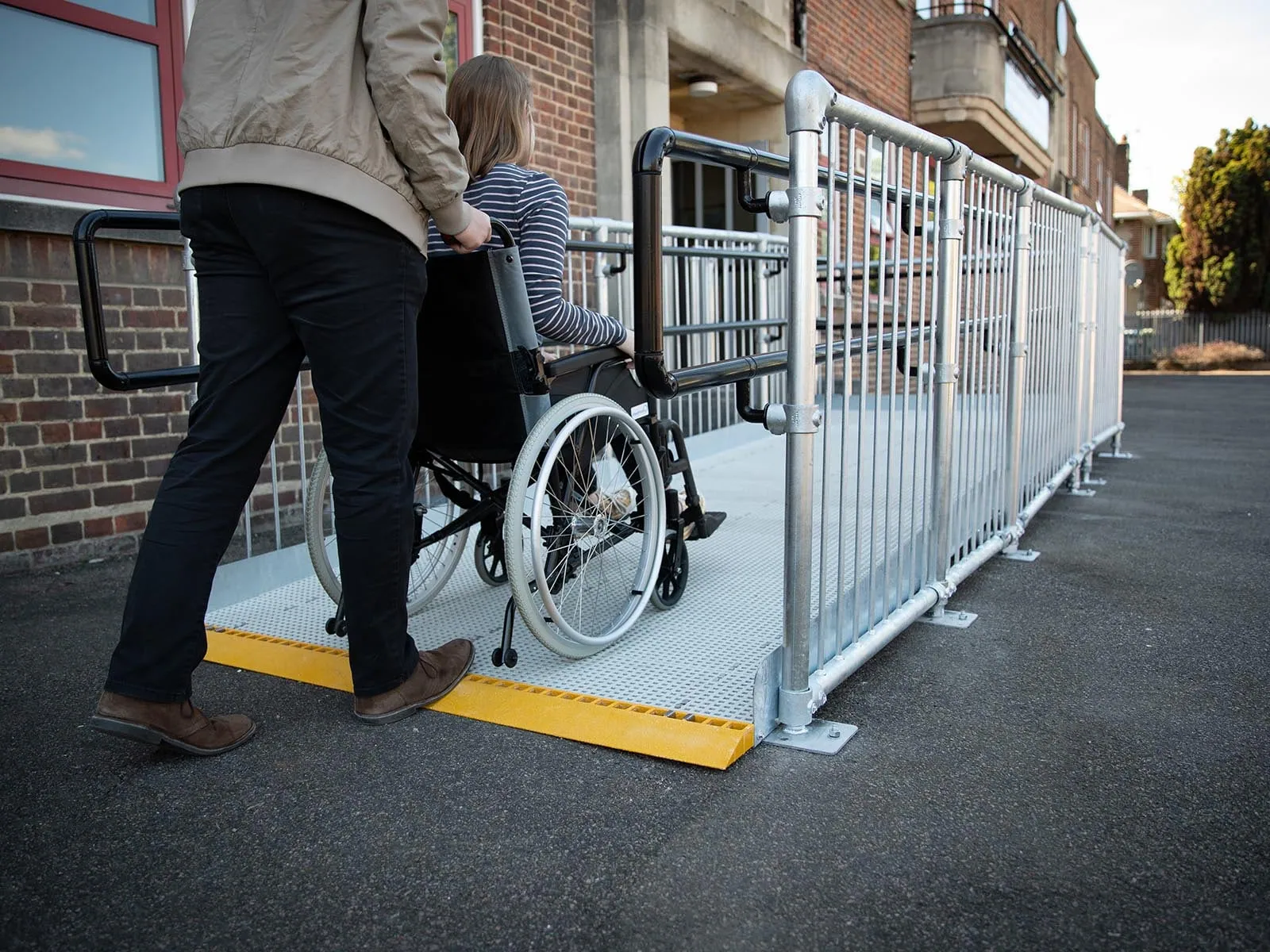
Education
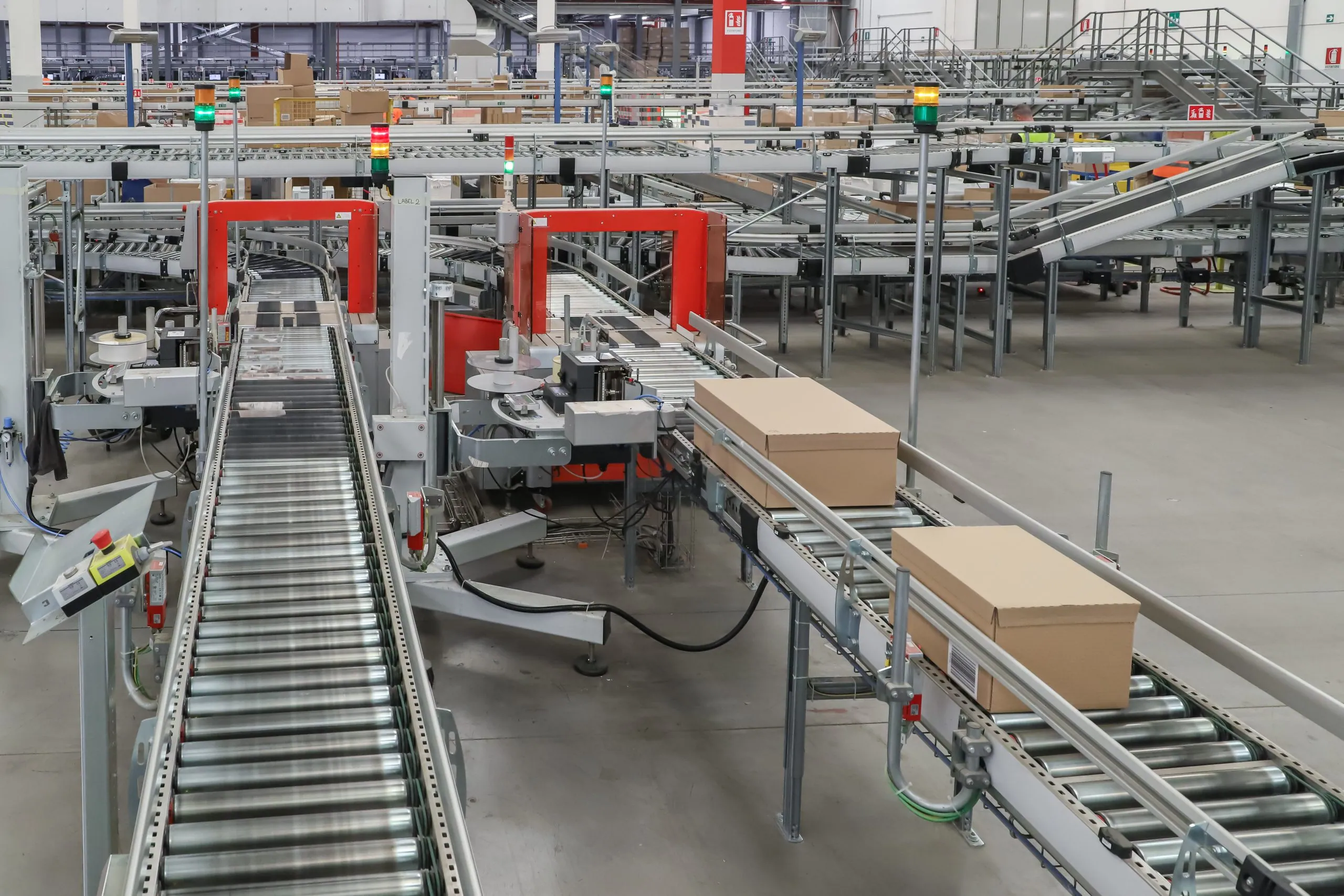
Manufacturing
Where this system is used
Industries and applications that run on Skylight Guardrail
Downloads
Brochures & downloads
Brochure
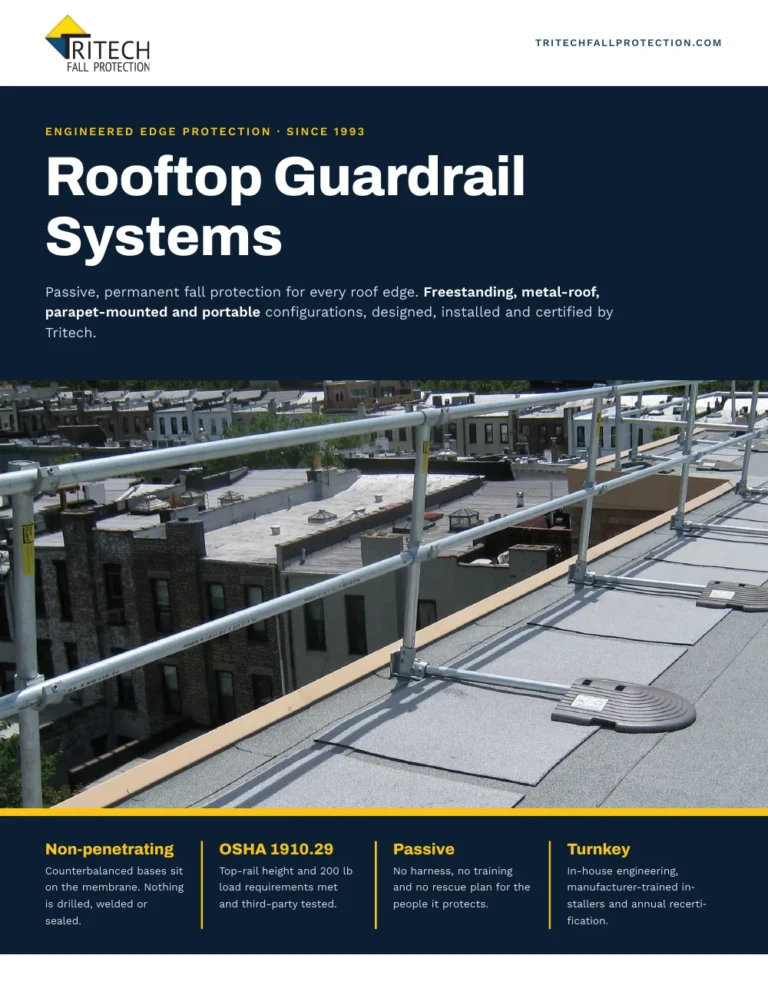
Rooftop Guardrail Systems Brochure
How Tritech engineers rooftop guardrail for membrane, metal, parapet and temporary roofs: four configurations, edge-distance zones and site engineering.
Answers to
Key Questions
Do skylights require fall protection?
Yes. OSHA classifies a skylight as a hole in a walking-working surface. Under 29 CFR 1910.28(b)(3), any worker who could fall 4 feet or more through that hole must be protected by a guardrail or screen around it, a cover over it, or a personal fall arrest system. A skylight that is not guarded or covered is an open OSHA violation on any roof people access.
What are the OSHA requirements for roof fall protection?
OSHA’s walking-working surfaces rule requires protection wherever a worker on a roof is exposed to a fall of 4 feet or more to a lower level (29 CFR 1910.28(b)(1)), with holes such as skylights protected by guardrails or screens, covers, or personal fall protection (1910.28(b)(3)). A guardrail used as the control must have a top rail 42 inches, plus or minus 3 inches, above the walking surface and withstand 200 pounds of outward or downward force (29 CFR 1910.29(b)). For temporary, infrequent work on a low-slope roof, a designated area at prescribed distances from the edge is permitted (1910.28(b)(13)). Tritech engineers and installs skylight guardrail systems built to these criteria.
What are the OSHA requirements for a roof access hatch?
A roof hatch is an opening in the same way a skylight is, and OSHA expects the opening and the area around it to be protected. Where a hatch sits near skylights, the perimeter protection is often handled together: a fixed guardrail around the hatch and around the adjacent skylights keeps the whole landing zone safe. The same 1910.28(b)(3) duty to protect holes applies to hatches and skylights alike, and self-closing gates are a recognized means of guarding the access opening.
What are the 4 types of fall protection?
The four are, in order of OSHA’s preference: elimination or substitution (remove the hazard), passive prevention (guardrails and covers that need no worker action), fall restraint (a tether that keeps the worker from reaching the edge), and fall arrest (a harness and anchor that catch a worker after a fall). A skylight guardrail is passive prevention: the second tier, and the one that protects everyone on the roof without depending on training.
At what height is fall protection required?
In general industry, OSHA requires fall protection at 4 feet above a lower level (29 CFR 1910.28). In construction, the trigger is 6 feet (29 CFR 1926.501). Because a skylight fall is a fall through a surface to the floor below, the relevant height is the drop to that lower level, which on most industrial roofs is well past either trigger.
CONTACT
Take Your Skylight Safety to New Heights
Our team is here to provide guidance, answer questions, and help you create a safer work environment.
Let’s Discuss Your Project
"*" indicates required fields
Not ready to talk yet? Download the Rooftop Guardrail Systems Brochure