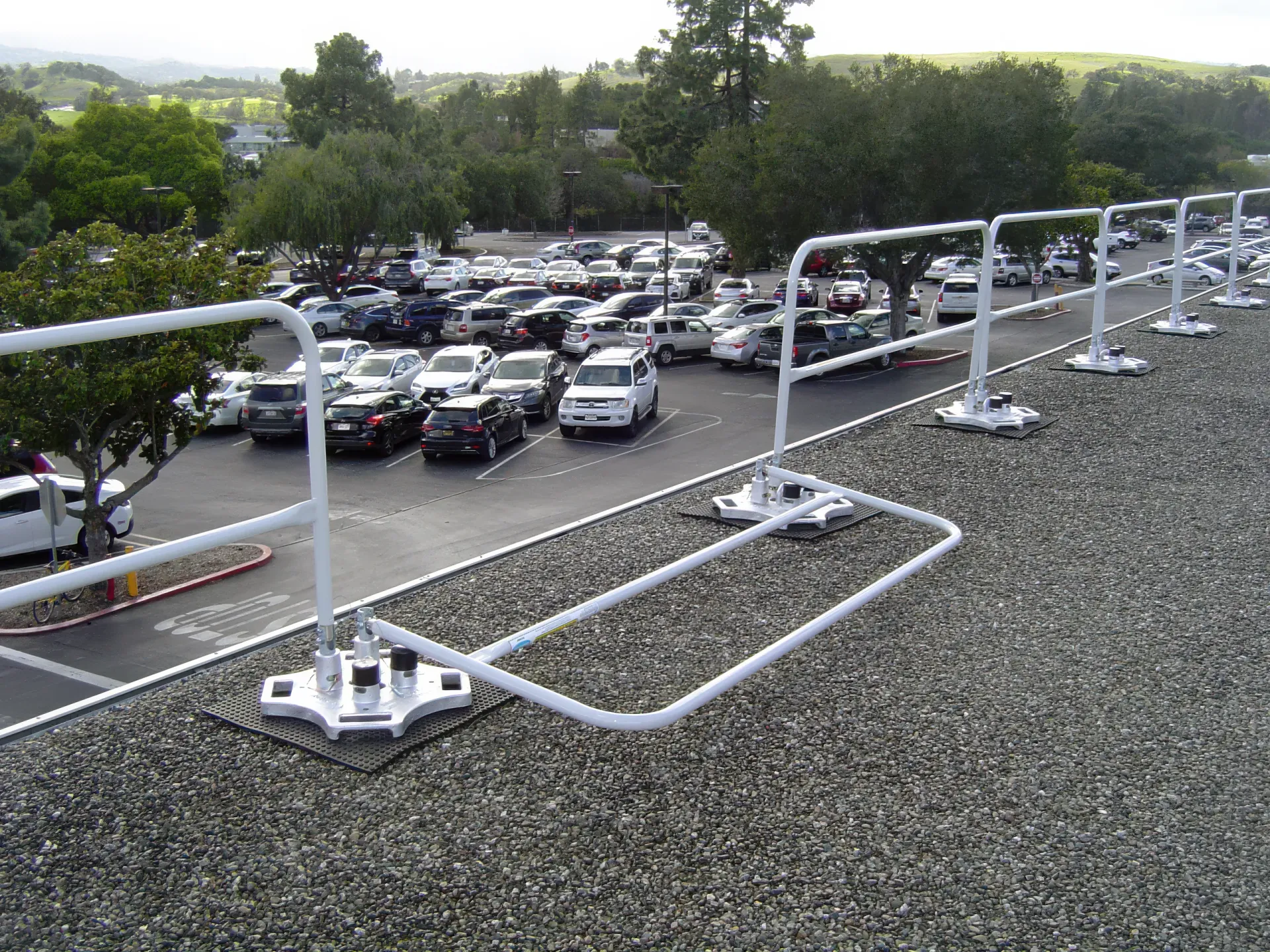

For facility managers, fall protection starts with the work being performed. General-industry tasks are covered by applicable Occupational Safety and Health Administration (OSHA) requirements in 29 CFR 1910. Construction work is covered by applicable 29 CFR 1926 requirements. The distinction matters when interpreting OSHA’s annual citation rankings and planning protection for maintenance teams and outside contractors.
What the 2026 rankings do—and do not—tell you
The National Safety Council’s September 15, 2026 announcement reported 4,041 preliminary citations for construction fall protection under 1926.501, the leading category for the 16th consecutive year. That number describes a construction standard; it is not a count of violations of general-industry fall protection rules. Read the preliminary announcement.
For context, the same release reports 1,863 citations for lockout/tagout (1910.147), 1,608 for respiratory protection (1910.134), 1,379 for powered industrial trucks (1910.178) and 1,072 for machine guarding (1910.212). These are general-industry standards, but they are not fall-protection citation counts. The release does not supply counts for 1910.28, 1910.29, 1910.30 or 1910.140; a missing Top 10 entry does not establish that a hazard is uncommon.
Identify the task before selecting the standard
A contractor performing routine maintenance is not automatically doing construction work. Likewise, construction performed by a facility’s own employees does not become general-industry work simply because those workers are on the owner’s payroll. Construction includes construction, alteration and repair; the boundary with maintenance requires reviewing the actual activity and circumstances. OSHA explains the construction-versus-maintenance distinction.
Review the general-industry fall protection requirements
1910.28 addresses when fall protection is required. For unprotected sides and edges, the general threshold is 4 feet above a lower level, subject to the rule’s specific provisions. Low-slope roof work has additional conditions based on distance from the edge and whether work is infrequent and temporary. A warning line is not a universal substitute for a protective system.
1910.29 sets criteria for systems such as guardrails and designated areas. 1910.30 addresses training and retraining. 1910.140 covers personal fall protection systems, including compatibility, use and inspection requirements. Apply the relevant provisions together rather than selecting a product against one isolated requirement.
Check the whole program before the next job
Start with an assessment of current tasks and access routes. Check roof edges, openings, ladders, platforms and elevated equipment. Consider eliminating exposure or using collective protection before relying on personal fall arrest. Where personal systems are needed, have a qualified person evaluate the anchorage, compatibility, fall clearance and rescue arrangements for the intended use.
Assign responsibility for inspection, maintenance and records. Follow the applicable standards, manufacturer instructions and system-specific requirements. Review training when equipment, tasks or conditions change, and coordinate with outside employers before their crews begin work. Keep drawings, instructions and inspection records accessible to the people who use and manage the system.
Turn requirements into a coordinated system
Since 1993, Tritech has provided turnkey fall protection solutions. Our team helps facilities connect hazard assessment, engineering, installation and ongoing inspection so that the system fits the work and its requirements. A citation ranking can prompt a review; the assessment of your facility determines what needs attention.
