TL;DR
Roof edges are one of the most serious fall hazards on commercial and industrial facilities. Any worker accessing a roof for maintenance, inspection, or repairs can be exposed to an unprotected drop, often the moment they step onto the roof. OSHA requires fall protection at 4 feet in general industry and 6 feet in construction, and the most effective long-term solution is passive, engineered protection that stays in place. Tritech helps facilities reduce risk with permanent guardrails, non-penetrating guardrails, lifelines, hatch protection, ladder systems, walk paths, and fall hazard assessments.
Roof edges remain one of the most frequently encountered—and most serious—fall hazards across industrial and commercial facilities. From routine maintenance and HVAC service to inspections and construction activities, workers are often required to operate near unprotected roof perimeters. Even a brief exposure without proper fall protection can result in severe injury or fatality. Unlike interior fall hazards, roof edges are often wide open, exposed to weather conditions, and subject to changing work tasks—which increases overall risk.
At Tritech Fall Protection, we regularly work with facilities that have safe internal operations but limited rooftop controls, reinforcing the need for proactive roof edge protection planning. This resource is for facility managers, EHS professionals, building owners, and contractors who want to understand their obligations and implement engineered solutions that protect workers from day one.
Rooftop Project Gallery
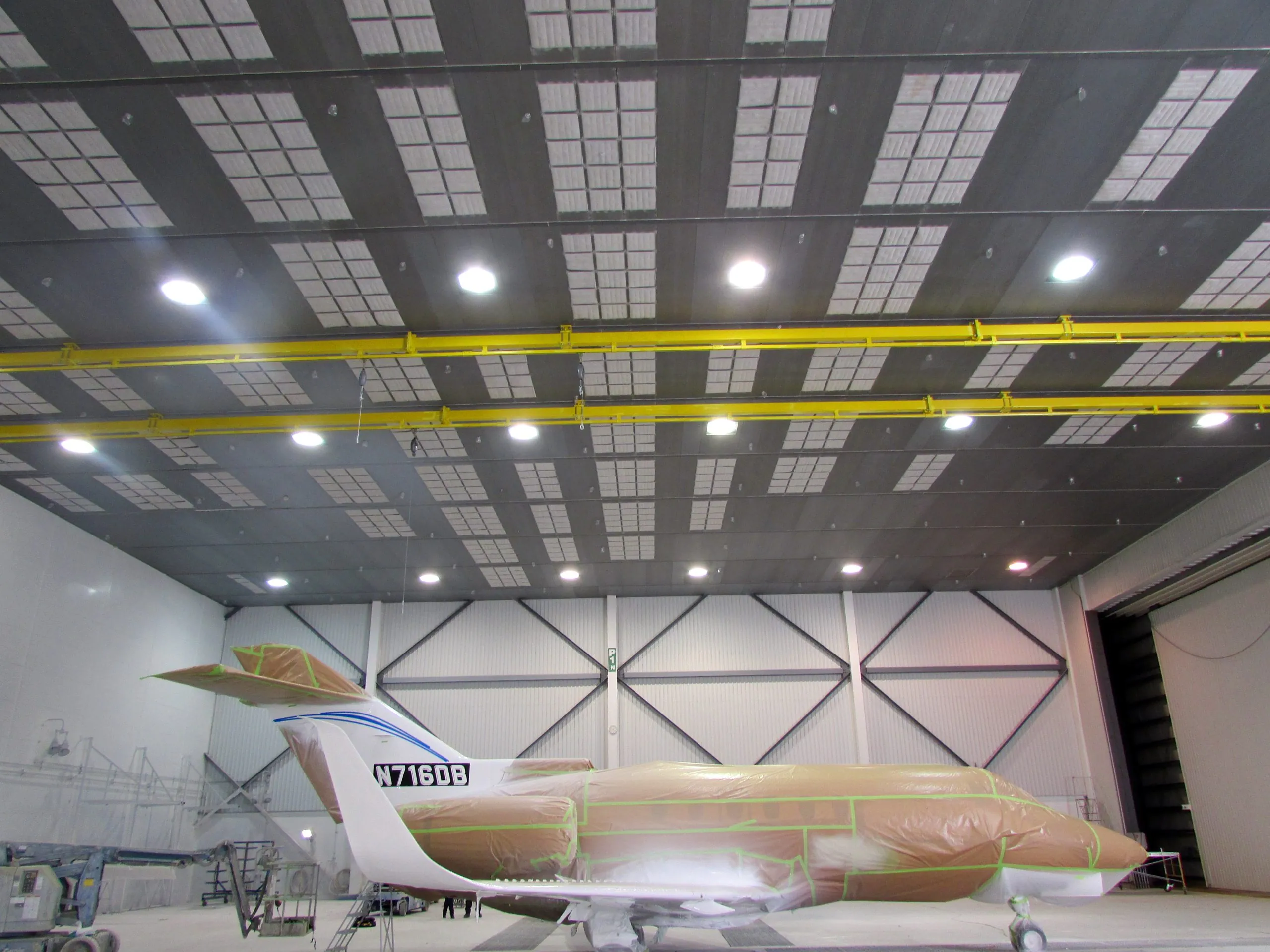
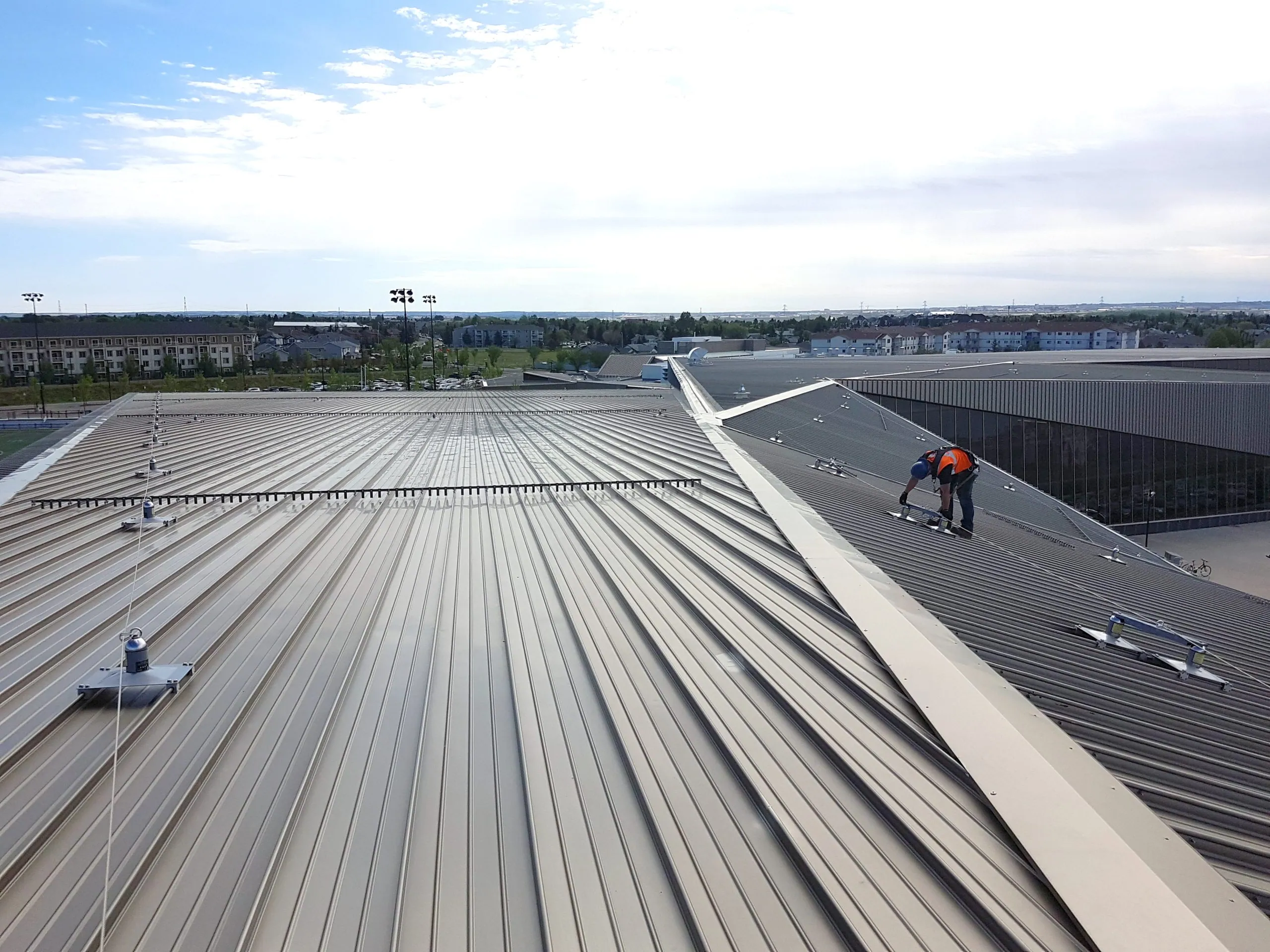
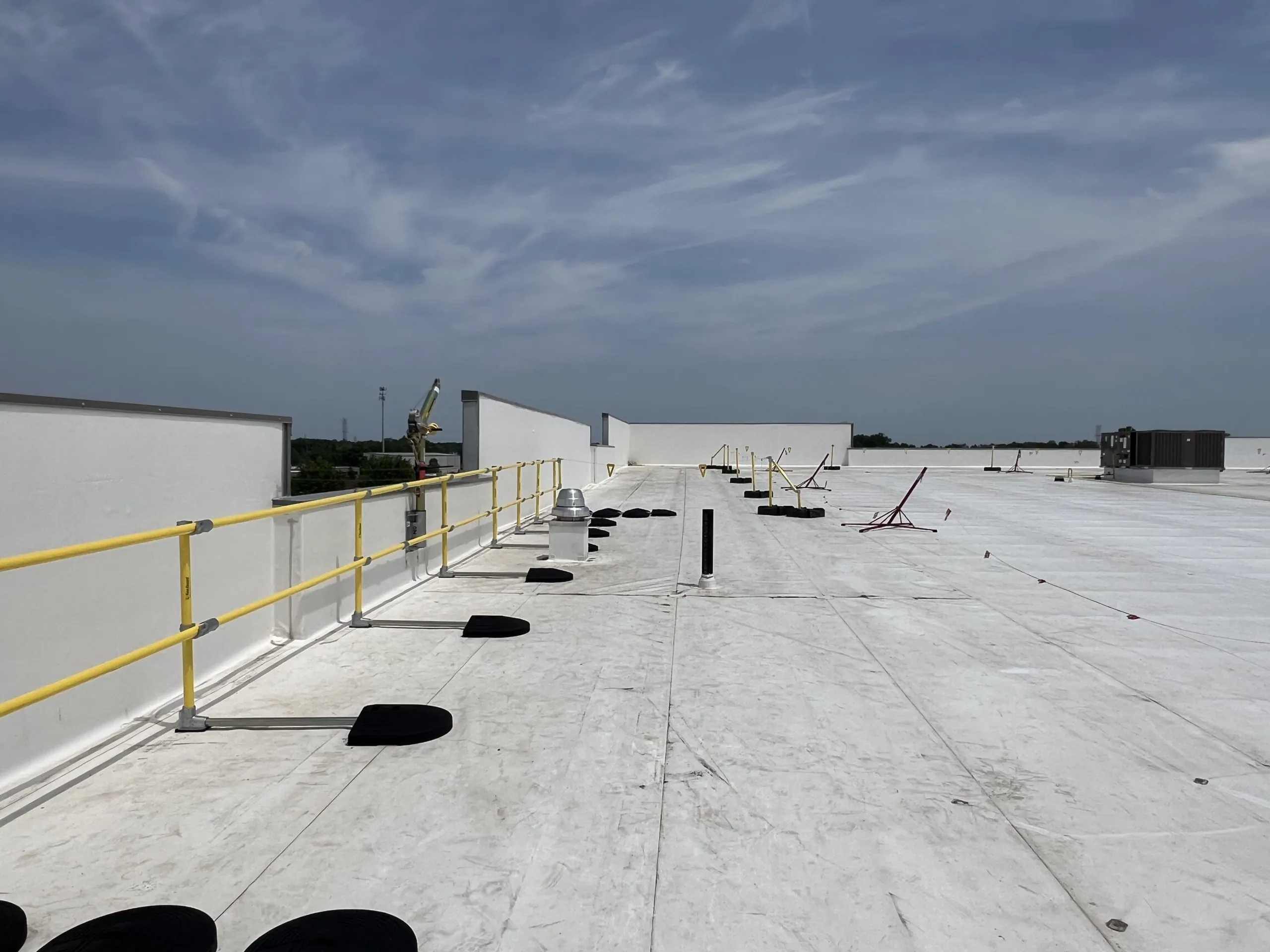
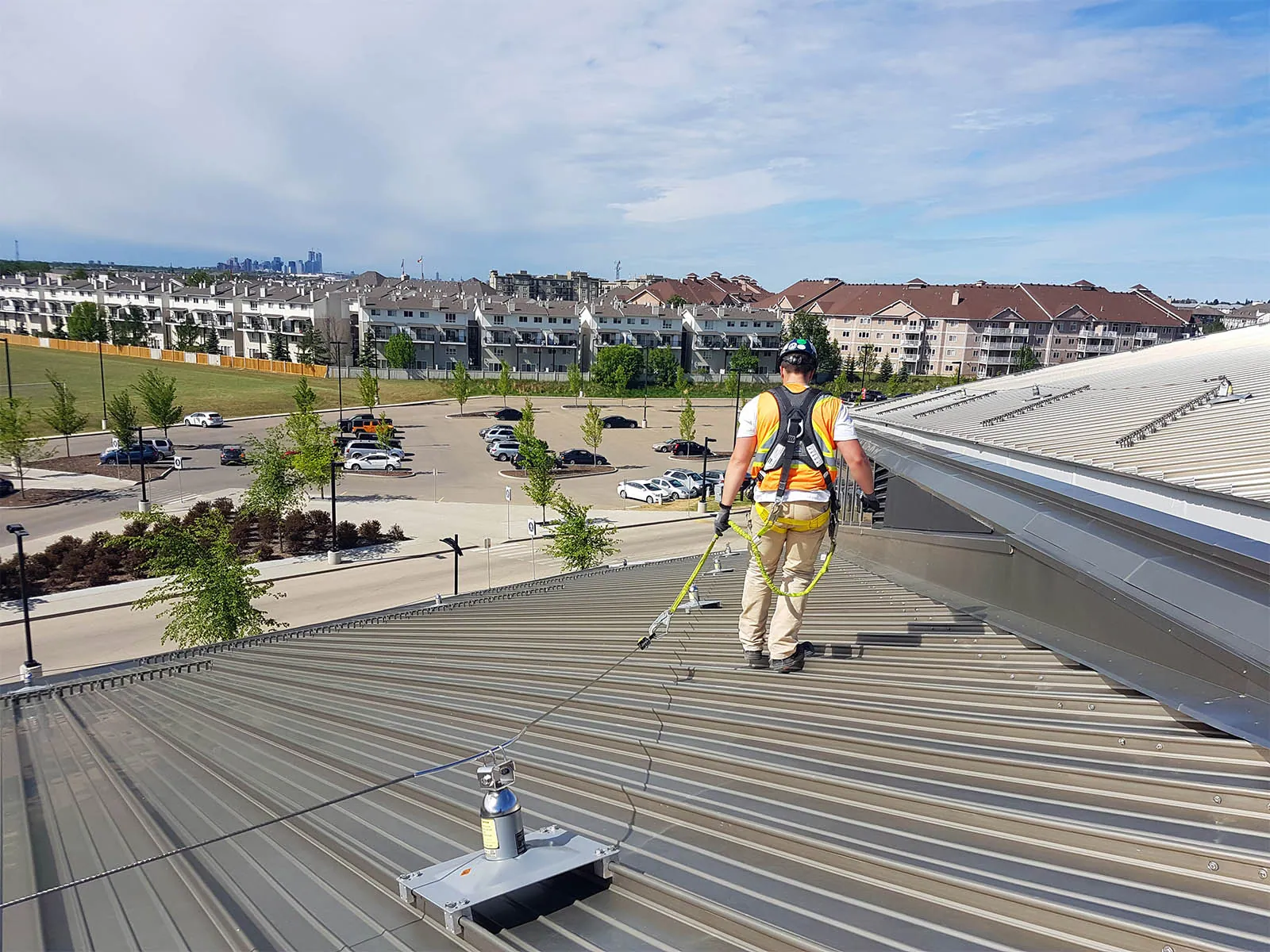
A sample of rooftop fall protection environments — guardrails, hatch guards, lifelines, and walk paths. Click any image to enlarge.


Why Roof Edge Hazards Demand Immediate Attention
Roof edges are consistently among the most dangerous exposure points on any commercial or industrial facility. Unlike fixed equipment or confined spaces, roof edge hazards are inherently passive—they require no special trigger to create risk. Any worker who accesses a rooftop for any reason is immediately exposed the moment they step through a hatch or onto a parapet.
Recent enforcement data from OSHA reinforces this reality. Fall protection remains the single most frequently cited standard year after year—and many of those citations involve employees working within close proximity to unprotected roof edges without guardrails or personal fall arrest systems. In several recent enforcement cases, OSHA cited employers for failing to provide adequate fall protection during routine maintenance activities, not just construction work. This highlights that rooftop hazards extend across virtually every industry that maintains a physical facility.
Penalties for serious and repeat violations can reach tens or hundreds of thousands of dollars, particularly when employers fail to address known exposure points. Beyond the financial impact, the human cost of an unprotected roof edge—a fatality or life-altering injury—is irreversible.
What this means for your facility: Any worker who accesses your roof for any reason—HVAC technicians, electricians, roofers, inspectors—is exposed the moment they step onto an unprotected perimeter. Passive, engineered protection eliminates this exposure without depending on worker setup or compliance.
The Unique Fall Hazards at Roof Edges
Roof edge environments create a distinct set of challenges that go beyond standard interior fall hazards. Safety teams need to understand these conditions to select the right protective systems.
Open Perimeter Exposure
Unlike interior elevated platforms, roof edges often have no natural barriers. Workers approaching HVAC units, skylights, or drainage systems may be within feet of an unguarded drop with no visual cue indicating the hazard boundary.
Variable Weather Conditions
Rooftops expose workers to wind, rain, ice, and extreme heat. These conditions reduce traction, impair judgment, and increase fall risk—making passive protection systems such as permanent guardrails significantly more reliable than task-based controls.
Changing Access Patterns
Rooftop access is rarely limited to a single task or trade. HVAC technicians, electricians, roofers, inspectors, and maintenance crews may all access the same roof perimeter under different conditions. A solution designed for one activity creates gaps for others.
Roof Hatch Transition Points
The transition from ladder to rooftop—and back again—is one of the highest-risk moments during any rooftop access. Workers are most vulnerable when stepping off a ladder onto an unprotected surface, particularly when carrying tools or equipment.
Non-Penetrating Roof Constraints
Many commercial and industrial roofs have warranties or membrane systems that prohibit penetrating anchors. This creates a false impression that guardrail systems are not feasible—when ballasted, non-penetrating solutions are available and fully OSHA-compliant.
OSHA Standards That Apply to Roof Edge Fall Protection
Roof edge fall protection is governed by OSHA standards that apply fully to both general industry operations and construction activities. Understanding which standard governs your work is essential for compliance.
General Industry (29 CFR 1910 — Walking-Working Surfaces)
Under OSHA’s general industry standard (1910 Subpart D), fall protection is required when employees are exposed to falls of four feet or more to a lower level. This applies to routine maintenance, inspections, HVAC servicing, and any other recurring rooftop task at an operational facility. Acceptable protection methods include guardrail systems, safety net systems, and personal fall protection systems. The full regulatory language can be reviewed here:
https://www.osha.gov/laws-regs/regulations/standardnumber/1910/1910.28
Construction (29 CFR 1926 Subpart M — Fall Protection)
For construction-related activities on rooftops, OSHA’s construction standard requires fall protection at heights of six feet or greater. This standard specifically addresses roof work and outlines acceptable protection methods including guardrail systems, warning line systems, safety monitoring systems, and personal fall arrest systems. The construction standard can be reviewed here:
https://www.osha.gov/laws-regs/regulations/standardnumber/1926/1926.501
While these standards establish minimum compliance requirements, many facilities benefit from engineered solutions that provide continuous, passive protection for routine rooftop access—rather than task-based temporary controls that depend on worker setup each time.
Key OSHA Standards for Roof Edge Protection
29 CFR 1910.28 — Duty to Have Fall Protection (General Industry): triggered at 4 feet
29 CFR 1910.29 — Fall Protection Systems and Falling Object Protection Criteria
29 CFR 1926 Subpart M — Fall Protection (Construction): triggered at 6 feet
29 CFR 1926.502(b) — Guardrail Systems: height, strength, mid-rail, and gate requirements
ANSI Z359 Fall Protection Code — Industry best practice standard for fall arrest systems
“Roof edges don’t discriminate by industry or trade. Any worker on any rooftop—for any reason—is exposed. The only reliable control is engineered protection that’s always in place.”
Tritech Fall Protection Solutions for Roof Edges
Tritech engineers and installs roof edge fall protection systems across every type of commercial and industrial facility—from single-story manufacturing plants to multi-story office buildings and large-scale industrial campuses. Our solutions are engineered to the specific demands of each rooftop, including options that protect roof membranes and preserve existing warranties.
Permanent Guardrail Systems
Permanent guardrail systems are the most effective and OSHA-preferred roof edge solution because they provide passive protection without requiring worker setup or specialized training before each access event. Tritech’s guardrail systems are engineered to meet or exceed OSHA height and load requirements and can be configured for any parapet height, roof geometry, or access pattern.
Non-Penetrating Guardrail Systems
Where roof penetration is not desirable or permitted by warranty, non-penetrating (ballasted) guardrail systems provide compliant protection while fully preserving roof integrity. These systems use weighted bases to meet OSHA’s force resistance requirements without a single fastener through the membrane—making them the preferred solution for flat-roof commercial and industrial facilities.
Horizontal Lifeline Systems & Certified Anchor Points
For facilities requiring worker mobility across large rooftop areas, engineered horizontal lifeline systems and certified anchor points allow workers to utilize personal fall arrest systems safely and efficiently. Tritech’s anchor systems are load-tested and certified, providing documented proof of compliance for OSHA inspections and insurance requirements.
Roof Hatch Guardrail & Self-Closing Safety Gates
Every roof access hatch is a potential fall hazard. Our roof hatch guardrail systems with self-closing gates ensure workers can’t step off the ladder onto an unprotected surface—a critical requirement for any facility with regular rooftop maintenance activity.
Ladder Safety Systems
Fixed ladder access points present fall hazards both during climbing and at the point of transition onto the roof. Tritech’s ladder safety systems—including vertical lifelines and ladder cages—protect workers throughout the full climb and reduce exposure at the critical ladder-to-roof transition point.
Designated Safe Walk Paths
For facilities with high-frequency rooftop access across large areas, engineered walk path systems create clearly delineated routes that keep workers away from unprotected edges. These systems integrate seamlessly with guardrail and lifeline solutions to create a comprehensive rooftop safety approach.
Fall Protection That Works Beyond the Initial Installation
One of the most common oversights we see when assessing facilities is roof edge fall protection that was installed for a specific task or project but never updated as the building’s use and access patterns evolved. The workers change, the tasks change, and OSHA’s requirements impose clear obligations regardless of whether the original installation was designed to meet them.
Once a facility is in full operation, ongoing rooftop fall hazard scenarios typically include HVAC and mechanical equipment servicing, roof membrane inspections and repairs, solar panel installation and cleaning, telecommunications equipment maintenance, snow removal and drainage management, and facade access for building repairs near roof level.
Tritech offers Fall Hazard Assessment Services specifically designed to identify every roof edge exposure at an operational facility and provide a clear, OSHA-compliant remediation plan—without disrupting your ongoing operations.
We also provide inspection and recertification services for existing systems—critical for any facility where guardrails, anchors, or lifelines were installed under previous ownership or following significant structural changes. Annual inspections keep your systems certified and your liability exposure minimized.
Protect Your Workers Before You Need To
Whether you manage a single facility or a national portfolio, Tritech has the expertise to build a compliant roof edge fall protection program around your specific environment—designed to last, engineered to code, and installed to protect.